Sunday, September 24, 2006

The Way to Heaven

(25th Sunday in Ordinary Time-Year B;This homily was given 24 September, 2006, at Our Lady of Mercy, East Greenwich, R.I.; read Mark 9:30-37)

There is a very endearing story about St. John Vianney, patron saint of parish priests. Immediately after his ordination to the priesthood, he was assigned to a small parish in an obscure French village called Ars.

As he made his way, on foot, towards that village, he came to a crossroads and did not know which way to go. There was a little boy there, so the saint asked him,

“Young man, which one of these roads leads to Ars?”

“It’s that way, Father,” he replied.

St. John Vianney then smiled at the boy and said,

“You have shown me the way to Ars. Now, I will show you the way to heaven.”


In our Gospel this morning, Jesus shows the disciples and all of us the way to heaven, and the way to greatness in the Kingdom of God.

He takes a small child—perhaps the same age as the one who showed St. John Vianney the way to Ars—and shows them that this is the way to greatness in the Kingdom of God.

If you want to be great in the Kingdom, then you have to think small! If you want to be exalted to the heights of heaven, then you have to be willing to take a step down in humility. You have to become the least, and the last, and the servant of all. That is how we reach the heights of heaven.


One of the greatest stories ever written about the journey from this earth to the heights of heaven is The Divine Comedy by Italian author Dante Alighieri. It begins on a very somber tone. The narrator, Dante himself, is telling us where he is: not only geographically and physically, but spiritually, as well. He writes:

Midway on our life’s journey, I found myself
In dark woods, the right road lost.

He had lost the way; lost his bearings; he was in the dark and all alone. Then suddenly, in those opening lines of the poem, his entire perspective changes. He looks up, and off in the distance he sees the mountain of God shining in the sun. He knows which way he must go, the path he must walk to find that eternal destination for which all of us are created.

Yet he quickly discovers, as he begins to ascend that mountain, that the road to heaven will not be an easy one. Three ferocious beasts block the way: a leopard, a lion, and a ravenous she-wolf.

The leopard, beautiful to behold but very dangerous indeed, represents the sensual pleasures of this life. She remains ever before his face, forcing him back down the path at every turn.

The hungry lion, with his head held high and threatening, represents pride, arrogance and our own self-importance deep within. These are the very things that the disciples encounter on their journey in the Gospel this morning, arguing about who is the greatest; who is the most important; who is the alpha-dog in the pack.

The she-wolf is the embodiment of all those cravings we have for the things of this life only; she is greed, avarice, and the insatiable longing for the things of this world.

There is no getting past these beasts, and Dante must retreat back down the mountain, devastated. Whether he likes it or not, he must humbly take a step down and curtail his ascent to that mountain height.

But just at that moment, the poet Virgil appears; a figure from the ancient world, a person whom Dante knew about and very much respected. He approaches Dante and assures him that he will be a guide to the ascent of that mountain, but that the direction they must go to begin that journey is down!

In fact, they must go all the way down to the depths of hell itself. Virgil takes Dante into the heart of the Inferno, and points out the entire history of sin and all its awful consequences. Dante is forced to witness utter depravity and the hopelessness that reigns in that place; it is enough to make him physically sick.

Yet Virgil, his guide, is relentless as he makes Dante confront the reality of sin, forces him to look it in the face, and take accountability for it. Dante must understand the overwhelming need has for a redeemer and for the mercy and the grace of God.

It is then and only then that Dante begins to move upward to the realm of the Purgatorio, where the souls of the just, those made right with God through faith, are being purified and purged of all selfishness and self love.

Until, finally, a new guide, Beatrice, leads him into the realm of the Paradiso, paradise itself, where he enjoys the beatific vision along with all the saints and the angels of God. It is a beautiful story about a man’s journey to the heights of heaven, even though he had to go through hell—literally—to get there!


Today, where do we find ourselves on our own journey towards God’s Kingdom? Are we experiencing, perhaps, what Dante writes about: darkness, confusion, the right road lost? Or have we begun to see the path God wants us to follow, beckoning in the distance?

Like Dante, we, too, must acknowledge that the sensual pleasures of this world, the insatiable greed and avarice that so easily beset us, and our pride and self importance are not the way to true happiness in this world, nor in the world to come.

If we were to walk with Virgil through the Purgatorio, or even through the Inferno, what are the sins he would point out to us today? We must acknowledge those places where our path to God has become obscured.

Because this morning, Christ Himself—not Virgil the poet—comes to us in word and in Sacrament. He comes to each one of us and says:

Show me where you have left the right road that leads to me.

Show me the sins that are in your life, the ones that are keeping you from growing closer to me and perhaps keeping you from my Kingdom.

And most importantly, show me your sorrow for those sins; the true repentance without which there is no forgiveness.

Show me that. Show me the way of humility.

And I will show you the way to heaven, and the way to eternal life.

Sunday, September 17, 2006

The Scandal of the Cross

(24th Sunday in Ordinary Time-Year B;This homily was given 17 September, 2006, at Our Lady of Mercy, East Greenwich, R.I.; read Mark 8:27-35)

Our Gospel this morning, from St. Mark, reveals what theologians often call the “scandal of the cross.” Long before it was ever a religious symbol, before it was the symbol of the Christian faith, the cross was a symbol of violence, suffering and death.

It was an instrument of torture used by the Romans as a deterrent to any and all opposition to the laws and regulations of the empire. The cross sent out a clear message to the subjects under Roman authority: if you transgress the laws of the state and challenge this empire, then that will be your fate; disgrace, humiliation, suffering and death.

And so it is for good reason that St. Peter comes out so strongly against Christ on this very subject. He wants to dissuade Christ from even considering the possibility that His life could end like that. St. Peter wants to remove the cross far away from the life and experience of Jesus of Nazareth.

Yet St. Peter discovers, very quickly, what we already know to be the truth: that you cannot remove the cross from the life of Christ; nor can you remove the cross from the life of the Christian.

Immediately after rebuking Peter in the strongest of terms—“Get behind me, Satan. You are thinking not as God does, but as human beings do” (Mark 8:33)—Christ turns to the disciples and says to them the very thing He says to each of us:

Whoever wishes to come after me
must deny himself,
take up his cross,
and follow me.
—Mark 8:34

You cannot remove the cross of Christ from the life and faith of the Christian.

About 20 years ago, in 1986-1987, the “scandal of the cross” and discussion about removing the cross, were front page headlines right here in East Greenwich.

Some of you remember the small traffic island that used to be at the intersection of Cedar Avenue, where it meets Kenyon Avenue and Middle Road. On that traffic island there used to be a wooden cross, a memorial to Dr. Eldridge, the famous “horse and buggy doctor” of East Greenwich.

There were great stories about the late Dr. Eldridge, how he would travel as far as Jamestown to visit patients in need, or how he once delivered three separate babies in a single night before returning to his simple home for a well earned rest.

Now that cross, dedicated in his memory, suddenly became the focal point of an intense debate, and eventually led to a lawsuit from the American Civil Liberties Union and the American Jewish Congress against the town of East Greenwich.

Of course, before a resolution was reached, it was discovered one morning that the cross had been removed. It was gone without a trace. A young man—who later turned himself and the cross in—had come by with a chain saw, cut it down, and carried it away in the night.

By now you may be wondering how I know so much about the history of the Wayside Cross of East Greenwich. After all, I have only been at the parish here for two years, and when those events took place I was in high school.

Truth be told, the reason I know so much about those events is because that young man who cut down the Wayside Cross (no, it wasn’t me) sat next to me in homeroom! He was my high school classmate.

If you followed the outcome of those days in the media, then you remember that he had the best of intentions for doing what he did. Far from being a vandal or disturber of the peace, he was trying to put an end to the debate and controversy surrounding the Wayside Cross by removing it. Unfortunately, it did not end the debate; it only prolonged it.

Like St. Peter in the Gospel this morning, and like all of us, he discovered that—even with the best of intentions—you cannot remove the cross, even if you try. It cannot be removed from the Town of East Greenwich, and it cannot be removed from the life and experience of each and every one of us.

The cross is a reality that all of us will experience at one time or another throughout our lives. It may come in many different forms: a physical sickness or disease, spiritual or mental anguish, the death of a loved one, fear and anxiety about the future, sorrow about the events of the past, an addiction, a broken relationship . . . it could be almost anything. But all of us experience the cross in some way.

The Good News, the miracle of the Christian faith, and the one thing that separates us from all other religions, is that God—who is in heaven, far removed the experience of suffering and pain, who is totally self-sufficient and complete in Himself, lacking nothing—suddenly comes to earth in the person of Jesus Christ and takes on our human nature.

Christ enters directly into our suffering and with the obedience of love He embraces the cross . . . and transforms it.

The cross is no longer the instrument of torture, a hollow symbol of violence, suffering and death. Suddenly it becomes the very instrument of our salvation. It is the means through which God forgives our sins, and opens the gates of paradise to invite each of us to eternal life. It is God’s greatest gift to the human race: the gift of Himself on the cross in love for all people.

The cross changes everything. We are no longer alone in our suffering, in the sorrow and pain that often plague us in this world. Christ has drawn near to us in our suffering. He has the power to change us, and the world we live in; it is the power of God flowing from the cross of Christ. And God wants to return that cross, not to a traffic island on Middle Road and Cedar Ave., but to the very places where we live and work each day.

How is God calling us, in a very real and practical way, to make the power of the cross—His mercy, forgiveness and grace—known in the world we live in? Where are those places that God is sending us forth to make His presence known in the world through lives of service, fidelity and faith?

There is a great poem by George MacLeod that speaks to this very need; it hits upon the sad reality that the cross of Christ is so often conspicuously absent, not only from the public square, but from the private and public lives of Christians, as well:


Return the Cross to Golgotha
By: George MacLeod, Focal Point, January-March, 1981

I simply argue that the cross be raised again
at the center of the market place
as well as on the steeple of the church,

I am recovering the claim that
Jesus was not crucified in a cathedral
between two candles:

But on a cross between two thieves;
on a town garbage heap;
at a crossroad of politics so cosmopolitan
that they had to write His title
in Hebrew and in Latin and in Greek . . .

And at the kind of place where cynics talk smut,
and thieves curse and soldiers gamble.

Because that is where He died,
and that is what He died about.
And that is where Christ’s men ought to be,
and what Church people ought to be about.


Today we ask God for the grace to return the cross of Christ to the place where it most needs to be: in our workplace, in our schools and homes, at the very heart and center of our lives; not as some roadside display but in lives of discipleship and faithfulness to Christ, so that those with whom we work and live can look at us, and know that we belong to Him.

Sunday, September 10, 2006

Fr. John Koroma, Diocese of Makeni in Sierra Leone

This weekend we were joined by Fr. John Koroma, a priest from the Diocese of Makeni, one of three dioceses in the country of Sierra Leone in West Africa.

Below is a brief description of Fr. Koroma's homeland, followed by the homily he gave here at OLM this weekend.

THE CATHOLIC CHURCH IN SIERRA LEONE


I come from Sierra Leone, a small West African country (a former colony of Great Britain), that has witnessed one of the bloodiest wars in Africa. This senseless war, from hindsight, has left massive scars on the land and its infrastructure; but more so, on the bodies, souls and minds of the already impoverished population due to years of inept and corrupt governance.

The country has a population of about five million. Of this, 10% are Christians (Catholics make 4% of the population) and about 60% are Muslims including my family. The rest are followers of indigenous beliefs.

Pastoral activity in Sierra Leone is manned by both Missionaries and Diocesan clergy. Besides the celebration of the Sacraments, pastoral work consists of building small Christian communities at grass-root levels, the formation of Priests and Religious, the training of Lay leaders and Catechists.

Due to the massive devastation of the country, pastoral agents are also actively involved in the day-to-day programs of human promotion and development. In concrete terms, they are rebuilding institutions and structures destroyed during the decade-long war such as churches, catholic schools, vocational centers and hospitals.

They are also setting up rehabilitation centers for rape victims, orphans, amputees and ex-child combatants and establishing Justice and Peace centers that help to educate the resilient population along the ways of justice, peace and genuine reconciliation. On the whole, the Church in Sierra Leone is helping to restore hope and dignity to a war-ravaged and traumatized people.

In the light of the salvific mission of Jesus Christ, this is Evangelization at its best:
Working passionately and relentlessly for the integral salvation of the human person, not just for the salvation of his/her soul. By virtue of our baptism, this is the sacred mission we are all called to undertake (wherever we find ourselves) with profound conviction and abiding commitment.

Fr. Bob John Koroma
Instituto degli Oblati di Maria Vergine
Via Casilina 205
00176 Roma
Italy.


(23rd Sunday in Ordinary Time-Year B; This homily was given by Fr. John Koroma on 9 and 10 September, 2006, at Our Lady of Mercy, East Greenwich, R.I.; read Isaiah 35:4-7 & Mark 7:31-37)

I would like to start by expressing my profound thanks and gratitude to Fr. Lolio, Fr. Chris, the Religious of the Parish, and to all of you, God’s people, for giving me this grace-filled opportunity to be in your midst in this splendid parish.

I feel blessed to be invited to come and pray with you within the context of the Mass. That I, a West African priest, can come here and feel such a tremendous sense of belonging; the feeling of being part of this parish family is a clear indication of the universality of the Church—this huge family of God that transcends color, race, nationality, and status. What a beautiful gift, to be a part of the Church, this new people of God.

At the heart of the Christian faith is the conviction that the God, who revealed Himself in the person of Jesus Christ, is not an abstract being; a self-knowing and self-loving god who merely contemplates himself; a god who is merely a figment of our imagination. No! The God who manifested Himself in the person of Jesus Christ is a personal, loving, and caring God who heals and saves. This is vividly demonstrated in today’s Gospel, which narrates, in a dramatic fashion, the healing by Jesus of a deaf and dumb man.

When Jesus heals, the purpose is not simply to cure the physiological ailment of the person, to restore his or her physical health and wholeness; it goes beyond that. The primary motive of Jesus’ healing ministry is always to restore the dignity and worth of the person, to integrate him or her back into the life of society.

During the time of Jesus, the sick and the handicapped were often ostracized. People thought that they had been controlled by demonic forces. When Jesus heals them, he integrates the person back into the life of the community.

My dear brothers and sisters, what Isaiah prophesied in the first reading today is what the entire mission of Jesus Christ is meant to bring: a radical transformation, an integral liberation from the shackles of sin in all its tragic manifestations of suffering, pain, division, terror, anguish, hatred, greed, and war.

Like the deaf and dumb man in the Gospel, we all need the healing touch of Jesus. But, first and foremost, we must humbly acknowledge that as humans, each and every one of us is sick. Our ailments might not necessarily be physiological ones; they could be emotional, psychological, spiritual, or moral, like anxiety, resentment, frustration, and guilt.

Just as the people brought the deaf man to Jesus for healing, we also need to reach out in faith and trust in Jesus; we need to allow Him back into our lives with His healing and restorative power. Jesus, who is present among us in this celebration, the doctor par excellence, will certainly do the rest. What a privilege we have as Christians! What a grace! What a treasure! May the Lord bless us all.

Sunday, September 03, 2006

Purity: Seeing with the Eyes of Lucy

(22nd Sunday in Ordinary Time-Year B; I was away at a friend's wedding in Columbus, Ohio this weekend, and was invited to celebrate Mass at a nearby parish where one of my classmates from seminary was assigned. This homily was given 3 September, 2006, at St. Brigid of Kildare, Dublin, Ohio; read Mark 7:1-23)

Who do you think is the most beautiful person in Hollywood? There are entire magazines and television shows completely devoted to answering that question.

Today, I would like to offer a different question: In all of Hollywood, who has the most beautiful soul? Or, put a different way: Who is the purest person in Hollywood? There are no magazines or TV shows dedicated to answering that question!

What if we were to bring that question a little bit closer to home: who is the purest person among your family members and friends? We are not used to thinking along those lines. But if we look at our Gospel this weekend, we can see that the question of purity is at the very heart of the matter.

Jesus and the Scribes and Pharisees are in complete disagreement over the meaning and practice of purity. We discover in that Gospel passage that the Pharisees were practically obsessed with it. They purified their hands before eating. They purified cups, jugs, kettles, and beds. You name it; they purified it.

But Christ is quick to point out their hypocrisy. Purity, he reveals, is not a matter of mere externals, without ever seeking a change within. That would be a Hollywood purity, an external display of beauty. Purity, Christ contends, is a matter of the heart.

In the strongest of terms, Christ shows how much we really need to be purified, from the inside out. He says:

From within people, from their hearts, come evil thoughts, unchastity, theft, murder, adultery, greed, malice, deceit, licentiousness, envy, blasphemy, arrogance, folly. All these evils come from within and they defile.
—Mark 7:21-23

To become pure is an inside job, and it requires that we open our hearts to God. He needs to be the One we let inside; we need to invite God into the depths of our hearts and allow Him to make us pure from the inside out.

In the Gospel of Matthew, Jesus says, “Blessed are the pure of heart [those who are pure on the inside], for they shall see God” (Matthew 5:8). In St. Luke’s Gospel, He says, “Whoever does not accept the Kingdom of God like a child will not enter it” (Luke 18:17). If we want to see God and recognize His Kingdom among us, then we need the gift of purity. We need a pure, child-like faith that God alone can give us.

I am sure you have heard of the fiction series called The Chronicles of Narnia. Written by Christian author C. S. Lewis, it is a tremendous tale of love, friendship and sacrifice. One of those books in the series, "The Lion, the Witch, and the Wardrobe," begins with a little girl named Lucy who enters the magical world of Narnia through a mysterious old wardrobe. The scene in the book is quite compelling as it describes, in great detail, Lucy’s ecstatic and awe-inspired reaction to this new winter wonderland that existed in the back of an old dusty closet.

This past Christmas a new film version of that story was released. While making that movie and filming that particular scene, the producers wondered whether or not the young actress who played Lucy would be able to portray that same awe and wonder as the character in the book. Would she be able to pull it off? Suddenly the director of the film had an idea.

They prepared the entire set, but never once allowed the little girl to see it. Instead, they blindfolded her until they were ready to film. When the lights came on, with the beautiful winter landscapes of Narnia glistening all around them, they took the blindfold off and let the cameras roll.

When you watch that scene in the movie, what you are seeing is a little girl’s actual reaction to the breathtaking land of Narnia. Her face is lit up with the joy and wonder of a child seeing something truly beautiful.

That is what God wants us to see when we look at the world around us. God wants to give us pure hearts to see as He sees. He wants us to look at ourselves and the world around us with the eyes of a child.

Now, if we are honest, we can admit that seeing like that is no easy task. Most of us have seen enough of the world around us to be tainted just a bit. It can be so easy in the world we live in to become cynical, or to be skeptical about the purity that God calls us to.

I was flying into Columbus just this weekend, and the young man seated next to me on the plane began to share with me some of the details of his life. He was a carpenter by trade and was saving up so he and his girlfriend could buy a house as soon as they were married.

As the conversation developed it became more and more personal. He was on his way to see his fiancé. He had moved her into her apartment when she first began graduate studies, and now he was going back there to spend some time alone with her.

I began to say to myself: I don’t think I want to know anymore of this story! I already know where this is going. Surely there is someone else he should be sharing this with! But, thankfully, I did get to hear the rest of the story.

As we approached the airport he said to me, “Father, when my fiancé and I began dating back in college, we realized that many of our friends had experienced broken relationships. We also realized that the brokenness often happened after the relationships turned physical.”

He went on to tell me how his fiancé was Jewish, and he was a Christian, and how their traditions guided them in a different direction than the one their friends had taken. He said to me, “Father, we decided that we would wait until we were married before we brought our relationship to that physical level. Our friends think we’re crazy, but we have never been happier.”

There I sat, on that airplane, thinking: So this was the rest of the story that you didn’t want to hear. If I had stopped listening I never would have heard that beautiful testimony of faith. I never would have seen what God was doing in this young man’s life.

How many people around us—people we meet everyday—have a similar story they could tell? How many of us are being invited by God to experience that kind of purity, and to allow our own faith tradition to guide our lives in that way?

This week we ask God for the gift of purity. We ask Him for the heart of that carpenter, that we might love as God loves; and for the eyes of Lucy, that we might see as God sees. For, as Christ Himself says, “Blessed are the pure of heart, for they shall see God” (Matthew 5:8).

Sunday, August 27, 2006

Plan A: "We will serve the Lord"

(21st Sunday in Ordinary Time-Year B;This homily was given 27 August, 2006, at Our Lady of Mercy, East Greenwich, R.I.; read Joshua 24:1-18)

The greatest episode in the entire Old Testament, the event that defined the nation of Israel as a people, is that journey from slavery in Egypt to new life and freedom in the Promised Land. Remember it was Moses who led the people out of Egypt, and through the Red Sea. For forty years he led them through the dessert. But Moses was not the one who would eventually bring them into the Promised Land. That task was given to a young man named Joshua.

The Book of Joshua—which we heard from in our first reading—describes how Israel had to fight to take possession of the Promised Land, and how they had to fight to keep it. Our first reading this morning occurs after they have already taken possession of the Land. All of the surrounding nations have been conquered: the Canaanites, the Hittites, the Jebusites, the Amorites, and the list goes on (Joshua 3:10, 24:12).

But Joshua, now at the end of his life, recognizes that there is still one more battle left to fight, one great challenge that could possibly destroy everything they had accomplished. That challenge, of course, is the faith and the fidelity of the people themselves.

Would they forget the God who freed them from slavery in Egypt, the One who conquered their enemies and established them in the Promised Land? Would they turn away from Him to serve other gods instead? That was the danger. And so Joshua gathers all the tribes of Israel at Shechem and says,

“If it does not please you to serve the Lord, decide today whom you will serve, the gods your fathers served beyond the River or the gods of the Amorites in whose country you are now dwelling. As for me and my household, we will serve the Lord.”
—Joshua 24:15

It was a powerful call for fidelity, and we know that the people responded to that call. Echoing the exact same words as Joshua, they cry out, “We also will serve the Lord, for He is our God” (Joshua 24:18).

An awful lot has changed in the thousands of years since those events took place, but the world we live in is not so very different from the world of Joshua and the people of Israel. We, too, are called to live out our faith and to remain faithful to the Lord in the midst of a land filled with many gods. I would like to point out a few of the more obvious ones that are more than prevalent in the culture we live in.

The first obvious god of our culture is materialism or consumerism. Our society is practically driven by the desire to buy, to consume, to accumulate stuff.

The other day I went to a furniture store because I needed a small chair for a desk that my parents own. That’s all I was there for. But I found myself walking through all the little showrooms, checking out all the other living room sets and end tables, all the nice bookshelves and mahogany desks. There was a lot of nice stuff there. I began to think of reasons why I might need to buy some of these items, and where I might be able to use them. Suddenly it occurred to me: I don’t even have a house! I live in a room in the rectory! Why on earth was I even looking at these things?

I think we are all susceptible to the false gods of consumerism and materialism, the need to have the newest stuff, the latest fashions, always something more or better than what we already have. It’s all right to want nice things and to own nice things, but when our things start to own us, when we become possessed by our desire to possess, then we need to ask ourselves whether or not we have begun to bow to the false god of consumerism.

Another one of the false gods of our time is what could be called a misused or misunderstood concept of freedom. In his encyclical letter Veritatis Splendor, Pope John Paul II talks about our culture’s tendency to exalt freedom itself almost to the point of idolatry (Veritatis Splendor, #54).

Instead of being free to follow God’s will for our lives—free to do the right thing, free to live the right way—we often want, instead, to be free from God’s will, free from any of the restrictions that keep us from being who we want to be, doing what we want to do.

Nowhere is this more present than in the areas of human sexuality and what some have come to refer to as “reproductive rights.” This past Thursday, the FDA approved the drug called “Plan B”, for availability without a prescription. If you are not familiar with this drug, then maybe the following description will be helpful. It’s from the website of the Unites States Conference of Catholic Bishops:

The FDA describes Plan B as ‘a contraceptive drug’ and equates its side effects to those of ordinary birth control pills. While Plan B can prevent fertilization, the manufacturer admits it may also prevent a newly-conceived embryo from implanting and surviving in the womb. This is properly understood as causing an early abortion.

Advocates of “Plan B” are hailing it as a great day in the development of “reproductive freedom.” They are saying it is “a victory for women’s health and for the American people” (Senators Hillary Rodham Clinton and Patty Murray, statement August 24, 2006).

But as Americans and as Catholics, we have to ask ourselves: How many more unborn children have to be sacrificed to the false gods of “freedom” and “choice” before our nation finally comes to appreciate the tremendous value of the gift of every human life?

God doesn’t have a “Plan B.” He only has a “Plan A,” and that is a plan of love and life, and a plan for the respect of the dignity of every human being. We need to learn that plan, and follow it, before it’s too late.

Consumerism, materialism, a misunderstood freedom, the gods of ambition, power; these are just a few of the false gods that are so prevalent in our culture today. There are countless others that vie for our attention and our convictions as we struggle to live out our Catholic faith and follow Jesus Christ in this world.

Now, more than ever, we are in need of men and women like Joshua, who will stand up and say, “We will not follow these gods that are contrary to our faith and oppose the very God who created us.” We need men and women who will stand up with Joshua and say, “As for me and my household, we will serve the Lord” (Joshua 24:15).

And may those around us recognize our conviction, and see that we really do stand for something far greater than ourselves, and may that inspire them to echo the words of the people of Israel: “We also will serve the Lord, for He [also] is our God” (Joshua 24:18).

Tuesday, August 15, 2006

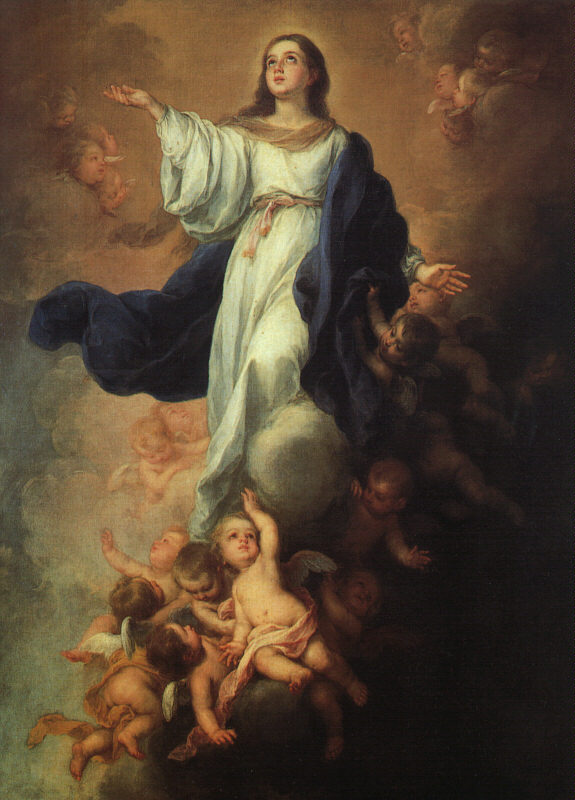
The Assumption of Mary, Soul and Body

(Solemnity of the Assumption-Year B;This homily was given 14 & 15 August, 2006, at Our Lady of Mercy, East Greenwich, R.I.; read Revelation 11:19-12:10 and Luke 1:39-56)

Have you ever noticed how many times, in the course of an average Mass, we change the position of our bodies? When we begin we stand for the opening prayer. We sit for the readings, stand for the Gospel, sit back down, kneel before Christ in the Eucharist, stand . . .

The reason we do so is because we come to Mass to worship God, and that is not just a spiritual practice. We do not worship God in prayer only. We are not just spiritual people; we are physical, as well. We are made up of body and soul, and when we respond to God we do so with our souls and our bodies.

That reality has everything to do with the feast we celebrate today: The Assumption of the Blessed Virgin Mary, body and soul, into heaven. We do not believe that Mary is in heaven spiritually. She is not present in heaven in the exact same way as St. Peter and St. Paul, or St. Francis of Assisi. All of those canonized saints are believed to be in heaven, but their bodies are still here on earth. They will one-day experience—along with us—the resurrection of the body. With Mary, it is different.

At the end of her earthly life, Mary was assumed, body and soul, into heaven. There is no grave in Palestine, or anywhere else for that matter, with Mary’s name on it. She is eternally in heaven, body and soul, forever worshiping her God and ours.

If we think about that for a moment, it really is the only “end” for Mary that makes sense. She who so completely gave herself to the Divine plan, so totally said, “yes” to God that she literally made Him present, physically, in this world. God, who is infinite and eternal, who exists invisible and outside of time and space, suddenly becomes physically present on this earth through the body of Mary. It is only fitting that Mary’s body, therefore—not just her soul but her body, as well—should be brought up into heaven at the end of her earthly life.

As we celebrate the feast of Our Lady, assumed into heaven, we ask God for the same grace to make Him present in this world, like Mary. We ask for that same cooperation with the Divine plan that makes Christ physically present to those around us.

The world we live in, so torn apart by violence, war, division, cynicism, a lack of faith, nonetheless still longs desperately for the touch of Christ and to see the face of God. Will you and I be the ones to bring the presence of God to those who are seeking the body of Christ?

St. Teresa of Avila, the great Spanish mystic and Doctor of the Church, has a beautiful way of expressing her incarnational spirituality. She writes:

Christ has no body now on earth but yours; no hands but yours; no feet but yours. Yours are the eyes through which the compassion of Christ must look out on the world. Yours are the feet with which He is to go about doing good. Yours are the hands with which He is to bless His people.

Who are the people in your life and mine who are in need of that blessing? Who are the ones in need of a kind word of encouragement, or someone to listen to them in their deepest need?

Might we be the voice of Christ in their lives, or that listening ear trying to understand. Might we respond to God, and to those around us, body and soul, so that we may one day be raised up again, body and soul, into heaven with Mary our Mother, and her Son, forever.

Sunday, August 13, 2006

Jesus, The Performance-Enhancing God

(19th Sunday in Ordinary Time-Year B;This homily was given 12 & 13 August, 2006, at Our Lady of Mercy, East Greenwich, R.I.; read 1 Kings 19:4-8 and John 6:41-51)

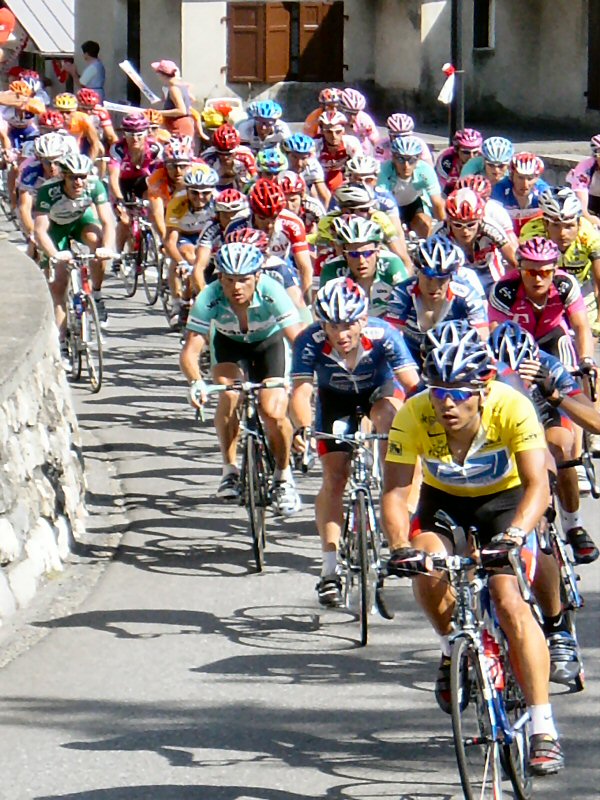
Whether you follow professional cycling or not, I am sure many of you are aware of the controversy that has surrounded that sport recently. American cyclist Floyd Landis appeared to have won the most elite of all races, the Tour de France . . . only to have that victory called into question after being tested for performance-enhancing drugs.

Unfortunately, cycling is not the only sport to suffer from that same controversy. The use of steroids in Major League Baseball, track and field, and other sports has caused many to call into question the credibility of some of the most famous athletes.

The sad reality is that the use of performance-enhancing drugs is not only unfair; it’s entirely unnecessary. There are natural means of preparing our bodies to function well and compete well, no matter what sport we play.

As you may already know, I myself am a runner; that is my sport of choice (the Runner’s Club still meets here on Saturday mornings at 6:30 am, if you are thinking about joining up!).

An essential part of any kind of training—for running or anything else—is diet: what we eat and what we drink, not performance enhancing drugs but regular, basic food and water.

One of the great tragedies of any marathon or major race is the sight of those who have not eaten well or drank enough water before the race. They often melt down and collapse on the side of the road, exhausted, dehydrated, unable to finish the race.

That is something like what we find in the first reading this morning. In the 1st Book of Kings, the prophet Elijah collapses on the side of the road, sits under the broom tree, and prays to God for death! It’s not a very encouraging picture, to say the least.

Now, it is important for us to look at this scene in its proper context. Elijah is without a doubt one of the greatest spiritual athletes in the entire Old Testament. Remember, Elijah is the one who went head to head with the King of Israel, Ahab, and his wretched wife, Queen Jezebel, on many different occasions. Time and again he risked his very life by calling them to task for their lack of fidelity (1 Kings 17-21). Elijah went up against the 450 prophets of Baal, challenging them in that famous contest of faith on Mount Carmel, and defeated them (1 Kings 18:16-40).

But even the greatest of all athletes, including the spiritual ones, have limits. This morning Elijah discovers his limits, and he can no longer go on. But when he comes to the end of himself—the end of all his strength, the end of his own resources, the end of his own power—it is then that God enters in and breathes new life into the prophet Elijah.

The angel of the Lord touches him, and orders him: “Get up and eat, else the journey will be too long for you!” (1 Kings 19:7). Elijah is given a hearth cake (whatever that is!) and a jug of water. After eating and drinking, we are told that, “strengthened by that food, he walked forty days and forty nights to the mountain of God, Horeb” (1 Kings 19:8).

Forty days and forty nights! Now that’s much, much longer than any marathon. And that’s the very point of the story: God is able to give us the strength we need to get through any of the difficulties we face in life. When we come to the end of our own strength, our own resources, our own power, it is then that God enters in and gives us supernatural help to get us back into the race. He gives us divine food that restores us and brings us new life.

In the Gospel this morning, Jesus says:

I am the bread of life . . . this is the bread that comes down from heaven so that one may eat it and not die . . . whoever eats this bread will live forever; and the bread that I will give is my flesh for the life of the world.
—John 6:48-51

The Eucharist is that supernatural help, the bread from heaven, that God gives to us in our deepest need. We do not need to take performance-enhancing drugs to help us in the contest of life. We follow Jesus Christ, the performance-enhancing God! He gives us Himself—body and blood, soul and divinity—in the Holy Eucharist.

For centuries the Church has always taught us that the Eucharist is “the source and summit of the Christian life” (Lumen Gentium, #11). Pope John Paul II says that “The Church draws her life from the Eucharist” (Ecclesia de Eucharistia, # 1).

One of the sad realities of our times is that many are choosing not to partake of that bread, and not to drink the cup of the blood of Christ. A Gallup Poll taken last April showed that Rhode Island was fourth from the bottom out of all 50 states in church attendance, at 28%. Given that we are the most Catholic state in the country, that is a pretty sad figure.

If the Eucharist is the source of Christian life, then where are those who do not come to Mass receiving their strength? If the Eucharist is the high point of the Christian life, then the majority of Christians in our state are settling for something a whole lot less than the summit and goal that God has offered.

Perhaps the most tragic consequence of all is that so many people today find themselves exhausted, unfulfilled and longing for a better life than the one they’ve got. Like the prophet Elijah, they sit on the side of the road, all but ready to give up. The one thing they lack, the one thing they long for most of all, is the very thing God gives to us this morning: Himself.

This morning we are touched not by an angel; we are not given a hearth cake and a jug of water. We are touched by Christ, and given His body and His blood, to strengthen us on our way home to Him.

Might we grow to appreciate more completely in our lives this precious gift that God offers us in the Holy Eucharist. And might we make it our mission and passion in life to invite others back here to this banquet, where God alone can fill them and give them new hope.

Sunday, July 30, 2006

Leftovers

(17th Sunday in Ordinary Time-Year B;This homily was given 29 & 30 July, 2006, at Our Lady of Mercy, East Greenwich, R.I.; read 2 Kings 4:42-44 and John 6:1-15)

One question that I am frequently asked as a priest is: “Who does the cooking for you at the rectory?” And I never hesitate to tell them that we have a gourmet cook who takes care of the meals at Our Lady of Mercy! He also happens to be the pastor, Fr. John Lolio.

“But what about when he’s not there?” people will often continue. “What do you do then?” Truth be told, I practically live on leftovers, on what is left-over after the meals the pastor has cooked.

Now I know what you’re thinking: Leftovers? How could anyone live on leftovers? But make no mistake about it; the leftovers I eat here are at least as good as your average meal at Capriccio’s, or any restaurant up on Federal Hill.

In our 1st reading this morning, as well as in the Gospel, we hear about leftovers. In the passage we just heard from the 2nd Book of Kings, the prophet Elisha instructs his servant to feed the crowd of 100 people with just a small amount of bread. The servant, of course, is more than a little skeptical. Nonetheless, Elisha says to him:

“Give it to the people to eat. For thus says the Lord, ‘They shall eat and there shall be some left over’.”
—2 Kings 4:43

And so there was.

In the Gospel we hear of the great miracle of the loaves and fish, how Jesus feeds 5,000 people with only five loaves of bread and just a couple of fish. St. John tells us that:

When they had had their fill, [Jesus] said to his disciples, “Gather the fragments left over, so that nothing will be wasted.” So they collected them, and filled twelve wicker baskets with fragments from the five barley loaves that had been more than they could eat.
—John 6:12-13


What do these passages, these miracles tell us about God? They reveal to us that God never works in our lives for our sake only. When God performs miracles and pours out His grace and His mercy, He does so in a super-abundant way. There’s never just enough; there is more than enough. When God acts in our lives, there are leftovers.

I would suggest that there are three things God makes known to us in these miracles, three things God reveals when it comes to His super-abundant love at work in our lives:

Firstly, God is able to perform miracles and do amazing things; but He expects us to bring at least something to the table. Jesus feeds 5,000 people, but not without the five loaves and two fish from that small boy who simply gave to Jesus what he had.

What are we bringing to this Mass this morning? Have we considered what God wants us to bring and place on this altar? What are we bringing to our relationship with God? Are we giving Him the time and space that He needs to accomplish what He wants to in our lives and in the lives of those around us?

Perhaps all we can offer to God this morning is our suffering, our sacrifices. God can do miracles with that gift beyond what we could ever imagine. We need to give God what we can—even if it seems small and as insignificant as a few loaves and a couple of fish—we simply give God what we’ve have, and trust in Him to do the rest.

Secondly, we can see in the Gospel that Christ saves a plate of leftovers for each one of us. There were twelve apostles there that day who witnessed that miracle with Christ. When all was said and done, they collected the fragments and placed them in twelve wicker baskets, one for each of them.

God reserves one wicker basket for each and every one of us here today. As He pours out His super-abundant love in our lives here at this Mass, He wants to strengthen us and transform our lives. But He also wants to make us His instruments well beyond these walls.

He wants us to bring the leftovers to those around us most in need of His love and mercy. Who are the people God wants to feed with the mercy and grace He pours out upon you and I today? Might we be faithful in acting on that grace.

Which brings us to the final truth God makes known to us in this miracle of the loaves and fish: that we need to act on and respond to the grace God gives us, as He gives it. Leftovers are good a day later, maybe even two. But any longer than that, and they go bad, they get spoiled; we have to throw them out.

We must not waste time when it comes to the things of God. Who is that person we need to write a letter to or get into contact with? Where do we need to make a phone call, or offer a kind word of encouragement? How is God calling us to respond to Him today? Don’t let the leftovers get spoiled in your life.

We come to this Eucharistic table this morning, and Christ Himself will perform yet another miracle with bread and wine, transforming it into His very body and His own blood. He feeds us in this place with the gift of Himself. But He expects us to feed others and make His love, His mercy, and His presence known in the world around us.

Might we allow Him to do that by responding well to the graces and the leftovers He gives us here; may the people in your life enjoy those leftovers at least as much as I enjoy the ones Fr. Lolio cooks here each week.

Sunday, July 23, 2006

"Let them eat . . . the Body of Christ."

(16th Sunday in Ordinary Time-Year B;This homily was given 23 July, 2006, at Our Lady of Mercy, East Greenwich, R.I.; read Jeremiah 23:1-6 and Mark 6:30-34)

You might remember from your old history lessons that there were many different reasons for the French Revolution. In addition to the economic problems that plagued France in the 18th century, there was also a tremendous scarcity of food and great unrest among the people.

All of these difficulties were brought before the queen at the time, Marie Antoinette. And history buff or not, all of us are familiar with her famous response to the dire circumstances of her people. To the report that the people had no bread, she replied, “Then let them eat cake.”

That very same callousness, that same lack of care for those in need is what we find in the first reading this morning. The people of Israel were plagued with bad leadership, bad shepherds. God responds to that sorry situation through the words of the prophet Jeremiah:

Woe to the shepherds who mislead and scatter the flock of my pasture . . . You have not cared for them, but I will take care to punish you for your evil deeds.
—Jeremiah 23:1-2

God comes out very strongly against those shepherds who care not for the flock, but only for themselves. But more than that, He promises that He will give them shepherds who will lead and care for the people; in fact, He himself will be their shepherd. Jeremiah prophesies about the Messiah, the king who is to come:

I will raise up a righteous shoot to David; as king he will reign and govern wisely. He shall do what is right and just in the land.
—Jeremiah 23:5


The Messiah, of course, is Christ Himself, who is the very essence of what a Good Shepherd and King should be. He rules over His people with the care and concern of God Himself; He is the one who will bring them to green pastures and lead them beside the still waters; He is the one who restores their souls (Psalm 23).

And it is Jesus Christ who says to the people not “Let them eat cake,” but “Let them eat my body, and let them drink my blood.” God responds to our hunger and thirst for a better life than this, He responds to the deepest needs of our souls, with the gift of Himself—body and blood, soul and divinity—in the Eucharist.


We can become so familiar with the Eucharist, so used to hearing of the Last Supper and the words we listen to at Mass each week—the bread Christ breaks and gives to the disciples, the cup that will be poured out—that we can sometimes forget what it all really means to begin with.

Christ is referring—at the Last Supper—to the cross. It is His very body that will be broken on the cross in order to make us whole. It is the blood of Christ poured out on Calvary that brings for us the forgiveness of sins.

But the cross and the Last Supper are not the only time these things happened. The entire life of Christ is one that is broken and poured out for others; He is Eucharistic in every aspect of His life and mission. The Messiah is the one who pours Himself out completely for the people.

We see that in the Gospel this morning; Jesus invites the disciples to come away and be at rest. They are exhausted and He leads them to a quiet place away from the crowds . . . only to find that the crowds have arrived there already! Far from sending them away, He embraces them and teaches them about the kingdom of God. As St. Mark says:

His heart was moved with pity for them, for they were like sheep without a shepherd.
—Mark 6:34

And so Christ—our Eucharistic Lord—pours Himself out once again to feed the people and meet their every need.

As Christians and those who will one day reign with Christ, we are called—here on this earth—to serve with Him and follow in His steps. As we gather here for this Eucharist, we are given the strength to do that.

On this altar the body of Christ is broken and His blood is poured out as we celebrate anew the sacrifice that set us free and made us whole again; the sacrifice of the Mass is the sacrifice of the cross itself. But our worship and communion cannot end here. We are called to share in the very life of Christ—in His sacrifice and in His life of service.

Might we go forth from this Church this morning and spend ourselves for others as Christ spent Himself for us. May we truly become, this week, bread broken to feed those who hunger for God, and the blood of Christ poured out for the life of the world.

Sunday, July 16, 2006

Called

(15th Sunday in Ordinary Time-Year B;This homily was given 16 July, 2006, at Our Lady of Mercy, East Greenwich, R.I. and Ss. John & Paul, Coventry, R.I.; read Amos 7:12-15, Ephesians 1:3-10 and Mark 6:7-13)

One of the main themes of the readings for this weekend is that of vocation. In our first reading Amos is called by God to prophesy to the people of Israel; in the Gospel Christ calls the 12 Apostles to Himself, gives them His own authority, and sends them out. These were special people who were given a specific vocation, a specific call from God.

But it is St. Paul who points out, in the second reading this morning, that we are all called; all of us have been chosen by God and given a vocation in this world. He says that:

God chose us in Christ before the foundation of the world, to be holy and without blemish before him.
—Ephesians 1:4


It is the universal call to holiness (CCC, #825). We are called by God to live differently than those around us, to follow Him in holiness of life in the midst of the world we live in. This call—to be holy as God is holy—is at the heart of every vocation. Whether we are priests, religious or married, the call to holiness is one that continues to re-echo throughout our lives and in the midst of our own vocation.

But let’s be honest; it is not easy to hear that call in the world we live in. There are so many distractions, so many things that pull us in a hundred different directions. In a culture so filled with images, voices and distractions, it can be very difficult indeed to hear God’s voice and answer His call to holiness.

A friend of mine is a priest who takes the call of God very serious in his life. Every year he goes to a different Benedictine monastery for retreat; a chance to get away and be alone with God. One year he arrived at the monastery and there was a businessman there on retreat who was—for all intents and purposes—married to his cell phone.

He carried it with him everywhere, and he answered it whenever and wherever it would ring. It went off in the chapel, and he would go outside and talk. It went off in the refectory, and he would stop eating to answer it. He walked up and down the corridors of that monastery, constantly talking on the phone.

Finally, my friend found a small balcony on the second floor. He went out there and realized it was the quietest place in the monastery. Unfortunately, it also had the best reception! Sure enough, out came cell phone man, yapping away! It was at that moment that my friend began to realize that God was trying to speak to him through that man on the cell phone; and it was crystal clear exactly what God was trying to say.

He went back into the monastery, and into the chapel, and he prayed:

“Almighty God, make me that open to Your call in my life. As open as this man, who cannot go 5 minutes without talking to this person on the other end, and listening to what they have to say. Make me that open to Your call and Your voice in my life.”


When is the last time that God called us and spoke to us in the midst of our own vocation? What are the things that keep us from hearing God’s call to live a holy life in Him?

I would suggest three things this morning that can help keep the lines of communication open between God and us, ways that we can focus more completely on that call to holiness as it re-echoes in our own particular vocation each day.

Firstly, we need to be people of prayer. God can reach us on the cell phone, our home computer, or through an ipod if He wants to; but He prefers to talk to us through the spiritual discipline of prayer. Do we set aside a specific time each day in which He can do that? It doesn’t necessarily have to be a long time, but there should at least be some time each day that we are quiet and alone with God.

Secondly, we need the sacramental life of the Church. God wants to sanctify us—to make us holy—through the grace of the sacraments He has given to the Church. We have been given the very Body and Blood of Christ in the Eucharist to sustain us and help us remain close to God. We have the grace of reconciliation when we are in need of forgiveness; the chance to begin again with Christ in freedom and joy. Might we take God up on these opportunities and draw closer to Him through the sacramental life of the Church.

And finally, we can answer God’s call to holiness most completely when we allow God to do whatever He wants to do in our lives. There is a great story about a bishop who was ordained in St. Peter’s Basilica in Rome. He was in the procession leading out, and suddenly a little nun came towards him, shaking her finger at him.

Normally you don’t stop in the procession at St. Peter’s; especially not since the Pope is the one at the end of that procession! But this bishop did stop, because the nun shaking her finger at him was Mother Teresa of Calcutta. Suddenly he heard her say to him (finger still shaking): “Give God permission to do what He wants in your life.”

He had absolutely no idea what she was talking about . . . until he went back to his diocese and began his ministry as a bishop, and realized how truly difficult it was to let go of his own desires, his own plan, his own will, and let God do what He wanted to do.

It’s not easy for any of us. But when we are willing to spend time with God each day in prayer, when we remain connected to Him through the sacramental life of the Church, and when we give Him permission to use us however He wants to, then our lives cease to be ordinary or mundane, or just a series of functions we perform or various hats we wear. We recognize instead that our lives truly are a vocation in the fullest sense of that word. We begin to live anew a fruitful vocation in the life of the Church and in the world around us.

Sunday, July 09, 2006

The Prophetic Office of Christ

(14th Sunday in Ordinary Time-Year B;This homily was given 9 July, 2006, at Our Lady of Mercy, East Greenwich, R.I.; read Ezekiel 2:2-5 and Mark 6:1-6)

The Scripture readings for this weekend give us a glimpse of the vocation and the mission of the prophet. Prophets were a major part of the life of the people of Israel. One third of the Old Testament consists in the prophetic works; we hear of the life and ministry of prophets like Isaiah, Jeremiah, or Ezekiel, whose call is described in our first reading this morning.

The prophet, essentially, is one who speaks for another. The prophet of Israel is one who speaks for God; he doesn’t give his own message, but carries God’s message, God’s word. In Ezekiel, God says to the prophet:

You shall say to them: ‘Thus says the Lord God!’
Ezekiel 2:4

That phrase—Thus says the Lord God—echoes throughout the Book of the Prophet Ezekiel. Over and over again he repeats the message of God to the people of Israel.

And the message of Ezekiel is the same message we find in all of the prophets. They are constantly calling the people back to fidelity with God, and faithfulness to the covenant He had made with them. But more than that, they also carried the message of God’s love and His plan for the future of Israel; they brought to the people a message of hope.

It has been said that the Book of the Prophet Ezekiel begins with doom and ends with consolation and hope. He addresses the people during one of the darkest times in the history of their nation, but the book ends with a restored Israel, and a New Jerusalem.

That is the message of the prophets; and it is the background for the Gospel we heard this morning. Christ enters the synagogue at Nazareth with that message of fidelity to God and a vision of hope. And it is precisely as prophet that He is rejected. He says as much in the Gospel:

A prophet is not without honor except in his native place and among his own kin and in his own house.
—Mark 6:4

Christ as prophet is not something we usually recognize ourselves. We see Him as the Son of God, for that is who He is; or as the second person of the Blessed Trinity, and so He is. But Christ is the quintessential Prophet, as well. Not only does He carry God’s message and God’s word; He is that message, He is the Word itself (John 1:1,14).

St. John of the Cross says that in Christ, the Word made flesh, God has already told us everything we could possibly need to know:

In giving us His Son, His only Word (for He possesses no other), He spoke everything to us at once in this sole Word—and he has no more to say.
—Ascent of Mount Carmel, II, Ch. 22, #3


Everything that God wants to say to us about faithfulness and truth is found in Christ. Everything that God wants to say about grace and mercy and forgiveness is found in Christ. Everything that we need to know about hope and eternal life is found in Christ.

That is why He is the quintessential prophet; there will never be a prophet on this earth greater than He. But we believe that there will be prophets as effective and as powerful as Christ. In fact, we believe that God has called us to be those prophets!

Does that sound a little over the top to you? Nonetheless, the teachings of our faith and the Second Vatican Council speak about how we—as baptized members of the Body of Christ—are called to share in the prophetic mission of Christ. We are called to be witnesses speaking for God in this world.

The same Christ who spoke in the synagogues and in the streets of Jerusalem still desires to speak to the people of our own day and age, and He wants to use us to do it. We are called to be the voice of Christ in the world we live in.

But you are probably asking yourself: How could I ever be an Ezekiel? How could I possibly be a Jeremiah or an Isaiah? Without God’s help it is impossible. But God gives us the grace and strength we need to make His message heard.

The Second Vatican Council spoke of two ways that happens. The first is something all of us are quite familiar with: The Christian Family. The family focused on Christ is—in and of itself—prophetic. Marriage and family life is the place where Christianity can flourish. It is where forgiveness and the will to overlook faults and failures is practiced. It is where Christians find the strength to push forward through the difficult times, holding onto a life of faith and trust in God. The Council Fathers go on to say:

In such a home husbands and wives find their proper vocation in being witnesses of the faith and love of Christ to one another and to their children. The Christian family loudly proclaims both the present virtues of the Kingdom of God and the hope of a blessed life to come. Thus by its example and its witness it accuses the world of sin and enlightens those who seek the truth.
Lumen Gentium, #35


And secondly, we are called to be prophets in this world not only through the Christian family but also by bearing witness to Christ in the ordinary circumstances of life.

God wants to reach out and touch the people all around us who never come to this Church. He wants to reach those with whom we work, those we see in the market or at the mall, men and women we encounter on a daily basis who have never heard or truly understood the Gospel message.

God wants to tell them about His mercy and forgiveness, His message of hope for them to spend all eternity with Him. And He wants us to be the ones that bring them that message by the way we live (our example) and through the words we use. St. Francis of Assisi was known to say: “Preach the Gospel always, and use words when necessary.”

Let us be faithful in that prophetic mission this week, and not be concerned with acceptance or rejection; failure or success. We are simply called to be the messengers, and the results belong to God.

As we heard in the Gospel this morning, Christ was rejected in that synagogue in Nazareth. Ezekiel and most all the other prophets were rejected at one point or another. We are not called to gauge our own success as prophets. We are simply called to be faithful.


But in our lives this week, might it be said about us what God says about the prophet Ezekiel in our first reading:

“Whether they heed or resist . . . they shall know
that a prophet has been among them.”
—Ezekiel 2:5

Sunday, July 02, 2006

Pathos and Sym-pathy

(13th Sunday in Ordinary Time-Year B;This homily was given 2 July, 2006, at Our Lady of Mercy, East Greenwich, R.I.; read Mark 5:21-43)

One of the most universal of all human experiences—something all of us encounter in our lives—is that of suffering. Whether it be the physical suffering of a disease or illness, or perhaps mental suffering, or even the spiritual suffering, that pain of the soul we feel at times, none of us goes untouched in this life by suffering.

In particular, as followers of Christ, we are called to have compassion on those who suffer, to help them carry their burdens; or to allow others to help and assist us when we are suffering in our own lives.

The Greek word for suffering is pathos, and it is where we get the word sym-pathy; to sympathize with another person is to enter—in a certain sense—into their pathos, into their suffering. It means that we are drawn “out” of ourselves in order to help others by our prayers, our sacrifices, and our love.

In the Gospel this morning, Christ teaches us the meaning of pathos and sympathy in the most dramatic of ways. We are introduced to a man named Jairus, a synagogue official whose daughter is at the point of death. Who among us could not sympathize with this man? In a moment of desperation, he pleads with Christ to come heal his little girl and Jesus quickly responds to that request.

But along the way a very strange thing happens. Jesus suddenly stops right in His tracks and begins to ask the crowd who it was that touched Him. It is a question that the disciples are somewhat puzzled by; but what could Jairus have been thinking at that moment? He could be thinking only one thing, over and over again:

My daughter. My daughter. Who cares who touched you? We need to get back home to my daughter.

And suddenly Christ turns to the woman in the crowd who has just been healed, and says to her the one thing that would have left Jairus, that synagogue official, speechless. He looks upon that woman with great love and He says to her: Daughter!

“Daughter, your faith has saved you. Go in peace.”
—Mark 5:34


It is one of the only times in all four Gospels that Jesus uses that word: daughter. He speaks it now to a woman who is at least His own age. And it is a word that Jairus would never forget for the rest of his life. Because on that day two daughters were healed: this stranger who had only been an interruption and a distraction a moment ago, and his own daughter whom Christ would literally raise from the dead.

Jesus often reaches right into our own suffering—into our own pathos—and opens us up to the suffering taking place all around us. In a world of pathos, it is Christ who teaches us the true meaning of sympathy, what it means to have compassion.

When I was in my first year of seminary studies, one of my classmates came to my room and shared with me the tragic news that had just come over the TV station. It was April 20, 1999, and he told me that there had been a terrible shooting at a high school in Colorado. The name of the school, of course, was Columbine High School.

My classmate asked me if I would like to join some of the other seminarians in the chapel; they were going to pray the rosary for the people involved in the Columbine tragedy. At the time I was very busy, and so I thanked him for the invitation and told him I would say a prayer on my own. It was sad news, but not something that really effected me; it seemed like just another tragic event, another tragic story for the evening news.

It wasn’t until several days later, as I was reading a newspaper article about the high school students who were killed, that I began to see something more than just another tragic headline.

That article included pictures of all the students who had died that day, and a small biography describing each one. One of them, Rachel Scott, for whatever reason, seemed to stand out among all the others. There were just a few small sentences about her, some basic information: that she was a devout Christian who was a part of a prayer group in town, that she loved her red sports car, that she enjoyed being in the school play.

Suddenly, as I read that article, I felt the most profound, almost overwhelming, sense of sorrow. I began to realize that this was more than just another story or news event. This was a seventeen-year-old girl whose life had been taken away from her. This was somebody’s daughter, somebody’s whole life. It caught me completely by surprise, and I began to pray daily for her family, that God would help them through this terrible loss.

About one year later, I was in Barnes & Noble and I came across a book with a young girl on the cover who seemed to look familiar. The book was called “Rachel’s Tears,” and it was about Rachel Scott from Columbine High School. Her parents had written that book in the months following her death.

I wondered how many other people, like me, had felt called to pray for Rachel Scott’s parents as they struggled through that loss; how many people had been offering prayers and sacrifices for them as they wrote that book about their daughter and her tremendous faith and love for God; the way she had changed the world she lived in and continued to change it even after her death.

God calls us to recognize the suffering that we see so often in the world around us. But more importantly, He allows us to do something about it. Who are the people we need to sympathize with in our lives and in our world today? Where can our prayers, our sacrifices, and our love make a difference for those who need it most at this time?

Might we freely offer to God all that we can to support those who are suffering, and take great consolation knowing that countless people—perhaps even at this moment—are already sympathizing with us and supporting us in the crosses that we carry each day.

Sunday, June 25, 2006

Amicitia Dei-Friendship with God

(12th Sunday in Ordinary Time-Year B;This homily was given 24 & 25 June, 2006, at Our Lady of Mercy, East Greenwich, R.I.; read Mark 4:35-41)

When you think of heaven, what kind of images usually come to mind? I think the general impression most people have when they think of heaven is of a place of happiness, a place of eternal rest and peace; at the very least the absence of pain.

The Christian faith, however, is much more specific than that when it comes to heaven and eternal life. Certainly we believe in a place of eternal happiness, a place where there will be no more pain, where “every tear will be wiped away” (see Revelation 21:4).

But more than that, heaven for the Christian is above all a relationship. St. Thomas Aquinas defines that relationship as one of friendship: He says heaven is amicitia Dei, friendship with God.

If we think about that for just a minute, it really is quite remarkable. The living God, the God of the Universe, wants to live in friendship with us: in a relationship of love, trust, faithfulness, intimacy. That relationship is one that begins here in this life and continues into eternal life. Friendship with God. That is the call of every baptized Christian.

Our Gospel this weekend gives us the opportunity to reflect on that relationship and to see more clearly Jesus Christ, the one who establishes that friendship with us. It begins, in this morning’s Gospel, with an invitation. St. Mark describes it this way:

On that day, as evening drew on, Jesus said to his disciples:

“Let us cross to the other side.”

Leaving the crowd, they took Jesus with them in the boat just as he was.

—Mark 4:35-36


From the earliest days of Christianity, the Church has often been described as a ship or a boat that carries the souls of the faithful to salvation. The main part of any church building is called the nave; it is the place where the congregation sits. We get that name from the Latin word for boat: navis.

The disciples in the Gospel are invited by Christ to leave the crowd behind and to get into the navis, into the boat with Him.

It is Christ who takes the initiative; He is the one who invites them to accompany Him on that journey “to the other side.” But they are the ones who must make a choice. They can remain on the shore with the crowd or they can get into the boat with Christ. But they cannot do both.

Friendship with God, that relationship we share with Christ, is also God’s initiative. He is the one who calls us into that friendship. But we, too, must make a choice. Like those first disciples, we must choose to remain with the crowd or to get into the boat with Christ.

We can have friendship with God or we can have friendship with this world. But we cannot have both. The New Testament Letter of James speaks of this in the strongest of terms. St. James says:

Do you not know that friendship with the world is enmity with God? Therefore whoever wishes to be a friend of the world makes himself an enemy of God.
—James 4:4

The way God calls us to live is very different from—and often completely opposed to—the crowd mentality we find in the world around us. The teachings of our faith on morality, marriage and the family, the sanctity of every human life, born and unborn, and so many other aspects of life, is radically different from the way the world sees these things. We cannot live in friendship with both worlds at the same time. It is impossible.


God has established the Church as the place where He teaches us “how to live in this passing world with our heart set on the world that will never end” (Preface II of Lent).

The Church is the navis, the ship that God has built to bring us home to heaven. And so, True friendship with God is first and foremost a friendship rooted and grounded in the Church.

But more than that, it is also a friendship that is nurtured in conversation with God, a friendship nurtured in prayer. We see the great need for this ongoing conversation with God in the lives of the disciples this morning.

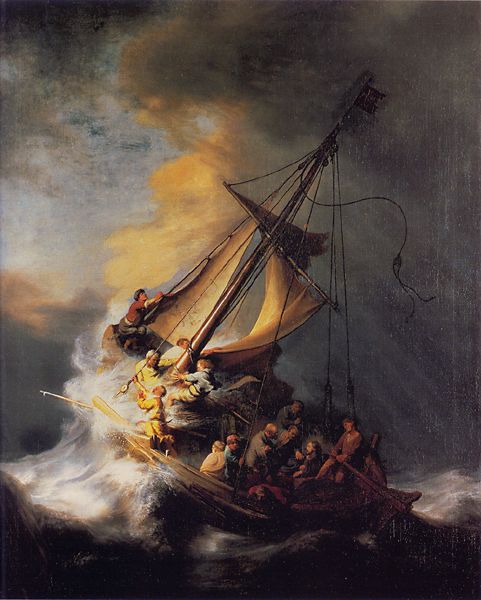
Their boat is being tossed around in the midst of a violent storm, and all the while Jesus is asleep on a cushion! Suddenly they wake Him and ask: “Teacher, do you not care that we are perishing?” (Mark 4:38).

It is a very good question. Who among us has not asked that same question, when Jesus seems to be asleep in our lives? Haven’t we all experienced times when God seems to be “asleep at the wheel” and we feel very much alone.

But the question isn’t whether or not Jesus cares. Of course He cares for the disciples in that boat. He cares for them infinitely so. The question we need to ask is: What took them so long to finally wake Him up in the first place?!

Jesus is not asleep because He doesn’t want to be bothered by their trials and difficulties. He is asleep because they have not woken Him up and made Him more completely a part of their lives.

The disciples could have woken Him up while the sun was still setting, and He would have gladly shared that moment with them. They could have expressed their concern about the storm clouds way off in the distance; they could have spoken with Him about the winds that seemed to be picking up. But they didn’t do that. This morning we need to ask: Why not?

Jesus wants to be bothered. He wants us to grow in that conversation with Him. Yes, we should go to Him when the major storms come into our lives. By all means we should go to Him then. But we should also seek to grow in friendship and intimacy with Him all throughout our day, and all throughout our lives. Friendship with God is a friendship that is nurtured in prayer.

This morning, as we reflect on this Gospel passage, we can ask ourselves: how is our friendship with God at this time? Is it a friendship rooted and grounded in the Church? Are we in the boat with Christ or do we have one foot in the boat and one foot on the shore? We cannot live in friendship with God and in friendship with the world. Ultimately we must make a choice.

And finally, is our friendship with God being nurtured in that daily conversation with Him? Do we find ourselves conversing with God throughout the day or is Jesus asleep in our lives, asleep in our boat, as we attempt to battle the storms of life alone?

Christ comes to us this morning in word and sacrament, to strengthen our faith and deepen our friendship with Him. Might we find that friendship growing and blossoming into something truly beautiful and life giving in the days ahead, as Christ continues to prepare us—even now—for that eternal life of friendship with God in heaven.

Sunday, June 18, 2006

Corpus et Sanguis Christi

(Solemnity of the Most Holy Body and Blood of Christ-Year B;This homily was given 18 June, 2006, at Our Lady of Mercy, East Greenwich, R.I.; read Exodus 24:3-8, Hebrews 9:11-15 & Mark 14:22-26)

Are you squeamish when it comes to the sight or even the mention of blood? Hopefully not, because blood is one of the main themes of the feast we celebrate this morning. It is in every one of our readings. There is blood in the prayers we offer for this Mass, and before our celebration is through there will be blood in the chalice on the altar.

Today we celebrate the Solemnity of the Body and Blood of Christ. Not just Corpus Christi—the Body of Christ—but Corpus et Sanguis Christi, the Body and the Blood of Christ.

One common thread we find running throughout the Old Testament is that of blood. To shed the blood of another carried the most severe of penalties; and the offering of blood as a sacrifice became a regular part of worship and faith of Israel. For the Jewish people especially, blood was considered to be a sacred sign of life itself (Leviticus 17:11,14; CCC, #2260). We find that powerful sign in the first reading this morning.

God makes a covenant with the people of Israel, the Ten Commandments. The people agree, not once but twice, to follow that covenant, to obey the commandments of God.

And as an outward sign of this covenant between them, Moses pours blood first over the altar (since it was God who initiated that covenant), and then he sprinkles the rest on the people (literally, he pours blood over them), saying: This is the blood of the covenant that the Lord has made with you (Exodus 24:8).


Sacrifice and the shedding of blood was a sign that would be repeated over and over again as the people of Israel renewed the covenant God had made with them. They would offer the sacrifice of bulls, of goats, and of lambs, as an outward sign of their fidelity to God.

But why so much sacrifice? Why the shedding of so much blood? It is only with the coming of Jesus Christ that we begin to see that the entire Old Covenant (and all of the sacrifices and shedding of blood that took place for the renewal of that covenant) was really just a preparation for the one sacrifice of Christ and for the shedding of His blood on the cross.
We hear in the second reading this morning:

When Christ came as high priest . . . he entered once for all into the sanctuary, not with the blood of goats and calves but with his own blood, thus obtaining eternal redemption.
—Hebrews 9:11-12


It is the blood of Christ and His sacrifice that renews us and gives us new life. It is the blood of Christ freely offered on our behalf that obtains for us the forgiveness of sins. As Archbishop Fulton Sheen puts it,

“The higher the life, the more precious the blood. When you come to the life of Christ, who sheds His blood, you get the total remission of sin.”


That is what God was preparing the people of Israel for. That is what He was preparing each of us for: the New Covenant written in the blood of Christ. Today, and at every Mass, we renew that covenant as we hear again the words of Christ from the Gospel, when takes bread and says:

“This is my body”


Then he takes the cup and says:

“This is my blood of the covenant, which will be shed for many.”


We are here today to offer the one eternal sacrifice of Christ to the Father; then here from this altar we will receive the body and blood, soul and divinity of Jesus Christ, the Son of God.

Do you believe that? Do you ever doubt that the body and blood of Christ are truly made present here in this Church at every Mass? It is not an easy thing to grasp. In fact, without faith, it is impossible.

There is a story about a very devout and holy priest in the 13th century named Peter of Prague. His greatest struggle as a priest was that he could not believe Christ was truly present in the consecrated host.

He even decided to make a pilgrimage to Rome, asking for the grace of God to help him with his constant doubts about the real presence of Christ in the Eucharist. On his way to Rome he stopped in the small Italian City of Bolsena, where he celebrated Mass in the Church of St. Christina.

In the middle of that Mass, immediately after he had spoken the words of consecration (This is my body . . . this is the cup of my blood . . .), blood began to seep from the consecrated host and trickled down his hands and onto the altar. Obviously, he was a bit shaken up by that experience. He interrupted the Mass and asked those present what he should do.

Pope Urban IV, the pope at that time, was only one city away, in Orvieto. And so they brought Fr. Peter to that city, where the pope listened to him and began to investigate all that had happened.

One year after that event, Pope Urban IV instituted a feast honoring the Sacred Body and Blood of Christ. He called it Corpus Christi, and it is the feast we are celebrating today.

Miracles happen. We know and believe that as people of faith. Some of us, in our own lifetime, may witness events like the Eucharistic Miracle at Bolsena. I have been there three times myself for the feast of Corpus Christi, and participated in Mass celebrated at that very altar; I have seen the relics: the corporal stained with blood and the marble from the floor that was touched by the blood of Christ. Miracles happen.

But the greatest miracle that has ever happened in the history of the world occurred when God became a man, and suffered and died on the cross to bring us home to heaven. Nothing greater than that has ever happened in this world, and nothing greater ever will happen this side of heaven.

And to make sure we would never forget it, in order to remain with us always, even until the end of the world (Matthew 28:20), He gave us Himself as an everlasting memorial of His suffering and death. He gave us Himself—body and blood, soul and divinity in the Eucharist—so that we might renew this covenant of love He has made with us.

That miracle is about to take place once again on this altar. Let us bring before Him now all our doubts and fears, our joys and hopes, our prayers and intentions, and place them here on this altar; and then let us receive from this altar all that God longs to give to us: nothing less than the sacred body and blood of Christ.

Tuesday, June 13, 2006

It's the City that makes the Saints

(Feast of St. Anthony of Padua-Year B;This homily was given 13 June, 2006, at Our Lady of Mercy, East Greenwich, R.I.; read Matthew 5:13-16)

The feast of St. Anthony of Padua is unique not only in the saint himself, but in his very name, as well. Usually when a saint is referenced by a city it is because he or she originated from that City. We refer to St. Francis of Assisi and St. Catherine of Siena because they were born and raised in those cities.

Not so with St. Anthony of Padua. St. Anthony was not born in the Italian city of Padua. In fact, he was not born in Italy at all. St. Anthony is from Portugal, and the city of Lisbon. Yet we do not refer to him as St. Anthony of Portugal or St. Anthony of Lisbon.

The reason for that has everything to do with the response of the people of Padua to the Gospel message. St. Anthony, a Franciscan missionary priest, brought the Good News to the people of Padua, and they were wide open to God’s word and the call to repentance.

It is said that, in response to the preaching and ministry of St. Anthony, people who had long been at odds with each other were soon reconciled and lived in peace. Those who owed large sums of money, which they had no intention of repaying, suddenly brought their debts before St. Anthony and acknowledged their need to set things right.

The whole city was transformed. Padua became a city very much like the one described by Christ in the Gospel this morning:

A city set on a mountain cannot be hidden. Nor do they light a lamp and then put it under a bushel basket; it is set on a lampstand, where it gives light to all in the house. Just so, your light must shine before others, that they may see your good deeds and glorify your heavenly Father.
—Mathew 5:14-16

Today’s feast and the Gospel remind us that it is not the saint that makes the city; it’s the city that makes the saints. It is not St. Francis and St. Claire that give us Assisi. It is Assisi that gives them to us. And it is the City of Padua that gives us St. Anthony for today’s feast.

How is God calling us to be that "city on a mountain?" We are called to respond with a radical love to the remarkable message of grace and forgiveness given to us by God. Who do we need to be reconciled with? How are we called to live more completely for Christ, to pray more fervently, to love more intensely in this city, our town, our parish community?

It’s the city that makes the saints. Might our response to the Gospel become the rich seedbed of the saints here in this "city on a mountain," as we respond to Christ’s call to be the light of the world, and the salt of the earth.

Sunday, June 11, 2006

The Family, Image of the Most Holy Trinity

(Solemnity of the Most Holy Trinity -Year B;This homily was given 11 June, 2006, at Our Lady of Mercy, East Greenwich, R.I.; read Matthew 28:16-20, Romans 8:14-17 and CCC #232-237)

Today we celebrate the Solemnity of the Most Holy Trinity, the most central mystery of the Christian faith. At the very heart of that mystery we come to understand two things: who God is, and what God does.

In fact, our faith teaches that we can only know who God is through what He does, through the way He makes Himself known in the world around us (Catechism of the Catholic Church, #237). We often hear it said that “God is love,” but how do we know that? We know because that is how He has revealed Himself to us.

God first creates the universe we live in and then literally loves us into being. St. Augustine says, “God loves each one of us as if there were only one of us to love.” And to show us the extent of that love, God the Son enters into the world He created and sacrifices Himself on the cross to reconcile us to the Father.

Then, as we celebrated last week, at Pentecost, the Father and the Son send the Holy Spirit into the hearts of all who believe and are baptized, making us sons and daughters of God. As we hear in St. Paul’s Letter to the Romans:

You received a Spirit of adoption,
through whom we cry, “Abba, Father!”
—Romans 8:15

That is how we know who the Trinity is, this God who is love; because He has made Himself known in the creative love that brought us into being, and the sacrificial love that made us His own children.

And of all the images that have been used to describe the Holy Trinity—the shamrock used by St. Patrick, and many others—of all those different images, the most appropriate and most beautiful one is the image of the Christian family.

The family is a communion of persons in love, just as the Father, Son and Holy Spirit are a communion of persons in love. That same creative love of the Holy Trinity can be seen everywhere in our lives and in our own families. We are here today as the fruit of our parents’ creative love.

And who among us has not experienced that sacrificial love revealed by Christ at the cross? How many times have you made sacrifices for the ones you love? What are those sacrifices our families have made for us time and time again? The family, in its creative love (that brings new life into being) and its sacrificial love, is the very image of the Trinitarian love of God.

But the family today—I think all of us would admit—is under more intense pressure and threatened by more challenges than ever before. There was a headline in the Providence Journal this past week that read: “Vatican Says Family Structure is Under Attack.” No argument there.

The article in the Journal was referring to the new document published by the Pontifical Council for the Family. That document names two very specific attacks that all of us are familiar with.

The first is same sex marriage and same-sex unions. How many times have we seen this issue in the newspaper in the last year (or the last few days)? We hear the same arguments over and over:

That it’s all about equal rights.
But it isn’t.

That those who oppose such unions are motivated by hatred or discrimination.
But we are not.

Or, as one Senator from R.I., a Roman Catholic, said in a statement recently:
“This is a state issue.”

But it is not a state issue. Nor is it a Church issue. Marriage is not a Catholic issue or a Vatican issue. Marriage is a Trinitarian issue. It’s an institution created by God and given to the human family long before the Church or the state ever existed.

As Christ Himself tells us in the Gospel:

From the beginning of creation, God made them male and female. ‘For this reason a man shall leave his father and mother, and the two shall become one.’
—Mark 10:6


That is Jesus’ response to the marriage “issue.” Marriage comes to us from God Himself, and because of that, neither the Church nor the state has the right to change it in any way. It is a gift from God in which a man and a woman give themselves to each other completely—as man and as woman—and cooperate with God in bringing new life into the world.

The love of a husband and a wife so closely resembles the creative love of the Trinity, in fact, that in 9 months they could be holding that love in their arms! That is the powerful and beautiful reality of the family as God sees it, and as God created it.

And so marriage is the first aspect of the family which is under attack in our culture today. The second aspect mentioned by that recent document is just as serious, yet much more hidden. It talks about the great “lengths people go to avoid having children, including contraception as well as abortion.”

How could these practices not have a destructive impact on the family as the image of the Most Holy Trinity? They go in the complete opposite direction of the creative and life giving love that God reveals to us in Himself. These practices exclude God the Creator from the act of love between persons; or worse, they destroy life before it even has a chance to begin.

The family structure is indeed under attack in the world we live in. So how are we called to respond, as Christians and people of faith, to these tremendous challenges?

We respond, first of all, by living out our call to family life and love. That speaks very loudly to the culture we live in. I can tell you that in 2 years in this parish, my life and ministry as a priest has been profoundly influenced and transformed by the families I have know here at Our Lady of Mercy.

Your family, your marriage, your witness to Christ in this world has more of an impact than you could possibly imagine. Please continue to offer that witness.

Secondly, vote. Or, perhaps better put, don’t vote; please do not vote for those politicians—Catholic or otherwise—who do not support the family or that gift of life that God has entrusted us with.

Sadly, they are not interested in God’s plan for the family; nor are they interested in the gift of life in its most fragile of forms. Please vote, instead, for those who will support the family and the gift of human life. And if we do not find candidates who will support this way of life handed down to us by God, then we must pray that God will raise them up here among us, perhaps from this very parish.

Which brings us to the ultimate and most important response of all: the response of prayer. As St. Paul reminds us, we are not engaged in a struggle with flesh and blood, but with spiritual powers, spiritual forces (Ephesians 6:12). We need the supernatural help that only God can give us.

We need prayer; we need to pray the rosary for families. Especially we need to entrust our lives and families to Mary, Queen of Families, that she who guided and cared for Christ so well on earth may continue to guide all of us, her children, on our journey home to heaven.

We pray, today and always:
Mary, Queen of families, pray for us.