Sunday, December 31, 2006

The Holy Family

(Feast of the Holy Family-Year C; This homily was given on 31 December, 2006 at Our Lady of Mercy, East Greenwich, R.I.; See Luke 2:41-52)

One of the most popular movies we this time of year, every year, is the film “Home Alone.” You have probably seen that movie about the mischievous boy, played by Macauley Culkin, who gets lost in the shuffle as his family leaves for a Christmas vacation. As the title suggests, he is left home alone, and comically defends the house against robbers, gets into all kinds of trouble, and has an all around great time. In the end, it becomes an endearing Christmas story about a young boy who comes to appreciate his family in a whole new way.

A few years after “Home Alone,” that same child actor, Macauley Culkin, starred in a very different movie, called “The Good Son.” He played a troubled child who was typified by violence and dysfunction; it was a very dark story indeed. The title, “The Good Son,” was meant to be ironic, since he was about as far from a good son as one could get.

Those two films offer us two very different perspectives on the family, two very different views of family life. This morning we celebrate the Feast of the Holy Family—Jesus, Mary, and Joseph—and we are reminded that we take our definition of family from no particular aspect at all in the culture around us.

We do not derive our vision of the family from popular opinion and beliefs, from the multitude of sit-coms we find on TV, nor from any of the movies in Hollywood, be they endearing tales like “Home Alone” or dysfunctional and violent stories like “The Good Son.” We receive our definition of the family from God himself, the author of life, and the founder of the family.

It is so important that we recognize that this morning, since we are living in a culture that has begun to redefine the family on every level. Many couples today are choosing to take children for themselves, as a right, through such means as in-vitro fertilization (IVF), instead of receiving children as a gift from God. Children are given by God as the natural fruit of married love or through adoption, not through any means legally and medically available.

On other end of the spectrum, many couples choose to limit the size of their families through artificial contraception, blocking God out of the equation entirely. Instead of seeking God’s plan for family life, based on his design of the human body, they decide upon an alternate plan that goes against the way God intended us to live and love.

Finally, we can see in almost every state throughout the country a redefining of the traditional understanding of marriage. No longer is it a covenant of love between a man and a woman; now it is being changed to include a relationship of love between any two persons at all: two men, or two women.

None of these are the design or definition of the family that God has given to us; none of them are based upon God’s design for our temporal and eternal happiness. In our gospel this morning we see God’s vision for family life based upon the person of Jesus Christ, His Son.

St. Luke describes the scene of the finding of the child Jesus in the temple. In many ways, it could be seen the Biblical version of “Home Alone.” Jesus is the child who is lost in the shuffle, inadvertently misplaced by Mary and Joseph, who think He has been left with someone else. They finally journey back to Jerusalem itself, and after searching for Him for three days they find Him teaching in the temple.

Jesus’ response is very revealing. He says to them:

Why were you looking for me?
Did you not know that I must be in my Father’s house?
—Luke 2:49

Jesus is focused first and foremost on His heavenly Father, and the Divine Family of the Holy Trinity. Another translation of His response says, “Did you not know that I must be about my Father’s business?” Jesus is obedient to His heavenly Father first, above all things . . . but NOT to the exclusion of his earthly family in Joseph and Mary.

St. Luke tells us that, after that scene in the temple, “He went down with them and came to Nazareth, and was obedient to them” (Luke 2:51). Jesus Christ is The Good Son in the fullest and most beautiful sense of that expression. He is faithful, obedient and true to His heavenly Father, and faithful, obedient and true to Joseph and Mary here on earth.

There is no separation for Christ between those two realities, because that is God’s definition of the family: our family life here on earth is the very reflection of the Divine Family that we find in the Holy Trinity.

Just as the Father, Son and Holy Spirit pour themselves out to each other completely, loving each other completely, willing the good in the other completely, even so we care called to live in our own families. We, too, are called to live for the other, to give and forgive and seek the good of the other members of our family. Our families should reflect the same love that we see in God.

Does that sound a bit overwhelming? Does it seem like too exalted a view of the family, perhaps one that is unattainable? I would suggest that it is not only challenging and difficult, but that it is impossible, without the help and the grace of God.

One of the greatest gifts that I have received personally as a priest is to be able to celebrate Mass for my parents, to give the Bread of Life to the man and woman who gave me the gift of life. My father, a number of years ago, built a small chapel in our basement. With the permission of the local pastor, I am able to celebrate Mass there for my parents whenever I am home on my day off. It is a gift that has brought us closer together and helped us to experience the truth of what our faith teaches is the “domestic church.” In a real and practical way it has helped us to live out our family life on a whole new level.

I mention that because each week we gather here around this altar as a parish family to receive that same gift of God Himself in the Eucharist. We are given that same supernatural help and strength to live out our own family life as a reflection of the love within the Divine Family of the Holy Trinity. Strengthened in that sacrament, might we continue to follow God’s plan, God’s design for our human family, as He continues to lead us ever closer to the Trinitarian love of heaven itself.

Monday, December 25, 2006

Christmas and The Happy Prince

(Solemnity of the Nativity; This homily was given on Christmas Morning, 2006 at Our Lady of Mercy, East Greenwich, R.I.; See John 1:1-18)

There is a beautiful short story written by Oscar Wilde called “The Happy Prince.” The Happy Prince is a statue that stands on top of a tall column overlooking the city. He is magnificent, covered in gold leaf, with sapphires for his eyes, and there is a large red ruby that is set in the hilt of his sword. All the people of that city have great admiration for the Happy Prince.

As the story begins, a small swallow is flying through the city on his way to meet his friends in Egypt for the winter. He decides to rest for the night and so he sets himself at the feet of the Happy Prince. Suddenly a drop of water falls upon him, and he looks up, only to discover that the Happy Prince is crying.

“Why are you weeping?” he asks him.

The Happy Prince goes on to explain that while he was alive he used to live in the Palace and he never saw what life was like in the city. But now that he is high above the city, he can look out and see all of the misery and suffering that are there, and he cannot help but weep.

Far away he can see a woman who is poor and in need, unable to help her family; but he is fastened to the column and can do nothing to give her any assistance whatsoever. He asks the swallow to bring her the ruby from the hilt of his sword. Although the swallow complains that he has to be going, and cannot be delayed by such errands, the Happy Prince prevails over him and the swallow brings the ruby to her.

When he returns the Happy Prince tells him of another person in that city, a young man trying to write a play. He is poor and hungry, and there is no heat in the place where he lives.

“My eyes are all that I have left,” he tells the swallow. “Pluck out one of them and take it to him.” The swallow reluctantly does so, and finally the Happy Prince sends him on another errand, this time with the other sapphire.

When he returns, the Prince thanks him and tells him that he may go now and join his friends in Egypt. But the swallow says to him: “You are blind now, so I will stay with you always.”

The Happy Prince then tells him to fly throughout entire city, and to return and describe what he sees. The swallow witnesses all the suffering and pain that the Happy Prince had seen, and when he returns and tells the Prince about it, he is sent out again and again, to bring the people all the gold leaves that had covered him so decoratively.

By the end of that story the Happy Prince is looking quite shabby, and the little swallow has lost the opportunity to join his friends, but the entire city has been changed and transformed. Not everyone recognizes it, and not everyone appreciates it, but things are different. They will never be the same again.

In many ways that story of the Happy Prince is what we celebrate this morning on the Solemnity of the Nativity. Jesus Christ is the Happy Prince who is not content to remain in His palace in heaven. God looks out and sees all of the suffering, sorrow and pain in the world, and he sends Christ to come and take on our human nature, to take on our sufferings and our sorrows.

Jesus Christ is the Happy Prince who is stripped not of gold leaves, sapphires and rubies, but is stripped of glory and stripped of heaven in order to come among us here on earth. In the end, He is stripped of His garments and nailed to a cross, in order to bring us forgiveness and the hope of eternal life. That is the miracle we celebrate this morning on the feast of Christmas.

And that is the miracle that God wants to continue right here among us even now. Like that swallow in the story about the Happy Prince, we are called to be the eyes of Christ looking out upon the suffering and pain of this world. It can be so discouraging sometimes to see all of the darkness in the world, and feel like things are never going to change. But St. John reminds us in the gospel this morning that Jesus Christ is “the light that shines in the darkness, and the darkness has not overcome it” (John 1:5).

We are called to bring that light to a world that desperately needs to hear the gospel message. Like the swallow, we are called to bring the treasures of our faith and the vision of hope and love to the world around us.

What are the very practical ways that God is calling us to do that this Christmas? As we look out “over the city,” what do we see? Where are the places that sorrow and pain have entered the relationships, families and people around us? How is God calling us to carry His message of mercy and forgiveness to a world that so often sits in darkness? Might we leave this Church this morning, carrying the treasures of God to those who long for Him.

Saturday, December 23, 2006

Bethlehem and the Baptist: Finding God in the Small Stuff

(4th Sunday of Advent-Year c; this homily was given 23 & 24 December, 2006, at Our Lady of Mercy Church, East Greenwich, R.I. See Micah 5:1-4 and Luke 1:39-45)

Does today’s Mass “count” for Christmas?

How many times do we have to go to Mass this weekend?

If I go on Christmas, does that count for the Sunday Mass too?

These are the questions that people have been asking all week, and for the most part they have been asked by people sincerely looking for the right answers! They are not looking for loopholes, but for some clarity on what to do, since Christmas this year falls on a Monday. Sometimes, when a Holy Day of Obligation falls on a Monday, it is not an obligation. How do we sort all of that out?

In 1991, an assembly of the National Conference of Catholic Bishops for the United States approved changes in the way we observe certain Holy Days of Obligation. They specifically looked at January 1, the Solemnity of Mary the Mother of God, August 15, the Solemnity of the Assumption of the Blessed Virgin Mary, and November 1, the Solemnity of All Saints.

It was decided—on account of the shortage of priests in some places and a number of other factors—that if these days fell on a Saturday or a Monday, then they would no longer be obligatory. We were certainly encouraged to attend Mass, but not obliged to.

But the Solemnity of the Nativity of Christ does not fall under that rubric. Along with Easter Sunday, it is one of the most important days of the year for us as Catholics. Therefore, whichever day it falls on, we are obliged to gather together and celebrate that great event.

Now, with all of that said, some people have asked one additional and very important question: Does God really care about all those details? Does it make a difference whether we come to Mass once or twice this week? Do these things really matter? Based upon our readings for this Sunday and the teachings of our faith about how God continues to guide the Church, I would say, unequivocally, YES! All of these things matter to God a great deal.

If we seek and search for God in the small things of life, than we will find Him also in the greater things, as well. But if we are not attentive or faithful in the small things—like how and when we come together for Mass on Sunday and Holy Days of Obligation—then chances are that we will not be faithful in the larger matters of our faith lives, as well.

Now that is not just pop-psychology, and it is not simply my own personal opinion. Those are the words of Jesus Christ Himself, from the Gospel of St. Luke. He says:

He who is faithful in a very little is faithful also in much; and he who is dishonest in a very little is dishonest also in much.
—Luke 16:10

Our readings this Sunday challenge us to see, in that message from Christ, not so much a juridical statement about a God who is hovering over the most minute details of our lives, as much as it is an invitation to discover God in the small things of life.

Our first reading is from the Book of the Prophet Micah. Micah is one of the smallest books of the Old Testament; it’s about 5 pages long. And in that book we hear about the little town of Bethlehem. All of us are familiar with that beautiful Christmas carol; we all know the story.

But it reminds us of the fact that God could have been born anywhere in the world that He wanted to: in Rome, the center of the Empire; in the great cultural centers of Egypt or Greece. But He chose to be born, instead, in the little town of Bethlehem, because God delights in the small stuff. He is celebrated in the little things, and if we want to recognize Him in the greater designs of the world we live in, then we have to be attentive to God in the little things.

In the gospel we heard the moving story of the Visitation, when Mary went in haste to see her cousin Elizabeth, who had herself conceived a child in her old age. Suddenly, as that story unfolds, John the Baptist recognizes the presence of Christ and he begins to rejoice! He is not yet born, and he is able to discern the presence of God in the voice of the Blessed Virgin Mary, and He is filled with joy. Are we that attentive to the presence of God in our own lives?

One of the great classics of Western spirituality is a small book by a 17th century monk named Brother Lawrence. The name of that book is “Practicing the Presence of God,” and it was inspired by an event that happened when Brother Lawrence was 18 years old. He was looking out into a field in winter, and noticed a large tree covered in snow.

It occurred to him, as he meditated on that scene, that in a few short months that tree would take on leaves and it would look fully alive and fruitful. He suddenly felt the overwhelming sense of God’s presence, as if God were showing him how life and fruitfulness is the very work that takes place deep within the soul touched by God.

Brother Lawrence was transformed by that experience; from that day forward he set out to daily practice the presence of God in the smallest and most ordinary experiences of life: cooking in the kitchen, walking outdoors, or sitting quietly in the chapel.

Our challenge for this 4th Sunday of Advent, in these few short hours before Christmas, is to search for and find God in the small stuff. Like Brother Lawrence, and John the Baptist, and the Little Town of Bethlehem, we are called to find the presence of God in the most ordinary and often remarkable circumstances of our lives.

Which brings us back to one of the questions from the beginning of this homily: Why does coming here two days in a row really matter? Why do we come here for the 4th Sunday of Advent, and then again on Christmas itself? Because God Himself is present here in a way that He is not fully present anywhere else this Christmas. He is present here—body and blood, soul and divinity—in the Eucharist. The God of the universe will become present here in the form of bread and wine. We will receive that tiny piece of bread, and receive the same Christ who was recognized by John the Baptist and born in the Little Town of Bethlehem (which means, literally, “house of bread”).

May we open our eyes and our hearts to recognize the presence of Christ in that great mystery of our faith, and so be open to recognizing Him everywhere God sends us in the days and weeks ahead.

Sunday, December 17, 2006

Harmony, Joy and the Holy Spirit

(3nd Sunday of Advent-Gaudete Sunday-Year C;This homily was given 17 December, 2006, at Our Lady of Mercy, East Greenwich, R.I.; read Zephaniah 3:14-18, Luke 3:10-18 and CCC #376)

It has been said that the easiest teaching of our faith to prove is the doctrine of original sin. All one has to do is read the morning paper or watch the evening news—or, perhaps at this time of the year, take a nice ride up and down Bald Hill Road and the Mall parking lot—and you can’t help but see the effects of original sin. It can become so familiar, in fact, that we sometimes forget that God never intended for us to live that way.

If you go all the way back to the Book of Genesis and the story of creation, there is a description of the original state of man, what the Council of Trent calls “original justice” or “original holiness.” That state has often been described quite beautifully and even musically as a state of harmony. There was harmony between the created world and God; there was harmony between the first man and first woman; and there was harmony deep within the human person (Catechism of the Catholic Church, #376).

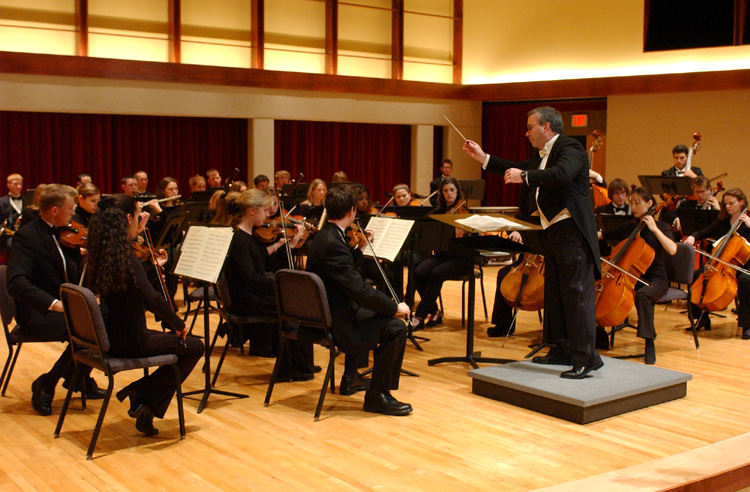
Think, for a moment, how many times in a day you feel yourself being pulled in a hundred different directions; that is not the way God intended us to be. We were created for harmony. Perhaps you have been to a philharmonic orchestra before, or something like it. Dozens of different instruments and a cacophony of notes and chords all combine to produce a magnificent symphony that reaches right into the depths of our souls. That is an image for the way we were created.

That harmony, of course, was shattered by original sin. Suddenly there was discord, disharmony in the universe, in our relationships, and deep within our own souls. Yet at this time of the year, in a particular way, we celebrate the God who chose to enter directly into that discord. Jesus Christ is the one who enters into the world torn by original sin in order to bring us back into harmony with God and with each other.

We can see that musical story of salvation played out in a wonderful way in our first reading this morning, from the prophet Zephaniah. The Book of Zephaniah is one of the shortest books of the Old Testament, and it carries a hard message indeed. Against the backdrop of Israel’s idolatry, Zephaniah announces the impending judgment of God and the imminent Day of the Lord.

But the section we hear this morning comes at the end of that book, and Zephaniah announces to the people that the judgment of God is now over, and the time has come to sing. He says,

Shout for joy, O daughter Zion! Sing joyfully, O Israel! Be glad and exult with all your heart, O daughter Jerusalem! The Lord has removed the judgment against you.
—Zephaniah 3:14-15

But more than that, Zephaniah announces that God Himself will come among them, and He Himself will sing!

The Lord, your God, is in your midst, a mighty savior; he will rejoice over you with gladness . . .he will sing joyfully because of you.
—Zephaniah 3:17

It is a prophesy about the Messiah, who would come to bring harmony between God and His people once again. It is the song of salvation, and one that all of us are called to participate in. We are all called to sing that song.


St. Paul, in our second reading, says:

Rejoice in the Lord always. I shall say it again: Rejoice!
—Philippians 4:4

The Latin word for “rejoice” is Gaudete, and it is where we get the title for this Third Sunday in Advent, Gaudete Sunday. This Gaudete Sunday, we can ask ourselves: What does St. Paul mean when he tells us to “Rejoice in the Lord always”? What does it mean to say that we should all “sing the song of salvation”?

What if we do not feel like singing? What if we have seen and experienced enough of the effects of original sin in our own lives that we scarcely feel like rejoicing? Is St. Paul encouraging us to have a Pollyanna-type attitude, to pretend that we do not live in a world where there is suffering and pain? I would suggest today that St. Paul is talking about something much deeper than that.

I was at a party recently, and a person asked me quite directly: “Are you happy?” There were several other people standing nearby, and most of them stopped what they were doing to hear the answer to that question. There is an expectation (obsession?) in our culture that we should all be happy, all the time, and that if we are not happy then there must be something wrong. I thought about the question for about 5 seconds, and then I answered: “No, I am not happy. I have had a number of events happen in my life today that are not “happy” things, so I am not happy . . . but I am joyful.”

He asked me, “What’s the difference?” And I went on to explain that happiness comes from the circumstances we find in our lives; it happens as a result of the people around us, or it can be based upon the way we feel at any given moment of the day. But joy is different. Joy does not come from us, or from the people around us, or from the circumstances of our lives. Joy is a supernatural gift, and it comes from God.

God is able to give us joy regardless of the circumstances of life. God can give us joy in the midst of all kinds of situations and experiences that are not “happy.” Joy is a supernatural gift that comes to us from God Himself.

St. John the Baptist, in the Gospel this morning, talks about that supernatural gift. He denies that he is the Messiah, and is quick to point out that he himself has come only to baptize with water. But with the Messiah, it will be different:

He will baptize you with the Holy Spirit and fire.
—Luke 3:16

Think about the day of Pentecost, when the disciples received those tongues of fire and were filled with the gift of the Holy Spirit. God set their hearts on fire with the gospel, and they rejoiced abundantly in Him. Following that day, they were to go through all kinds of trials and tribulations.

All of the Apostles—with the exception of St. John—were martyred. The Church was persecuted without mercy. They were despised by everyone in the world around them. But they were absolutely filled with joy! They had been given the supernatural gift of the Holy Spirit, the gift of God Himself, and they overflowed with joy.

St. Philip Neri, the great Italian priest who has often been called the “Apostle of Joy” has a great way of expressing this very truth. He says, “Joy is the infallible sign of the presence of the Holy Spirit.” When you see joy in the life of a Christian, then you know that the Holy Spirit is alive and active in that person’s life.

The Christian preacher and author, Walter B. Knight, put it this way: “Joy is the flag that flies over the castle of our hearts, announcing that the king is in residence today.” What a beautiful way of acknowledging that the joyful life of the Christian has its point of origin not in us, but in God. The people of Israel in the Book of Zephaniah do not sing because they are happy. They sing because “the king is in residence,” because He has come among them and brought harmony and joy into their lives.

This Gaudete Sunday, we ask God for that same grace and that same supernatural gift in our own lives. Might God raise the flag over the castle of our hearts, so that those around us may recognize that the King lives here. And may we listen and heed St. Paul’s exhortation to "rejoice in the Lord," not just when we are happy, but to "Rejoice in the Lord always."

Sunday, December 10, 2006

O Come, O Come, Emmanuel!

(2nd Sunday of Advent-Year C;This homily was given 10 December, 2006, at Our Lady of Mercy, East Greenwich, R.I.; read Baruch 5:1-9 and Luke 3:1-6)

One of the themes we see in the liturgy all throughout the year, but one that is more pronounced in the season of Advent, is our spiritual connection to the people of Israel. Just as they were longing and yearning for the coming of the Messiah, for a Savior, a Redeemer, even so we wait for and long for the coming of Christ.

Every year at this time we sing anew that hauntingly beautiful 9th century hymn:

O come, O come, Emmanuel
And ransom captive Israel
That mourns in lonely exile here
Until the Son of God appear


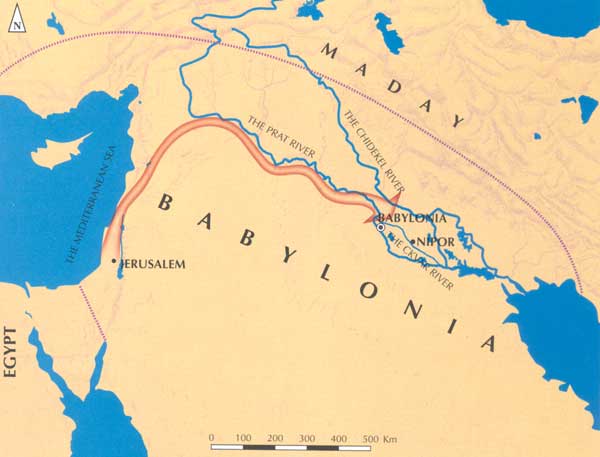
Captive Israel . . . in lonely exile . . . Those words, of course, allude to the Babylonian Exile, one of the darkest and most traumatic events of the Old Testament. To Israel, brought into the Promised Land so long ago, to be taken away from that land was unthinkable.

Yet, because of their sins, their infidelity to God, their lack of faithfulness to His covenant and His commandments, they fell further and further away from Him. Time again God sent them the prophets, trying to draw them back to Himself. But they had not listened. Finally, He allowed the Babylonians to conquer Israel, and they carried them away captive. Only those who were too weak or unable to make the journey were left behind.

And along with them was left everything Israel cherished: the temple and everything that was so central to their worship and faith; their entire way of life. For years they were held captive in Babylon . . .

In our first reading today, from the Prophet Baruch, the Lord announces that Israel’s captivity is at an end; her time of exile is over. Speaking to the people of Jerusalem, the ones who were left behind, Baruch exclaims:

Look to the east and see your children gathered from the east and the west at the word of the Holy One, rejoicing that they are remembered by God. Led away on foot by their enemies they left you: but God will bring them back to you born aloft in glory as on royal thrones. For God has commanded that every mountain be made low, and that the age-old depths and gorges be filled to level ground, that Israel may advance secure in the glory of God.
—Baruch 5:5-7

God will create a direct route through the desert, a straight path for the people to return. He will level the mountains and fill in the valleys and make a level road for them to come back to Jerusalem. Baruch says “God is leading Israel in joy” (Baruch 5:9).

No longer is it Moses who leads the people through the desert and into the Promised Land. Now it is God Himself who enters into the desert and brings Israel back home, rejoicing.

The return from exile is a remarkable journey of hope; it speaks of the majestic and extravagant love of God, of His tender and merciful care for His people. And that is the very same message we celebrate each Advent.

Whether we realize it or not, we ourselves are in Exile. Even when things are going well for us, even when we experience relative peace and joy, even then we long for something more. We yearn for something beyond this place, a better life and a permanent home with God. We are in exile.

So often the sins of others, and the faults and failures of those around us cause us sorrow and pain; we realize all too well that this world we live in is far from home.

But never is that exile, that captivity, felt more than when we separate ourselves from God by our sins. Because of our own faults and failings, because of our own sins against God and against each other, we exile ourselves from God. We are held captive by our own words and actions, and we remain there, in exile.

The Good News of the gospel is that God doesn’t leave us there! God Himself becomes an exile from Heaven, in a certain sense. God becomes man, and enters directly into our captivity in order to set us free. Jesus Christ is captivated by His own love for us, and surrenders Himself into the hands of wicked men. He is bound and brought before Pontius Pilate, and badly mistreated. He is bound to the wood of the cross so that we might be set free from our own captivity to sin and death. This is the message of the gospel! This is the God who saves us and redeems us!

O come, O come, Emmanuel
And ransom captive Israel
That mourns in lonely exile here
Until the Son of God appear

Advent is a time of celebrating the answer to that prayer, that cry of the heart. Jesus Christ is the Son of God who has come and will come again. This morning, St. Luke announces His arrival. He sets up quite beautifully the historical context.

Tiberius Caesar was the Emperor of Rome, the king of the world as it was know at that time. Pontius Pilate was the governor of Judea; and then he names the local kings, Herod, Philip, and the other tetrarchs. These were the secular rulers. He goes on to name the religious leaders, the high priests, Annas and Caiaphas. And the word of God came to none of them! Instead, St. Luke tells us,

The word of God came to John, son of Zechariah, in the desert (Luke 3:2).

In the desert! In the desert, where God had met the people of Israel to lead them back from exile. And the message of the Baptist is the same message we hear from the Prophet Baruch: that God wants to make a direct route and a straight path for His people to walk on. Quoting the prophet Isaiah, St. Luke relates the mission of John the Baptist with the deepest yearning of God Himself:

Prepare the way of the Lord,
make straight his paths;
every valley shall be filled, and
every mountain and hill shall be made low.

The Lord is coming, and He expects us to be ready for Him when He arrives. John came “proclaiming a baptism of repentance for the forgiveness of sins” (Luke 3:3). Our preparation this Advent cannot be anything else than that: repentance and the forgiveness of sins.

What are those sins that have placed us in exile from God? Where do we feel that exile the most at this time in our lives? Where is God calling us to turn away from sin and turn back again to Him? We ask for the grace of repentance in our lives, and a return from the exile of sin.

God wants to grant us the forgiveness of those very things that have separated us from others and separated us from Him. But He will never do that, He will never grant us His forgiveness, if we do not ask Him for it!

He has prepared a way in the desert, a place for the forgiveness of those sins, in the Sacrament of Reconciliation. When is the last time we made a sacramental confession? When was the last time we heard the words:

God, the Father of Mercies,
through the death and resurrection of His Son,
has reconciled the world to Himself
and sent the Holy Spirit among us
for the forgiveness of sins;
through the ministry of the Church
may God grant you pardon and peace,
and I absolve you from your sins
in the name of the Father, and of the Son,
and of the Holy Spirit.


Christ is coming. Whether we are ready or not, He is coming. God comes to us in our exile, but we must be prepared. He comes to us today in the Eucharist. He will come into our bodies this Mass in the Blessed Sacrament. He will come into our lives this Advent. Are we ready for that?

The God who comes to us in the desert, and who makes a way for us to return home to Him, reminds us today that we are not made for exile. We are not made for captivity. We are made for God. We are made for Heaven. And that is something to rejoice in. As that 9th century hymn tells us:

Rejoice! Rejoice! Emanuel
Shall come to you O Israel.

Friday, December 08, 2006

The Immaculate Conception

(Solemnity of the Immaculate Conception; This homily was given 8 December, 2006, at Our Lady of Mercy, East Greenwich, R.I.)

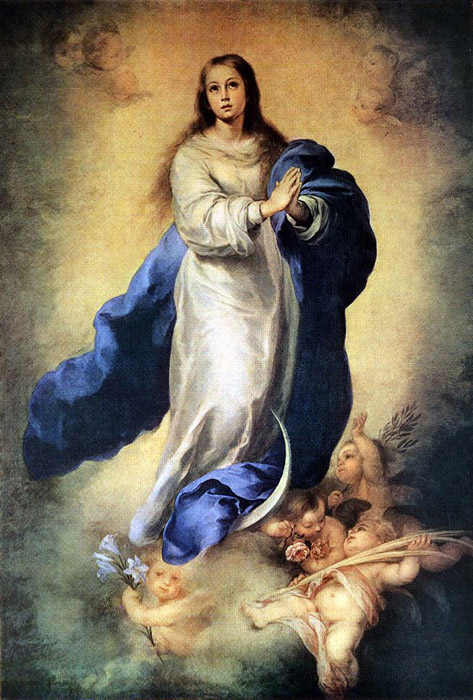
We are still just at the beginning of Advent, that time of preparation for the coming of Christ into our world. Today on this Solemn Feast of the Immaculate Conception we are reminded that we are not the only ones who celebrate Advent. God Himself prepares, in a particular and beautiful way, for the coming of Christ into the world. His preparation is Holy Mary, the Immaculate Conception.

Now, the Immaculate Conception is often mistaken for the conception of Christ in the womb of Mary. That is a popular mis-conception. The Immaculate Conception refers to Mary’s being conceived in the womb of her mother, St. Ann. We believe, as Catholics, that Mary was preserved free from all stain of Original Sin because of the merits of Christ, who suffered and died on the cross to defeat sin and death for us all.

The question we can ask ourselves today on this feast is: Why? Why did God choose to do that? What is the reason for the Immaculate Conception?

Centuries of the Church’s teaching and wisdom have given us two distinct and fitting replies to that question. Firstly, when God was preparing to send His Son into the world, He desired for Christ to be untouched by sin. He wanted Jesus to be born of a woman who was not just really good, or even 90% free from sin. He wanted the person who gave life to Christ in this world to be a virgin totally free from all stain of sin. “And that virgin’s name was Mary” (Luke 1:27).

But more than that, there is a second fitting reason for the Immaculate Conception. Mary is free from Original Sin and all actual sins so that she would be totally free to say “Yes” to God’s plan at all times. Mary did not just say, “Yes,” to be the mother of Christ and give birth to Him. She said, “Yes,” to caring for Him and raising Him with great love and devotion. She said, “Yes” all throughout her life, and perhaps never more than when she stood at the foot of the cross. Mary stood in the icy shadow of the cross and cried out with her whole heart, “Yes,” while her Son was giving life to the world.

That is Mary, the Immaculate Conception! And that is God’s Advent, God’s preparation for the coming of Christ into this world. It should come as no surprise that our Advent and our preparation for the coming of Christ is very much the same thing.

God wants to come into our lives, just as He came into Mary’s. The same body of Christ that entered into Mary’s body, will enter our own body in the sacrament of Holy Communion. Have we truly prepared for that? God’s desire for us is the same as it was for Mary. He wants to enter into a person who is free from sin.

Obviously, that is—in a certain sense—a problem. You and I are not the Immaculate Conception. We have all been born with Original Sin. But God has taken care of that, hasn’t He? Through the gift of baptism, we have been cleansed of Original Sin.

And for the sins we have committed since then, God has also provided. He has given us the Sacrament of Reconciliation, by which we are forgiven of actual sins committed against God and one another.

As we enter more deeply into the season of Advent, have we taken the time to make a good confession? Have we given God the opportunity He desires to make us more completely free from sin and totally open to His call and His work in our lives?

Through the prayers of Mary Immaculate, may we continue to open our hearts up more and more completely to God. May our lives be free from sin and free to follow God’s plan for our lives and for all that He wants to accomplish in the world around us.

Sunday, December 03, 2006

Waiting and Watching for Christ

(1st Sunday of Advent-Year C;This homily was given 3 December, 2006, at Our Lady of Mercy, East Greenwich, R.I.; read Luke 21:25-36)

Today we begin the holy season of Advent, four weeks of preparation for the celebration of the birth of Christ; we celebrate with great joy the coming of Christ among us. This Advent we can ask ourselves one important question:

Are we waiting for Christmas, or are we waiting and watching for the coming of Christ? There is a difference.

Most of the people in the world around us are waiting for a chance to come together with family and friends. It is a time when we all give gifts to the ones we love and care about; and this time of year is always filled with a sense of joy and tremendous expectation.

Hopefully we will all be able to experience those things in these days to come. But none of these things are distinctively Christian. You could belong to any faith denomination—Jewish, Muslim, you could even be an Atheist—and still wait for and enjoy those things.

This Advent the Church reminds us that, for those who belong to Christ and follow Him, we are not just waiting for a holiday or merely anticipating a joyful season. We are waiting and watching for a person. That person, of course, is Jesus Christ.

In the Gospel this morning Jesus challenges us to do more than wait. He calls us to “Be vigilant!” He says,

“Be vigilant at all times and pray” (Luke 21:36).

Against a spirit of malaise and spiritual laziness, Jesus cautions us to be alert and ready. Be vigilant! Be watchful!

Beware that your hearts do not become drowsy from carousing and drunkenness and the anxieties of daily life, and that day catch you by surprise like a trap.
—Luke 21:34-35

Advent is a time that we wait and watch for the coming of Christ, because He has already told us clearly that He is coming.

There is a true story about a small farming town in the Midwest that was experiencing a severe drought. It had not rained in weeks, and they were afraid of losing the entire crop for that year. The pastor of the local church called for a prayer meeting, and encouraged all the people to come together and pray to God for rain.

On the night the service was held, the church hall was full. The pastor was pleasantly surprised to see so many of his parishioners gathered together; many were talking and catching up on old times. There was a genuine sense of community and even some laughter in that place.

He made his way to the podium to call the meeting to a start, when suddenly he stopped right in his tracks. There, on the front row, was a little 8 year-old girl, and she wasn’t talking to anyone. She was sitting, by herself, with her head bowed in prayer, and she was wearing a little red raincoat. In her small hand she clutched a little red umbrella.

Suddenly the pastor began to realize that all those people had come together, with great sincerity and faith, to ask God for rain. But this girl had come expecting God to answer. She had come to that place expecting God Himself to show up.

When we pray, do we have that kind of faith? When we spend time alone with God, do we expect Him to show up? Do we have that same humility and trust in the promises of God, who tells us “Where two or more are gathered in my name, there am I in the midst of them”?

In Israel, in the time of Christ, how many people were waiting for the Messiah? They knew the promises of God; they knew that He had said He would come among them. Suddenly He appeared and walked through their streets; He taught in their synagogues and in their towns and villages. But so many of them missed Him! They were waiting for the Messiah, they were waiting for God, but they were not watching, they were not vigilant.

This Advent we ask God for the grace not to make that same mistake. Might we remain vigilant, watchful, and ready for the coming of Christ. The first and most important way we do that is prayer.

But we cannot simply remain there. We are called to put our prayer and our faith into action. Part of being vigilant and watchful for the Lord means being busy. We need to be about the business of the Gospel.

I saw a bumper sticker not too long ago that was referring to the second coming of Christ. It said: Jesus is coming back . . . Look Busy! There is some truth to that. We need to be vigilant as we wait for His return, and one of the ways we do that is by responding, in our families, our workplace, and everywhere God sends us, to the needs and the demands of the Gospel.

I worked for Stop & Shop, in the Produce Department, for 9 years. One of the first things we would do each day was to call the voicemail of the district manager for Produce. He was the one in charge of the entire Rhode Island division, and he would record instructions each day about which items needed to be on sale, what to watch out for, things of that nature.

But ultimately, we would call that voicemail because he would always end by giving a list of the stores he was going to be visiting that day. And if we were on that list, then we better be ready! If not, experience taught us all too well, things would be very unpleasant for us indeed!

And so we would do almost anything to make sure that we were ready: we would sacrifice coffee breaks, sometimes lunch breaks. We would call in extra help from outside, so that when he arrived, the apples and oranges were all stacked meticulously; every leaf of lettuce was perfect!

This Advent we are not waiting for the district manager of Produce for Stop & Shop; we are waiting and watching for the coming of Jesus Christ, the Son of God. What are the sacrifices that we need to make in our own lives as we prepare for that coming? Where is God calling us to be more vigilant, in prayer and in our personal lives this Advent? How are we called to be busy about the Gospel wherever God directs us this week?

We ask Him here, in this place, for the grace to be vigilant and watchful; here, where we gather and pray together each week, we know that God Himself shows up. Here, on this altar, He becomes present to us—body and blood, soul and divinity. Might we be strengthened in this Blessed Sacrament today, so that we will be more vigilant, more watchful for His coming in our lives this Advent.

Sunday, November 26, 2006

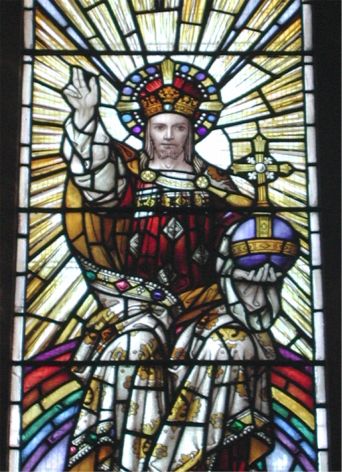
Christ the King, Redeemer of Man

(Feast of Christ the King-Year B;This homily was given 25 & 26 November, 2006, at Our Lady of Mercy, East Greenwich, R.I.; read Revelation 1:5-8 and John 18:33-37)

Our Gospel for this Feast of Christ the King is the mysterious passage from St. John’s Gospel, where Christ is questioned before Pontius Pilate. It is mysterious because it involves the Son of God being interrogated by a man, but it is also mysterious because it is difficult to understand just where Pilate is coming from.

Is he serious and sincere as he questions Christ? Is he simply curious about who this Jesus of Nazareth is, or is he outright sarcastic? Whatever the case may be, one thing is perfectly clear: Pontius Pilate does not realize who Christ really is.

Christ describes Himself as a King whose “kingdom does not belong to this world” (John 18:36). He certainly is a King in the world, but His kingdom is not of this world. With that, a light seems to dawn for Pilate. He asks, “Then you are a king?” And Jesus responds:

For this I was born and for this I came into the world, to testify to the truth. Everyone who belongs to the truth listens to my voice.
—John 18:37

It is a response that is unfortunately lost on Pilate, but it stands at the heart of today’s Feast of Christ the King, and is fundamental for understanding who Christ really is: the one who “testifies to the truth.”


In 1979, just a few months after being elected Pope, John Paul the Great issued his first encyclical letter: Redemptor Hominis—The Redeemer of Man. Re-iterating many of the foundational principles of the Second Vatican Council, he described how the key to understanding the history of humanity, and to understanding humanity itself, is found completely only in Jesus Christ. He alone is “the center of the universe and of history” (Redemptor Hominis, #1).

Directly paraphrasing Vatican II’s Gaudium et Spes, he went on to describe Christ as the one who reveals who God is, since He is fully Divine, and who also reveals the truth about man, since he is also fully human (Gaudium et Spes, #22, Redemptor Hominis, #8).

Again, we can listen to the words of Christ to Pontius Pilate:

For this I was born and for this I came into the world, to testify to the truth.

Christ comes to testify to, or bear witness to, the truth about God and the truth about man. That truth is this:

That God created us, He loves us and has redeemed us in Christ; even when we had turned away from him, even when we had sinned, God still sent Christ to suffer and die on the cross to save us so that we might live with Him forever in heaven . That is who God is, as revealed by Christ.

The truth about man is directly related to that. Because Christ came and took on our human nature, He has also raised us “to a dignity beyond compare” (Redemptor Hominis, #8). We who have been baptized into Christ have been made a part of God’s own Kingdom: Sons and Daughters of God, kings and queens in a sense, as members of His kingdom.

These are not just the pious thoughts and sentiments of Pope John Paul the Great, nor are they merely theological reflections from the Second Vatican Council. They are truths that are found all throughout the Scriptures.

In our second reading for the Feast of Christ the King, from the Book of Revelation, we hear that:

Jesus Christ is the faithful witness, the firstborn of the dead and ruler of the kings of the earth. To him who loves us and has freed us from our sins by his blood . . .
—Revelation 1:5

That is the first truth Christ reveals to us, about who God is: The one “who loves us and has freed us from our sins by his blood.” The second truth follows directly after that: He is also the one “who has made us into a kingdom, priests for his God and Father” (Revelation 1:6).

We have been made into a kingdom, raised to “a dignity beyond compare.” Because of our baptism, we share in the very life of God. What more could we possible want than that?

You may have read the book “The Lion, the Witch and the Wardrobe,” from C. S. Lewis. It is one of the books in a series called The Chronicles of Narnia and was recently made into a movie.

The story—an allegory for the Christian faith—is an endearing tale of four children who enter the mystical Land of Narnia, and meet there a lion named Aslan, who is the King of Narnia. He is the one who will eventually give his life for the sake of the people, and obviously represents Christ.

These four children serve along side Aslan, and they, too, give completely of themselves for the sake of the King and for the Land of Narnia. In a very moving scene at the end of the book, Aslan has them sit in four thrones, and he places a crown on each of their heads. With great solemnity he says,

“Once a king or a queen in Narnia, always a king or a queen.”

C. S. Lewis, a devout Christian, understood the dignity of Baptism. It is not something that can easily be revoked when we fail; it is not something we can easily lose because of our sins and weaknesses. But it is something we are called to live up to.

That is our challenge today on this Feast of Christ the King, to fulfill what John Paul II calls our “kingly service” (Redemptor Hominis, #21), following in the footsteps of Christ the King, who came “not to be served but to serve, and to give his life as a ransom for many” (Mark 10:45).

We do that—Redemptor Hominis continues—in two very practical ways. First and foremost, by being faithful within our own vocation. Whether we are called to the priesthood, religious life or the married life, we are called to be faithful and fruitfull right where God has called us.

Secondly, we fulfill our “kingly service” by using our freedom wisely. We are called to use our freedom, not for selfish gain, but to love and serve God and others. “Christ teaches us that the best use of freedom is charity, which takes concrete form in self-giving and in service” (Redemptor Hominis, #21).

Might we be found faithful in following the footsteps of Christ the King in our own kingly service here on earth, and come to discover the truth that: “Once a king or a queen in the Kingdom of God, always a king or a queen.”

Thursday, November 23, 2006

It's A Wonderful Thanksgiving

(Thanksgiving-Year B;This homily was given 23 November, 2006, at Our Lady of Mercy, East Greenwich, R.I.; read Luke 17:11-19)

There is a very powerful line in one of T.S. Eliot’s famous works called the “Four Quartets.” It is found in the final poem, “Little Gidding,” and it has to do with pilgrimages and journeys of faith.

The point that Eliot makes is that the purpose of a pilgrimage is not to change the way we look at the place we are traveling to, be it Jerusalem, or Rome, or even someplace local, like LaSalette Shrine. The purpose of a pilgrimage is to change our perspective about our point of origin. It is to return back to the place we began, and see that place with new eyes; to have a renewed vision of who and where we are.

The line is both powerful and beautiful. He writes:

We shall not cease from exploration
And the end of all our exploring
Will be to arrive where we started
And know the place for the first time.
—T. S. Eliot, “Little Gidding” (No. 4 of ‘Four Quartets’)

We find that journey of faith in our Gospel this morning in the story of the ten lepers healed by Jesus. St. Luke tells us they began that journey in a very awkward, even painful, position before Christ. He says “they stood at a distance from him” (Luke 17:12). They were not allowed to approach him, on account of their disease and condition; they were social outcasts who could only stand “at a distance.”

And yet they were close enough to cry out for help, and to ask Christ for healing. Jesus quickly answers that prayer. He says to them, “Go show yourselves to the priests” (Luke 17:14), and in that very act of obedience they come to experience the healing so desperately longed for.

One of them, recognizing not only what has happened but Who has brought about that tremendous gift, returns to the place he started. But now everything has changed. He no longer stands off “at a distance” from Christ. He draws very close indeed, and falls down at the feet of Jesus in praise, adoration and overwhelming gratitude. He has come to understand what T. S. Eliot meant:

The end of all our exploring
Will be to arrive where we started
And know the place for the first time.

It is during this time of the year that we begin to hear the same story, told in so many different ways. Whether we like it or not, the Charles Dickens classic, “A Christmas Carol,” is already showing in theatres. And how many times in the days and weeks ahead will we see the movie “It’s a Wonderful Life,” playing on TV? Really it is just the same story, with the names and the places changed.

Ebenezer Scrooge makes that journey through Christmas past, present, and future, only to come right back again to where he started on that cold Christmas Eve. But he suddenly sees the world he lives in a whole new light. He has a new understanding of himself and is overwhelmed with joy.

George Bailey, in “It’s a Wonderful Life,” comes to the end of himself and regrets that he was ever born. He thinks he has no reason to live and makes a decision to end his life entirely. And yet suddenly he is shown what life would look like without him, and everything changes. He comes back, in the end, right to the place where he started and has a renewed sense of gratitude for his job and his own place in that small town. He is filled with love for his family and all that he has been given.

This Thanksgiving, God invites us to make that same journey of faith and that pilgrimage of gratitude, to come to a new vision of all that we have received from Him. We do that in a very practical way. Sometime today, I would suggest that we find some quiet place to sit down in the presence of God and to thank Him for five things that we have been given.

It might be our family, our friends, or our Catholic faith. We may have had a great year filled with many blessings, so we should be thankful to God for that gift. Or perhaps we have had the worse year ever. Maybe we have experienced tragedies or difficulties, but we made it through. Because of our faith, or our friends and family, we were able to move forward with hope. Today, thank God for that. Whatever it may be, think of five things that you are thankful for today.

And then, in the days and weeks ahead, whenever the movie, “It’s a Wonderful Life,” or Charles Dickens’ “A Christmas Carol,” comes on the TV or you hear them advertised on the radio, thank God for five more things. Or maybe you just remain thankful for the same five things.

This day we simply ask God to guide us more completely into that journey of faith and pilgrimage of gratitude, that we may come to realize, along with George Bailey, Ebenezer Scrooge, and the leper in St. Luke’s Gospel, that:

The end of all our exploring
Will be to arrive where we started
And know the place for the first time.

Sunday, November 12, 2006

Schindler's List and the Law of the Gift

(32nd Sunday in Ordinary Time-Year B;This homily was given 11 & 12 November, 2006, at Our Lady of Mercy, East Greenwich, R.I.; read 1 Kings 17:10-16 and Mark 12:41-44)

It is perhaps the most beautiful and profound statement of the entire Second Vatican Council. It would later become one of the major themes of the life and pontificate of John Paul the Great; and it provides the only context that allows us to understand the radical generosity we find in the first reading and in the Gospel this morning.

It is called the “Law of the Gift” and it is found in Vatican II’s Gaudium et Spes:

“Man cannot fully find himself except through a sincere gift of himself.”
—Gaudium et Spes, #24

Describing how God is a Trinity of persons, each of them giving themselves to the other in love from all eternity, Gaudium et Spes went on to proclaim how we—made in that very same image and likeness—are created for love and to give ourselves away in love. By nature, we are creatures who are fulfilled only by giving to others: our families, those around us, and most especially, God Himself.

“Man cannot fully find himself except through a sincere gift of himself.”

We discover the “Law of the Gift” in the first reading this weekend, in that widow from Zarephath. Far from sitting down with her son to starve to death (as she laments to the prophet Elijah), she gives generously everything she has and instead continues not only to live, but the thrive and flourish. She has life abundantly, because she gave with great abundance to the man of God, Elijah.

The widow in the Gospel, who “contributed all she had” (Mark 12:44), is held up by Christ as the very icon of generosity and faithfulness.

And if we take a moment to consider this Veteran’s Day Weekend, and all the men and women who served and continue to serve our country so faithfully, we discover that they, too, live by the “Law of the Gift.” We honor and remember them today, not because of what they kept for themselves or what they accomplished for themselves, but for what they gave to obtain the freedoms we celebrate and enjoy today.

“Man cannot fully find himself except through a sincere gift of himself.”

You may have seen the movie, Schindler’s List, which tells the remarkable and true story of Oscar Schindler. Born in Czechoslovakia, as a young man Schindler followed the coattails of the German army into occupied Poland at the start of the Second World War. He quickly enmeshed himself in the ranks of the Nazi party, not because he espoused their ideals or wanted to follow their way of life, but because he saw a tremendous opportunity to make an awful lot of money.

He was placed in charge of a factory located about 60 kilometers from Auschwitz, where he “employed” over a thousand Jews. Basically, it was slave labor; he had to pay them next to nothing and he hardly fed them anything. He made a mint in that place.

Yet, somewhere in the middle of the war Schindler began to realize the absolute brutality of the Nazis, that they had no intention of merely holding the Jews captive or exploiting them. Their “master plan” was to simply exterminate them, every Jewish man, woman, and child. That shocked Oscar Schindler into reality.

He began to use his influence and contacts in the Nazi party, as well as his money, to save the lives of the very people he had exploited. It was dangerous business, entailing that he risk not only his resources and his name, but also his very life.

Twice Oscar Schindler was arrested under suspicion that he was working to save Jews. Both times his influence, and his money, got him out of it. Each time he immediately returned to that factory and continued what he had been doing: literally buying time, and buying Jewish people from the Nazis.

If you have seen the movie then you remember the haunting final scene, when the war ends and Schindler takes account of the whole ordeal. He gets out of his car, along with his friend, Stern. The factory and all the workers are off in the background. He turns to his friend and he says:

“I could've got more. I could've got more, if I'd just...I could've got more...”

His friend says, “Oscar, there are eleven hundred people who are alive because of you. Look at them.”

But Oscar Schindler won’t hear a word of it. He continues:

“If I'd made more money...I threw away so much money, you have no idea. If I'd just ...I didn't do enough.”

His friend continues to argue, in vain, as Schindler begins to look around him at the car they drove up in. “This car,” he says. “Why did I keep the car? Ten people, right there. Ten people, ten more people.”

He rips a swastika pin from his lapel, and says, “This pin, two people. This is gold. Two more people…At least one. One more. One more person. A person, Stern. For this. I could've gotten one more person and I didn't. I didn’t...”

Of course, no one would fault Oscar Schindler for keeping his car or a gold pin. But the point is, he convicts himself. He is himself convinced that he could have and should have given more. He was aware of the “Law of the Gift,” that we are made to give ourselves completely to others, to God. He had come to understand that “Man cannot fully find himself except through a sincere gift of himself.”

In the New Testament, in the Acts of the Apostles, there is a compelling and rather disturbing story about a married couple named Ananias and Sapphira (Acts 5:1-11). It occurs at the very foundations of the early Church, when many were selling off their lands and property and laying the money at the Apostles’ feet.

Now, nobody was under an obligation to do that. Nevertheless, many willingly gave all they had to benefit the work of the Gospel. Ananias and Sapphira had sold their property, and they, too, chose to bring their money to the Church. But they decided to keep some of it for themselves, and simply tell the others that they had given all.

St. Peter confronts Ananias and explains how the money was his, before and after he sold his property. He could have done anything he wanted with it. But what he chose to do was lie, and for what? St. Peter says to him, “You have lied not to men, but to God” (Acts 5:4). At that, Ananias drops dead!

A few hours later, his wife Sapphira comes before St. Peter, completely unaware of what just happened. He asks her about the amount, and she confirms that her and her husband have given over the whole thing. St. Peter replies: “The footsteps of those who have buried your husband are at the door, and they will carry you out” (Acts 5:9). And then she drops dead! Again, a very disturbing story.

Yet that scene is displayed, in living color, near a side altar, in St. Peter’s Basilica in Rome. A friend of mine gives tours of St. Peter’s, and one day he was doing that very thing and explaining what is called “The Altar of the Lie.” A woman in the group seemed a bit upset, and asked,

“Why on earth would the Church include that scene in a mosaic for this basilica? Of all the beautiful scenes in the Acts of the Apostles or the rest of the New Testament, why that one?”

My friend didn’t miss a beat, but simply responded that the reason for that scene in this church was because of its location. He motioned to a doorway across from the “Altar of the Lie,” and said:

Those doors over there are the doors to the sacristy, where every priest—whether he be newly ordained or a cardinal of the Church—gets ready for Mass. And every priest who comes out of that sacristy door, no matter which altar he is heading to, must first look at that scene of Ananias and Sapphira before he celebrates the most sacred mystery of our faith. And he must ask himself: ‘Have I given everything? Have I given everything, like I said I would on the day of my ordination, or have I held something back from God, or from the people of God.’

Each one of us, whether priest or not, must ask that same question before we approach the Eucharistic table this morning. Not because God will strike us down, like Ananias and Sapphira; and not because God is greedy and wants to take from us the very things we are reluctant to give.

But because we are created to give completely of ourselves and we will not be fulfilled nor complete until we do so; like the Trinity, three Persons eternally giving themselves to each other in love, we are made to give ourselves completely away, to our families, to the people around us, and to God Himself. Might we look into our hearts and into our lives this day, and simply give everything—our will, our desire, all that we can muster—because “Man cannot fully find himself except through a sincere gift of himself.”

Sunday, November 05, 2006

The Secret of Life

(31st Sunday in Ordinary Time-Year B;This homily was given 5 November, 2006, at Our Lady of Mercy, East Greenwich, R.I.; read Deuteronomy 6:2-6 and Mark 12:28-34)

What do you think is the “secret of life”? Is it hard work? Loyalty? Is it family? Scientists tell us the “secret of life” is found in DNA; if we can understand DNA then we can unlock the great mystery of life itself.

If you are a Country Music fan then you have probably heard the popular song by Faith Hill called “The Secret of Life.” It is about two guys sitting down at a bar looking for the answer to that question. They come up with all kinds of possible solutions: The secret of life is . . .

A good cup of coffee
'Keep your eye on the ball'
Monday Night Football

I kind of lean towards that last one, truth be told! But for a pious Jew in Jesus’ time, the “secret of life” could be found nowhere else but in the Law of God, in the commandments God had given to the people of Israel through Moses on Mt. Sinai. Therein, the devout Jew would say, lies the secret of life.

But the question of the day would be: Which one? There were 613 different commandments in the Torah. It was a commonly debated question, which one of these was the greatest. Any Rabbi worth his salt would have a strong opinion on that topic. And so the Scribe approaches Jesus in the Gospel this morning and asks Him: What do you think?

Which is the first of all the commandments?
—Mark 12:28


Typically, Jesus answers that question very differently than they expected. He offers a very traditional answer and an entirely new one, at the same time. Jesus begins His response by reciting the Shema.

The Shema is one of the core professions of the Jewish faith, and we heard it this morning in our First Reading from the Book of Deuteronomy. Shema is the Hebrew word for “Listen!” or “Hear!” and Jesus recites the Shema word for word when He says:

Hear, O Israel! The Lord our God, is Lord alone! You shall love the Lord your God with all your heart, with all your soul, with all your mind, and with all your strength.
—Mark 12:29-30; (cf. Deuteronomy 6:4-5)

It was a very traditional response that most Jews would have agreed with. The Shema was recited by devout Jews three times as day. They would write it out and wear it on their garments, or place it in small boxes on the doorway of their home to remind them—each time they came and went—of the great commandment to love God.

But Christ also adds a second commandment, so they will understand that the way of life God calls us to cannot be easily summarized in just one passage of Scripture or just one of the commandments. He says that:

The second is this: “You shall love your neighbor as yourself.”
—Mark 12:31


In that is the novelty or the nuance that Christ offers, His own particular contribution to the question about the greatest commandment. He combines the two commandments—love of God and love of neighbor—as one, linking them both together with the single word: love. To love both God and neighbor is greater than all the other commandments (Mark 12:31).


But with all that said, Christ is not simply the greatest Rabbi of His day providing the best teaching. He is not even the greatest teacher among all the other teachers or the apex of all the other religions. He is not even in that category. He transcends all categories.

Jesus Christ is Lord of Israel and Lord of all precisely because He not only gives us the law and the commandment to love God and love neighbor, but because He is the only one who truly lives it. Christ is the only one to live fully the love of God and love of neighbor, and in that is found the Secret of Life!

The Secret of Life is Jesus Christ, God made man, who comes down from heaven to dwell among us and teaches us how to live and how to love. Jesus Christ is the one who loves God to the fullest, giving His life to the father in the obedience of love, even to the point of death on the cross. Jesus Christ is the one who loves neighbor to the fullest possible extent by sacrificing Himself on the cross for the salvation of us all.

That is the secret of life: to give oneself away—to offer oneself as a gift—and in that to be fulfilled and complete.

Christ invites every one of us to participate in that secret of life by participating in His own life through baptism. By our baptism into Christ the Holy Spirit lives in us and helps us to live the commandments of love.

St. Paul, in his letter to the Colossians, talks about the great mystery and the secret of life, and he says it is:

. . . the mystery hidden from ages and from generations past. But now it has been manifested to his holy ones, to whom God chose to make known the riches of the glory of this mystery among the Gentiles; it is Christ in you, the hope for glory.
—Colossians 1:26-27

Christ lives in us. The Holy Spirit lives in us. We now have the ability to live out the commandment of love—to love God and neighbor—like Christ Himself because He lives in us. As overwhelming and supernatural as that sounds, we do it in a very practical way: by the things we say and by what we do each and every day.

There was a story in The New York Post just a few weeks ago about a man who was caught trying to jump off the Empire State Building with a parachute. He was arrested and charged with reckless endangerment. Of course, he pleaded innocent. His lawyer went before the court and declared that his client was innocent because he was simply “expressing himself.”

The judge asked for an explanation, and the lawyer went on to say that, “some people express themselves with words. My client expresses himself with actions.” The article did not give the outcome of the case, but we can guess what it probably was!

But that is an example of what God asks of each one of us. Not that we jump off the Empire State Building with a parachute! But that we express ourselves, that we express our love for Him and our neighbor, with words and actions. Both are necessary. What are some of the ways God is challenging us to love him and other with our words and actions this week?

What are the words God is moving us to pray in conversation with Him? Have we asked God to become more a part of our lives, more a part of our families, our workplace? Have we asked Him to make us a better father or a better mother? A better son or daughter, husband or wife? Have we spent time with Him in prayer? That is how we love God with our words.

With our neighbor, we use words to encourage, to build up; perhaps we use words to challenge each other to live the Gospel more faithfully.

And finally, we accompany our words with the actions that speak that same message. In a very practical way, we respond to the needs around us. St. Augustine was once asked, “What does love look like? You always speak about love; you write about it. But what does love look like?” He responded:

It has feet to go to the poor and needy.
It has eyes to see misery and want.
It has ears to hear the sighs and the sorrows of others.

This week we ask God for the grace to love Him and our neighbor with our words and actions. And as we do that in the everyday practice of our faith, may we enter more deeply into the very secret of life, what St. Paul says is: “Christ in you, the hope of glory.”

Wednesday, November 01, 2006

Feast of All Saints

(Feast of All Saints;This homily was given 1 November, 2006, at Our Lady of Mercy, East Greenwich, R.I.; read Matthew 5:1-12)

One of my favorite places on earth is the Basilica of St. Peter in the City of Rome. Unlike the Gothic style cathedrals, like Notre Dame in Paris, which seek to draw our attention and our imagination toward the heavens by their tall steeples and stain glass windows high up near the vaulted ceiling, the Basilica of St. Peter’s is early Baroque.

The Baroque style seeks to do the opposite: to draw heaven right down here to earth. As if in imitation of the God who becomes man and walks among us, St. Peter’s gives us a glimpse of heavenly realities right here and now.

When you walk into St. Peter’s, immediately you will find holy water fonts being held up by life-sized angels; they are close enough for you to reach out and touch.

Walking further into the Basilica, exploring the many side altars and the nave of that church, you discover the statues, images and mosaics of the saints. They are almost at eye level, and some are close enough for you to grab hold of their feet.

But more than that, the lives of the saints are physically present. The Basilica is literally founded upon the very remains of St. Peter; the bones of the Fisherman are part of the very foundation. The tombs of John Paul the Great and Blessed John XXIII, as well as many other popes and saints from throughout the centuries, are also a permanent part of that great Basilica.

St. Peter’s reminds us of what we celebrate today as Catholics: the Feast of All Saints. It reminds us that God does not want us to wait until heaven before we experience the change and transformation of our lives and our world that the Scriptures speak of. God wants to bring the power and splendor of heaven right here to this earth. The saints are the ones who allowed Him to do that. Christ constantly challenges us to do the same.

The Gospel for today is Jesus’ Sermon on the Mount, and the Beatitudes He delivers for all the people of God. Jesus does not say, “Blessed will be the poor in spirit, some day.” No, He says, “Blessed are the poor in spirit,” right here, right now.

“Blessed are the merciful.” Even now—as they imitate God’s greatest attribute—they are blessed, and in the end they will receive great mercy.

“Blessed are the peace makers.” God is especially impatient to reward those who strive for peace among people and nations. He is determined to bless them now, and already the world recognizes them as “Children of God.”

“Blessed are clean of heart.” They are blessed right here and now, those who seek to be pure and chaste even in the midst of a world and culture that mocks that purity and laughs in the face of the chaste. Blessed indeed, Christ says, are those who seek that virtue. “They shall see the face of God.”

On this feast of All Saints, Christ challenges all of us to walk in the footsteps of the saints, and to live the Beatitudes, not the attitudes of the culture around us.

Do we have the courage to do that? Do we dare to follow the examples of the saints and to give God permission to bring the power and majesty of heaven right down here to this earth, in our families, our schools and workplaces?

If the answer is, “Yes, we do have the courage to seek this grace, this gift,” then perhaps one day there will be a statue, an image, or a mosaic in St. Peter’s Basilica with us on it.

But more importantly, there will be a place for us in heaven, with God and all the angels and saints, for all eternity.

Heaven:

[Your Place Here]

Sunday, October 29, 2006

Bartimaeus and "Living the Catholic Faith"

(30th Sunday in Ordinary Time-Year B;This homily was given 29 October, 2006, at Our Lady of Mercy, East Greenwich, R.I.; read Mark 10:46-52)

We began our Fall Book Club again a few weeks ago, and this season we are discussing Archbishop Charles Chaput’s book Living the Catholic Faith: Rediscovering the basics. As the title suggests, the book explores the fundamentals of what it means to live the Christian life.

In the second chapter, Archbishop Chaput says that there are three “requirements” for those who chose to accept God’s love and live in it as followers of Christ, three things that “are continuous throughout a Christian’s life.”

The first is conversion. Think about the very first words of Christ when He begins His public ministry: “This is the time of fulfillment. The kingdom of God is at hand. Repent, and believe in the Gospel” (Mark 2:15). So the first requirement is to turn from sin and be faithful to the Gospel.

The second one flows from that: discipleship. We become disciples of Christ, walking with Him in our daily lives. And finally, as we experience that ongoing conversion and continue to walk with Christ as His disciples, we encounter the third requirement for the Christian: transformation.

Our lives become transformed as we become more and more like Christ, in the way we talk, the way we act toward others, the way we vote (especially important for us to remember with elections right around the corner). In other words, we are transformed to be Christians not in name only, but in the way we live our lives.

In our Gospel this morning, we see those three requirements—conversion, discipleship, and transformation—in a profound and beautiful way in the life of the blind beggar, Bartimaeus.


As our Gospel narrative begins, we find Bartimaeus in the very same place each of us would be in without Christ: blind and in the dark. That is here we would be, spiritually blind and lost without God.

Now, make no mistake about it; Bartimaeus is able to get by. He is not stumbling around and bumping into things. He is able to provide for himself by begging for money in the streets of Jericho. But his life falls so far short of what it could be. He longs for so much more than what he has.

He is a man without vision, without sight . . . but not without hope. We know that because suddenly he hears that Christ is passing by, and “On hearing that it was Jesus of Nazareth, he began to cry out and say, ‘Jesus, Son of David, have pity on me.’
—Mark 10: 47

The crowd tries to silence him, and therein lays a great irony. The title “Son of David” is a Messianic title. The crowds do not yet recognize Jesus as the Messiah. They cannot see that He is the Anointed One of God. But blind Bartimaeus sees it! He is able to see that Jesus is the one of whom the prophets spoke; the one who would set the captives free, and give sight to the blind. So he cries out all the more: ‘Jesus, Son of David, have pity on me.’

And suddenly Jesus responds; He instructs the crowd to call him. So they say to Bartimaeus:

Take courage; get up, Jesus is calling you.
—Mark 10:49

There we discover the very mystery of conversion. It is no longer the case that Bartimaeus is the one crying out. Now it is Jesus who is calling out to him. Long before we ever begin to call out to God—for grace and strength, for help or healing—long before the prayer of faith is ever on our lips, God Himself is already calling out to us. He is calling out to each one of us right now, calling us to a deeper conversion of heart and a renewed commitment to turn away from sin, and be faithful to the Gospel.

Bartimaeus recognizes that call and he responds immediately. St. Mark tells us “he threw aside his cloak, sprang up, and came to Jesus” (Mark 10:50). What an odd description. He threw aside his cloak. Why did he do that?
Some of the Fathers of the Church comment on this passage and say that he is throwing off the old self, and putting on Christ (as St. Paul describes in the New Testament). He is getting rid of the old way of doing things, the old Bartimaeus, and getting ready to begin a whole new life with Christ.

In the early Church, when people were baptized, they were often fully immersed in the life giving waters of rebirth. They would remove their garments completely and enter fully into the water—dying with Christ in baptism—only to emerge a new creature. They would put on a new, white garment as a sign that they had put their old, sinful ways behind and had now put on Christ.

Today God challenges each of us, as baptized Christians, to throw aside whatever sins are keeping us from living a full life in Him. We are called to throw aside our old self, and put on Christ, even as we were clothed with that white garment at our own baptism.

But more than that; being a Christian involves more than just avoiding evil. We are also called to do the good. We are called not just to let go of bad things, but even to sacrifice good things in order to follow Christ more closely.

St. Jose Maria Escrivá comments on this scene, where Bartimaeus throws aside his cloak and goes to Christ, and says it is a representation for the sacrifice we are all called to as disciples of Christ.

Escrivá describes a time in his life when he had come upon a battlefield just after a major campaign (Election Year pun intended) had been fought. He described how the entire field was literally covered in army coats that the soldiers had abandoned—thrown aside, like Bartimaeus—as the battle raged on.

There were also water bottles; sacks filled with personal items like pictures or letters from loved ones. All of these items had been left behind by the victors, those who had won the fight! They were willing to sacrifice even those good things in order to win the victory that day. How much more willing should we be to make sacrifices in our lives to win the victory for Christ?

And so, as Bartimaeus experiences his conversion and comes to Christ, we are told “Immediately he received his sight and followed [Christ] on the way” (Mark 10:52).

That was the greatest miracle of all; not that he was healed of his blindness, however remarkable that may be. The true miracle is the life of transformation Bartimaeus now experiences as he “follows Jesus on the way.”


This week, how is God calling us to experience conversion, discipleship, and transformation? Where is God calling us, in the midst of our own lives and experience, to be disciples who are transformed and immersed in the mystery of Christ?

This morning Jesus comes to us in the Eucharist and gives us the grace and strength to encounter Him in a whole new way. God opens our eyes, like He did with Bartimaeus. But more than that, He opens our hearts and gives us everything we need to “follow him on the way” in our own lives this week.

Sunday, October 22, 2006

Ambition

(29th Sunday in Ordinary Time-Year B;This homily was given 21-22 October, 2006, at Our Lady of Mercy, East Greenwich, R.I.; read Mark 10:35-45)


Our Gospel for this weekend is about ambition. We all know people that are ambitious, sometimes literally driven by ambition. And sometimes ambitious can become obnoxious. But it doesn’t have to be that way.

Ambition itself is actually neutral. It can be very good, even holy; or it can be base, self-serving, and downright ugly.

We find ambition in our Gospel this morning in the Apostles James and John. They approach Christ and say to Him:

Grant that in your glory we may sit one at your right and the other at your left.
—Mark 10:37

It is ambition almost to the point of embarrassment. After all that Christ had taught them, by word and example, about service and humility, about giving of oneself and not asserting oneself, about taking the lowest place. Instead, the Apostles James and John are seeking the highest places of all!

The other 10 Apostles catch wind of it, and they become indignant. They are furious. Sadly, they are not indignant because they want James and John to become better disciples; they are not indignant because they are offended for Christ, whose message has not been heard. They are indignant because they themselves are ambitious!

It is a very challenging Gospel, to say the least. These are the men Christ has chosen as the foundation for His Church, and they are so ambitious. But the response of Christ is important for us to consider.

Remarkably, He doesn’t squash the ambition of James and John. Instead, He takes their ambition and He purifies it. Remember, ambition itself is neutral. It can be used for selfish gain, but also for the greater glory of God. And so Jesus says to them:

You do not know what you are asking. Can you drink the cup that I drink or be baptized with the baptism with which I am baptized?
—Mark 10:38


Pope Benedict XVI, in his Wednesday audiences throughout the summer months this past year, spent time reflecting on the lives and ministry of the twelve Apostles.

At one point he focused on James and John, and he commented on this very "ambitious" scene found in the Gospels of St. Matthew and St. Mark. He says that in the response of Jesus—Can you drink the cup? Can you be baptized with the baptism with which I am baptized?—the Lord is trying to open the eyes of James and John.

Our Holy Father says that Jesus wants to open their eyes, first of all, to who He is, the Messiah that “did not come to be served but to serve and to give his life as a ransom for many” (Mark 10:45). But, at the same time, He is also opening their eyes to what He is calling them to do: to share in that very same mission of service, and to give their lives in the very same way, even unto the shedding of blood.

Jesus asks them: “Can you do this? Can you follow me and give yourself completely, even as I do?” James and John answer, very ambitiously, “We can” (Mark 10:39). Now that would seem almost too ambitious! It appears to be way over the top, except we know, historically, that they were able to do exactly that.

St. James is the first Apostle to be martyred for his faith in Christ. The Acts of the Apostles recounts how he was killed by the sword, under the reign of King Herod Agrippa, in the year 40 A.D. (Acts 12:1-2). He drank from that same cup, was truly baptized with the same baptism as Christ.

His brother, St. John, met a different fate. He was the only Apostle not to undergo martyrdom. Instead, according to one tradition, he was exiled to the obscure island of Patmos, where he spent his days in seclusion, separated from everything and everyone dear to him. Yet by the time his life was over he had written 5 out of the 27 books of the New Testament: The Gospel of John, the Book of Revelation, and three of the Catholic Epistles (1-3 John). That’s quite an ambitious undertaking.

These are the people Christ used to begin His mission of salvation: James and John, and the other 10 Apostles. That mission, some 2000 years later, has gone far beyond what any of them could have possibly imagined.

It’s not that James and John were too ambitious when they approached Christ that day. The fact of the matter is they were not ambitious enough! Christ wanted to take their ambition and purify it, to elevate it and direct it in the mission of the Gospel. He wants to do he same with each and every one of us.

This weekend in the Church Universal we celebrate World Mission Sunday. It is a chance for us to support the efforts of all those who give their lives to the spreading of the Gospel. But we also recognize that we are all called to share in the apostolic mission. God calls us all to share in the mission of the Gospel.

We do that first and foremost through prayer. We are called to share in the mission of the Gospel by praying for those who have not yet heard the message of salvation. We pray that they will have an openness to receive that message of Christ, which has the power to transform their lives forever.

Yet in prayer we also come to find that God desires our own transformation through the very same Gospel. In his message for this World Mission Sunday, Pope Benedict XVI writes that: “Only by dwelling in God do men and women burn with a flame of Divine love that can set the world on fire.”


God wants to set the world around us on fire, but first He desires that we be set on fire with His message of mercy. God wants to light a fire in each of our hearts, to place that “flame of Divine love” within us, and then to spread that flame everywhere in the world we live in. Are we giving Him our hearts in prayer so that He can do that?

Secondly, we participate in the saving mission of the Church through our financial support. Our collection for World Mission Sunday will go to support over 1100 dioceses throughout the world, helping thousands of people to be touched by the love of Christ.


And finally, we are called to share in the missionary work of the Church simply by the way we live our lives. We are living in strange times; the mission fields are no longer just in foreign lands. Each of us can think of people—perhaps living under our own roof, and certainly in the places we work—who have not heard or received the Gospel message of salvation through faith in Christ.

We are called to be missionaries to them, helping them to know and experience the love of God. Again, in his message for World Mission Sunday, Pope Benedict XVI says that we are called to do that in two ways:

By loving God first, to the very point of giving our lives for Him (like James and John learn in our Gospel).

But also by stooping down and reaching out to the needs of all; again, like James and John, serving those most in need by following the example of Christ

This World Mission Sunday we ask God to truly make us ambitious; certainly ambitious in our businesses, and in family life or our personal lives. Guided by the Holy Spirit, there is nothing wrong with that. But above all we ask Him to make us ambitious in the mission of the Gospel; and in everything we do, might we do it first and foremost for the love of God, and for His glory.