Sunday, April 16, 2006

Surprise! It's Easter!

(Easter Sunday-Year B;This homily was given 16 April, 2006, at Our Lady of Mercy, East Greenwich, R.I.; read John 20:1-9 and De-Coding Da Vinci by Amy Welborn)

What a surprise it was, just a week and a half ago, when the lost “gospel of Judas” was discovered. Imagine finding out, just at the outset of Holy Week, that everything we believed about the one who betrayed the Son of God was incorrect! Judas, apparently, was no enemy of Jesus, but His closest friend. His handing-over Jesus turns out to be the greatest favor of all. As Jesus tells him in that “gospel”:

“You will sacrifice the man that clothes me.”

In other words, You will set me free, Judas my friend.

Of course, the timing of this “new” gospel is no big surprise if we simply look at the ghosts of Easter past. For the past couple of years we have been “surprised” by all the stories of a supposed marriage between Jesus and Mary Magdalene, hidden through the centuries and now revealed by Dan Brown in The Da Vinci Code.

But my favorite Easter surprise comes from Holy Week of 1996, when reporters from the BBC revealed that they discovered a box that had contained the bones of a certain “Jesus, Son of Joseph,” found in a grave in Palestine. They wanted to know if this would affect the faith of the followers of Christ.

Of course, they failed to mention that they actually found many bone boxes labeled “Jesus, Son of Joseph,” since those two names were among the most popular of Jesus’ time!

So what do these three “discoveries” or surprises have in common (besides trying to spoil Easter for a whole lot of people)? All of them have to do with a very different vision of Christ and the human person than the Christian faith we profess each week. They belong to the tradition and worldview called Gnosticism.

You’ve probably seen that word, Gnosticism, in some of the articles about the “gospel of Judas.” The “gospel of Judas” is a Gnostic gospel. Details about the life of Christ in The Da Vinci Code, according to Dan Brown himself, are based upon the Gnostic gospels, namely the “gospel of Thomas” and the “gospel of Mary.”

The Gnostics—a philosophical-religious group from the 2nd and 3rd centuries—are a hard group to pin down. Their views and beliefs are a bit diverse, but there is a common vision they all seem to hold onto. In her book, De-Coding Da Vinci, Amy Welborn describes some basic themes of the Gnostics:

The source of goodness in life is spiritual, and the material world (our bodies, and the world we see around us) is evil.

We, as humans, are imprisoned within our bodies. We need to be set free (again, think of the “gospel of Judas,” when Jesus says to him: “You will sacrifice the man that clothes me.”).

Salvation comes from having a secret knowledge, but only a select few are worthy to receive it. You better know your stuff if you want to go to heaven as a Gnostic.


It is for good reason that the Church has rejected these Gnostic gospels from the beginning. The problem with the entire Gnostic vision of the human person is the insistence that this world and this life are not really all that important. If the material world and the body are evil, then we should be eager to get rid of them. Better for the body of Jesus to rot there in that grave in Palestine. The only thing that matters to the Gnostic is the life after this one. Nothing in this world matters.

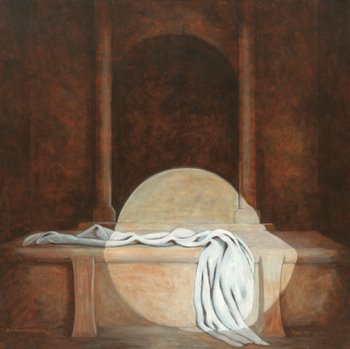
How different is the vision we are given as followers of Christ! The real St. Mary Magdalene comes to the tomb this morning to anoint the body of Jesus, and what she finds instead is an empty grave. There is no body! It is the greatest Easter surprise of all: He is risen!

The radical message of the Christian faith is that Christ breaks into our world and takes on human nature entirely. The material world, and our humanity most of all, is something that is good, not evil. God takes it to Himself—soul and body—and He redeems it. He raises it up again.

The true message of the real Gospel is that this world—our bodies, our relationships, our care for the poor, our words and actions, our very lives—these things matter. We are not just spiritual beings waiting to be set free from this world. We are made of soul and body, and God wants us to live fully right here in this world, with our hearts set on the world to come. That truth should change us, and change the way we live our lives.


There is a very moving short story by English author D. H. Lawrence, called “Odour of Chrysanthemums.” It is considered to be a classic of English literature (it's also one of the only D.H. Lawrence stories you can read without having to go to confession afterward!).

The main character is a woman named Lizzie, and she is married to a coal miner who often comes home drunk or sometimes not at all. She despises him in her heart because he has become nothing more to her than a stranger.

As the story begins and her husband doesn’t show up after work, she begins to say to herself: He won’t be home tonight until they carry him in. And sadly she is right. She soon discovers that her husband has died accidentally in the coal mine. They indeed carry him home and she has the difficult job of cleaning him up, wiping all the dust and dirt from his body.

But in the midst of that awful task she discovers something alarming about this man as she clears away the coal and the soot. She begins to see things in him that she had never seen before. And then suddenly she begins to look more deeply at her own life, and she asks herself:

Who am I? What have I been doing? I have been fighting a husband who did not exist. He existed all the time. What wrong have I done? What was it that I have been living with? There lies the reality, this man.

The narrator goes on to say:

Her soul died in her for fear: she knew she had never seen him, he had never seen her, they had met in the dark and had fought in the dark, not knowing whom they met nor whom they fought. And now she saw, and turned silent in seeing. For she had been wrong. She had said he was something he was not.


On this Easter morning, as we celebrate the resurrection of Jesus Christ—soul and body—and reflect upon how He has taken on our humanity in all its weakness and all its brokenness . . . and redeemed it, what is our response as we look around us at the world we live in?

Like Lizzie in that story, we too are called to see something more than brokenness, weakness and sin. We are called to see each other as children of God, redeemed by Christ, and called to share in His resurrection. Might that Gospel and that vision of eternal life truly change the way we live in this world as we wait in hope for the life of the world to come.

Thursday, April 13, 2006

Holy Thursday-The Paschal Mystery Made Present

(Holy Thursday-Year B;This homily was given 13 April, 2006, at Our Lady of Mercy, East Greenwich, R.I.; read Exodus 12:1-14, 1 Corinthians 11:23-26)

Tonight we begin the sacred Triduum, those holy three days in which we enter more deeply into the very mysteries of Christ’s passion, death and resurrection. These days are always filled with inspiring and powerful moments. As we listen to the readings in these days, we can ask ourselves:

What must it have been like to be with Christ and the twelve Apostles in that upper room for the Last Supper?

To stand beneath the cross with Mary that Good Friday?

To come, with Mary Magdalene, to the tomb of Christ that first Easter morning . . . and find it empty?


In the Triduum we focus on these great events of Jesus’ life, the events of our own redemption. But somehow it is not enough for us to simply recall these events that occurred some 2,000 years ago. We need more than a memory, more than a remembrance of the redemption Christ won for us.

Jesus knew that. And for that reason, on the night before He died, at the Last Supper, Jesus takes the events of His own passion and death, and unites them once and for all to a meal.

It was the Passover meal, the one celebrated by the Jews each year to remember how God saved them from slavery and death in the land of Egypt. Jesus and the Apostles had celebrated that feast, that meal, all their lives. Yet, suddenly Jesus does something that had never been done before. We heard about it in that second reading from St. Paul.

He took the bread that was always used at that meal, and said, “This is my body” which will be given up for you. Then He took the cup and said, “This cup is the new covenant in my blood.”

The body that Christ will offer to the Father on the altar of the cross, and His blood that will be poured out on Good Friday for the forgiveness of sins, that gift of Christ Himself, is made present at that Last Supper in the form of bread and wine.

Christ then commands the Apostles to continue that sacrifice as He institutes the priesthood. He commands them to “Do this in memory of me.”

This is the gift we celebrate each Mass when we celebrate the Eucharist. It is the Passover fulfilled, the very sacrifice of Christ made present in every time and place. We truly believe as Catholics that the events of that first Triduum—Jesus’ sacrifice and death for us on the cross—are made present each time we celebrate the Mass.

Pope John Paul II, in his encyclical letter Ecclesia de Eucharistia, refers to this very mystery when he says:

In this gift Jesus Christ entrusted to his Church the perennial making present of the paschal mystery. With it he brought about a mysterious “oneness in time” between that Triduum and the passage of the centuries.
—Ecclesia de Eucharistia, #5

That first Triduum and those events of our redemption are, in a certain sense, “brought forward,” here tonight, and wherever the Eucharist is celebrated. They are perpetuated throughout all of history, and there is never a time or place where the great sacrifice of Christ and the glory of His resurrection are not present.


There is a man named Walter Ciszek whose cause for canonization is now being put forward. He was a young Jesuit priest from Pennsylvania who wanted nothing else than to bring the Gospel of Christ to the people of Russia. Near the beginning of World War II, he finally got his chance and he slipped behind the Iron Curtain under the guise of a common laborer.

It wasn’t long before the KGB discovered that he was a priest, and he was arrested and tried as a Vatican spy! It was a ridiculous charge and he expected them to discover this soon enough and he would be set free. Instead, the more they interrogated him the more convinced they became that he was sent to Russia to bring back secrets to Rome.

Walter Ciszek spent 23 long years in the Soviet prisons and the labor camps of Siberia. In that time he began to see that his dream of bringing the Gospel to the Russian people was being fulfilled in a very different way than he had imagined. Time and time again he offered the sacrifice of the Mass—at the risk of being executed—making Christ and the paschal mystery of the Triduum present even in the midst of Siberia.

Finally, one cold spring morning, he was told that he would be released from the prison camp in Siberia. He was given a new place to live, though still in many ways a prisoner within communist Russia, and he was therefore forbidden to celebrate the Mass and exercise his ministry as a priest. He did it anyway.

In his book, “He Leadeth Me,” Ciszek describes one night when he celebrated the Easter Vigil in the small hut or bolok that doubled as his “chapel”. Word had gotten out that he was celebrating the Mass and hundreds of people had come from all over to attend.

There were so many that he was unable to move—even to lift his arms. Communion had to be distributed after Mass, at 3 am. It was six hours later, at 9 O’clock in the morning, when he finally finished. Collapsing on his bed that morning, one thought was fixed in his mind: That all this had taken place in communist Russia!

Obviously, an event like that became known almost immediately. He was brought before the KGB the next day and told that he would be relocated. They warned him never to celebrate the Mass again. Yet time and time again he continued to make Christ present in communist Russia through the Holy Sacrifice of the Mass. Over and over again he would express the same sentiments: that it was worth the risk.


How many times has that same mystery been celebrated, in Russia, in Auschwitz, in a thousand forbidden places and in the midst of countless lives of faithful Christians from the time of Christ until this very day? How many dark and lonely places have been graced with the light of Christ made truly present in this holy sacrament of the altar through the hands of priests consecrated for that very purpose?

Tonight we celebrate that very mystery: the mystery of the Eucharist and the Sacrament of the priesthood whereby the Eucharist is perpetuated in every time and place.

But do the Eucharist and the priesthood mean the same to us as they did to Walter Ciszek and the people of Russia? This Holy Triduum we give thanks to God for the gift of Christ in the Eucharist and the gift of the priesthood that was instituted on that same first Holy Thursday night. May we spend the rest of our lives growing in these mysteries, and coming to recognize Christ’s paschal mystery present to us each time we celebrate the holy sacrifice of the Mass.

Sunday, April 09, 2006

Extravagant Love-Passion for His Passion

(Palm Sunday-Year B;This homily was given 9 April, 2006, at Our Lady of Mercy, East Greenwich, R.I.; read Mark 14 & 15)

Who are the people we ordinarily associate with the Passion of Christ? Each year we hear about the Apostles, Mary and the women of Jerusalem; we hear about the scribes and the Pharisees, Pilate and the Romans, and a host of other characters.

But in St. Mark’s introduction to the Passion of Christ we are introduced to a person we do not usually think of when we reflect upon the suffering and death of Jesus: the woman with the alabaster jar of precious ointment. St. Mark recalls how she breaks open that jar and pours out its expensive contents in an expression of extravagant—even provocative—love.

Although we may not often consider her to be an important part of Jesus’ Passion and death, Christ Himself declares of her, and her alone:

Wherever the Gospel is proclaimed to the whole world,
what she has done will be told in memory of her.
—Mark 14:9

As we meditate on Christ’s Passion this coming week, we are called to do more than simply tell her story; in a certain sense, we are called to enter into her story; and not her story only, but the story and the very life of Christ Himself.

This is Holy Week, the singular most significant week in the Church’s liturgical year. It is the week that we focus, in a particular way, on the most central mysteries of our salvation:

On Holy Thursday of this week, we gather to celebrate the Mass of the Lord’s Supper. We remember that Christ, on the night before He died, gave over His body and poured out His blood in the Eucharist for the life and sustenance of the Church.

On Good Friday we gather as God’s people to remember and celebrate the sacrifice of Christ on the cross, that glorious death which purchased for us salvation and the forgiveness of our sins.

Finally, at the Easter Vigil, we assemble once again as Church on Holy Saturday evening, our souls and our sanctuary filled with light, and celebrate with great joy the resurrection of Christ.

This is indeed Holy Week, and God calls each of us to enter into it with joyful expectation and hopeful anticipation as the day of Easter draws near. We are called to celebrate not only these solemn feasts, but to truly open our hearts to God in all the areas of our lives: in our homes and families, in our relationships, and in the work place.

Might we break open what is most precious within each one of us this Holy Week, pouring out upon Christ and His Body, the Church, our faith, our devotion, our passion for His Passion. And might our hearts be opened more completely this year to receive the Easter message of Christ’s resurrection with joy.

Saturday, April 01, 2006

The Law of the Gift

(5th Sunday of Lent-Year B;This homily was given 2 & 3 April, 2006, at St. Elizabeth, Bristol, R.I. and 3 April, 2006, at Our Lady of Mercy, East Greenwich, R.I.; read John 12:20-33 and Gaudium et Spes, #24)

The Christian life and Christian faith is often experienced and expressed in paradoxes. We see this many times in the Gospel. Jesus says that those who humble themselves will be exalted; those who wish to be greatest must become the servant of all.

Perhaps one of the greatest paradoxes in Scripture is found in St. John’s Gospel, the one we listened to this weekend. Jesus tells us that the path to a fruitful and productive life begins at death!

Unless a grain of wheat falls to the ground and dies, it remains just a grain of wheat; but if it dies, it produces much fruit.
—John 12:24


Ultimately, Christ is talking about the mystery of Easter. Each year we prepare ourselves to celebrate that mystery, which marks the journey from life, to death, to life eternal. Christ Himself comes to experience that mystery in its fullness through His passion, death and resurrection.

Yet each one of us is called to live out this mystery every day. Christ tells us that:

“Whoever loves his life (clings to it) loses it” (John 12:25).

“Whoever hates his life in this world (
learns to give it away) will preserve it for eternal life” (John 12:25).


The theological term often used to describe this way of life is the Law of the Gift. Essentially what is means is that we are really and completely fulfilled only when we learn how to give more completely of ourselves (Vatican II, Gaudium et Spes, #24).

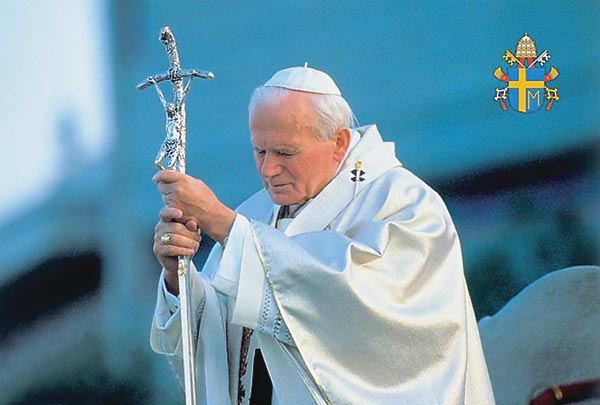
It is no coincidence that we reflect on this passage from St. John’s Gospel and meditate on the Law of the Gift this weekend, on the 1-year anniversary of the death of our beloved Pope John Paul II.

Perhaps more completely than anyone in this past century, Pope John Paul II taught and lived the Law of the Gift all throughout his life. As a young man, and then a priest, but most especially as Vicar of Christ and successor to St. Peter, Pope John Paul II exemplified the Law of the Gift and left us all an example of how to build a life following that law.

Many people still remember the year 1978 as the year we elected two Popes. Having returned to the city of Rome for the second conclave in a matter of weeks, many of the cardinals began to question what God might be saying to them regarding the election of the next successor to St. Peter.

For hundreds of years they had elected Italian Popes; might God be moving them in another direction, to think outside the parameters that they were used to working within?

It is said that, after many days of deliberation, the momentum began to sway in the direction of the young Polish Cardinal, Karol Wojtyla [that is John Paul II’s baptismal name]. As they were counting the ballots it suddenly became clear that there were enough votes in his favor, and that he would be the next Pope.

Witnesses say that Wojtyla looked visibly shaken, and that he bent over and placed his face in his hands. One of the Cardinals began to fear that he would not accept the nomination! Think about how different that is from a Presidential election, with the balloons and streamers and everyone shouting for joy.

He understood what God was asking of him. He understood well the Law of the Gift: that God was asking him to give no less than everything.

Earlier that week, before the conclave, in a sermon he was asked to preach at a Mass for the recently deceased John Paul I, he reflected on this incredible responsibility, and the depth of the love which God demands of every Pope. He had said:

The succession of Peter, the summons to the office of the papacy, always contains within it a call to the highest love, to a very special love. And always, when Christ says to a man, “Come, follow me,” He asks him what He asked of Simon: “Do you love me more than do the others?” Then the heart of man must tremble . . . Christ’s command, “Come, follow me,” has a double meaning. It is a summons to service, and a summons to die.


And so, the Cardinal in charge approached Karol Wojtyla’s desk that afternoon, while the others waited silently and watched. He asked him if he was willing to take up this office to which God was calling him, and Wojtyla replied immediately, without hesitation: “I accept.” The grain of wheat had fallen, and the fruit was about to begin.

John Paul II’s entire papacy modeled this dying to self, with which he began his journey as the successor of St. Peter. Time and time again he would have to surrender himself to the will of God and lose himself in order to gain Christ.

I’m sure most people are familiar with the fact that John Paul II was the first Pope in history to have been shot. It was one of the darkest days in the last century, when—in 1981—an assassin attempted to kill the Pope right in St. Peter’s Square.

The day was May 13, the same day that the Blessed Virgin Mary had once appeared to three young children in Fatima. When asked how it was possible that the bullet which entered his body had missed every major organ, the Holy Father said: “One hand fired [the gun], but another guided the bullet.”

And then the Pope went on to do something that sent shockwaves throughout the world. He forgave the man who had tried to kill him. In an address taped from his hospital bed and broadcast from St. Peter’s Square that very Sunday, the Holy Father said:

I pray for that brother of ours who shot me, and whom I have sincerely pardoned. United with Christ, Priest and Victim, I offer my sufferings for the Church and for the world. To you, Mary, I repeat: Totus tuus ego sum.

That last part of the Pope’s message, his motto as Pope, is a Latin phrase which sums up John Paul II’s total consecration to Jesus, through Mary: Totus Tuus, I am totally yours.

It is to Mary that John Paul II attributed that miraculous intervention. The bullet that went through his body that afternoon was later taken from the floor of the Pope-mobile, and placed—by John Paul II himself—in the crown of the statue of Our Lady of Fatima, in Portugal. It remains there today.

But what a curious message he was sending that Sunday: “United with Christ, Priest and Victim, I offer my sufferings for the Church and for the world.”

What does that mean? What does it mean for someone to offer their sufferings up for the Church? For the world? What it means is that we saw the fruit of John Paul II’s papacy; always we saw the fruit. But behind it all was that grain of wheat falling to the ground.

Falling, like his face in his hands at the conclave when he was elected Pope. Falling, like his body on the floor of the Pope-mobile, offered up to Jesus, through Mary. Falling, like his voice towards the end of his life, shaking with age and the dramatic effects of Parkinson’s disease, but speaking nonetheless the eternal words of God.

John Paul II was a man who lived out the Law of the Gift, and we in the Church and people throughout the world are continuing to see the fruits of it:

Unless a grain of wheat falls to the ground and dies, it remains just a grain of wheat; but if it dies, it produces much fruit.
—John 12:24


But it is not only the Pope who is called to live out the Law of the Gift. All of us are called to realize that eternal truth, that “man can fully discover his true self only in a sincere giving of himself” (Gaudium et Spes, #24).

I was 23-years old when I first felt God calling me to the priesthood. I remember my response at that time, how I had decided in my heart: God, I am willing to do anything that You want, to be anything You want me to be . . . anything but that!

It took me 5 years before I was able to prayerfully discern and grow in my life and faith, until I could see that this vocation that God was calling me to was the very thing that I also wanted all along. I realize now that being called to the priesthood, and responding to that call, is the greatest thing that has ever happened in my life. It’s the Law of the Gift, the reality that we are never really fulfilled in this life until we learn first to give more completely of ourselves to God and those around us.

As we continue to remember Pope John Paul II and seek to follow his example in our daily lives, how is God calling each of us to live out the Law of the Gift more completely in our own vocation, in our relationships with each other and with Him?

Like Pope John Paul II, let us learn to spend our lives loving God and those around us more completely than ever before, because our lives are not truly lived until we learn how to give them away.


If you are in the area, please join us for:

The Spiritual Legacy of Pope John Paul II
St. Elizabeth's Parish Mission

Bristol, R.I.
April 3-6, 7:00 PM


Sunday, March 19, 2006

Cleansing the Temple

(3rd Sunday of Lent-Year B;This homily was given 19 March, 2006, at Our Lady of Mercy, East Greenwich, R.I.; read Exodus 20:1-17; John 2:13-25)

One of the oldest and most basic ways of establishing a relationship between persons is through what is called a covenant. We see this everywhere, even in our own culture. The most common covenant is the covenant of marriage. A man and a woman make a commitment and agreement with each other, to love one another, to care for one another, to be faithful to each other. It is a covenant of equals.

There is also such a thing as a covenant between two unequal parties. A king would make a covenant with his subjects; a landowner would make a covenant with tenants, agreeing to pay them a certain wage in exchange for the produce they gathered from the land.

Perhaps the greatest covenant in human history is the one we read about in the book of Exodus; it is the covenant God makes with the people of Israel. Having just freed them from slavery in Egypt and put them on the road to the Promised Land, the Lord leads Moses to the top of Mount Sinai, and there He makes a covenant with the people.

The covenant God makes with Israel is a covenant of love and the conditions of that covenant are crystal clear:

You have seen for yourselves how I treated the Egyptians and how I bore you up on eagle wings and brought you here to myself. Therefore, if you hearken to my voice and keep my covenant, you shall be my special possession, dearer to me than all other people, though all the earth is mine. You shall be to me a kingdom of priests, a holy nation.
—Exodus 19:3-6

This covenant of love, the Ten Commandments, with all of its prescriptions and implications, essentially comes down to two sides of the same coin: love of God and love of neighbor.

The first three commandments are directed towards the love of God:

I, the LORD, am your God, who brought you out of the land of Egypt, that place of slavery. You shall not have other gods besides me.

The people were to put nothing before their relationship with God: not family, not business, not personal interests. God was to have pride of place over everything else that they did and over all other priorities in life.

You shall not take the name of the LORD, your God, in vain. For the LORD will not leave unpunished the one who takes his name in vain.

They were to honor God with their speech, never taking His name in vain or dishonoring His name by the way they conversed with others.

Remember to keep holy the Sabbath day.

The people of Israel were to observe that day as a day of rest, and a day of worship. No work was to be done, and God was to be honored in a particular way, for the Lord Himself rested on the seventh day.


The rest of the commandments are concerned with love of neighbor; if we love our neighbor, then we will not steal, we will not covet, we will not commit adultery, we will not kill . . .

To observe these commandments was to dwell in the fullness of life that God was calling them to in the Promised Land. They would be at peace and live in a harmonious relationship with God and those around them.

The history of the nation of Israel is essentially a set of footnotes as to how well or how poorly they observed this covenant and followed the commandments that God had given them. All throughout the Old Testament, God constantly sends them the prophets to call them back to fidelity, back to the covenant that God had made with them on Mount Sinai.


This morning Jesus enters the Temple, the place where the fullest expression of love of God and neighbor should be observed, and He finds anything but that expression. It was the place where the people of God would come together as one, and worship the Lord, their God.

But instead of love of neighbor, Christ finds exploitation of neighbor. He enters what should be a house of prayer and a place of worship, and instead He discovers a marketplace. God is no longer top priority here; now it’s business. And Christ is furious.

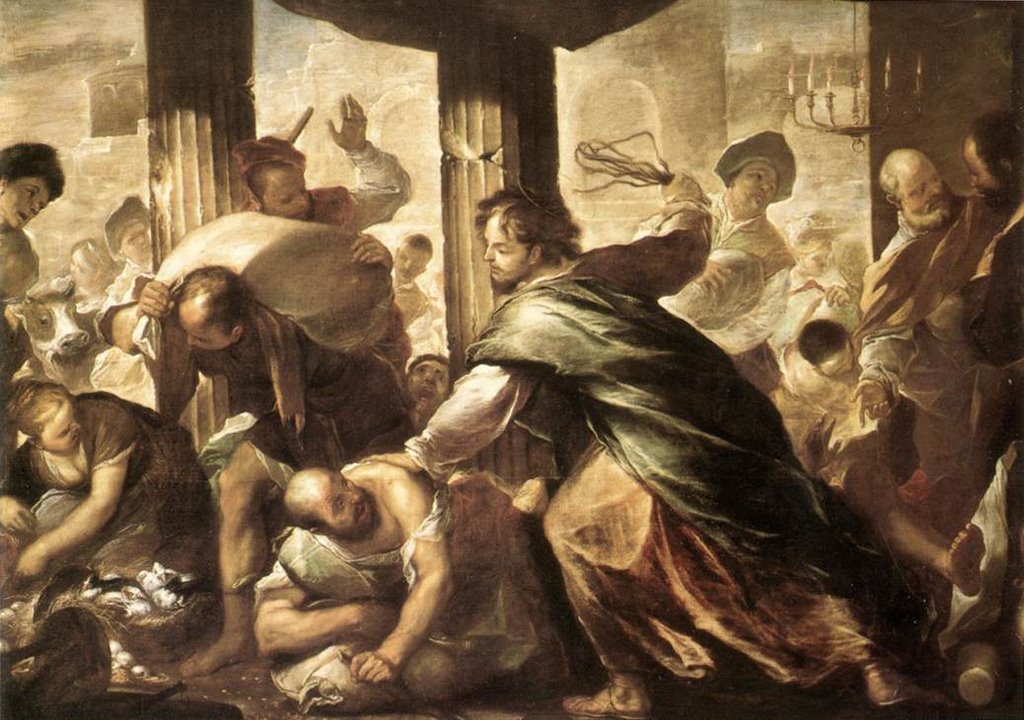
We see Christ in rare form in the cleansing of the Temple. In a display of righteous indignation, He makes a whip out of cords and drives away the moneychangers. But the Fathers of the Church have always seen in this event much more than Christ chastising the people. He is preparing them for an entirely new sacrifice, and a new and everlasting covenant.

The cleansing of the Temple is a dramatic and explosive event in the life of Christ, and one of the few moments that is included in all four Gospels. The scene itself goes much further than a reprimand of the moneychangers. St. John tells us that Christ:

Drove them all out of the temple area, with the sheep and oxen . . . and to those who sold doves he said, “Take these out of here.”
—John 2:15-16

He drove out the sheep and the oxen? What did they do wrong? He orders the doves to be taken out of there. For what reason? Christ is preparing the people of Israel for the day that is fast approaching when the animal sacrifices will cease and there will be an entirely new form of worship.

Historically, we know that in 70 A.D., less than 50 years from this scene in St. John’s Gospel, the Temple itself will be completely destroyed by the Roman Empire. Christ predicts this very event in the Gospels. He says, “Not one stone will be left upon another.”

What He has come to bring is a new sacrifice and a new covenant. No longer will there be a lamb sacrificed every year at Passover to remember the deliverance of the people of Israel. No longer will there be a sacrifice of a lamb every morning and every evening in the Temple for the atonement of sins.

As John the Baptist points out when Christ walks by the banks of the Jordan River: “Behold, the Lamb of God, who takes away the sins of the world.” The new sacrifice and the new covenant is Jesus Christ. There is only one sacrifice, and one man, Christ the Son of God, who has come to establish a new covenant between God and man.

We have been baptized into the very life of Christ; as St. Paul tells us: “Christ in you, the hope of glory” (Colossians 1:27). The Holy Spirit lives in us through baptism and we now have the ability—by the grace and mercy of God—to live out the covenant like never before. We are able to love God and neighbor the way Christ commands us because He gives us all we need to do so.

Each time we come together as the people of God to celebrate the Eucharist, we renew this new covenant that God has made with us. We hear the words of Christ, spoken in love at the Last Supper, when He said:

Take this, all of you, and drink from it.
This is the cup of my blood,
The blood of the new and everlasting covenant.


On this Third Sunday of Lent, as we continue to prepare ourselves for the celebration of Easter, how is God calling us to open our hearts and minds more completely to this covenant of love He has made with each of us? Where have we failed to love God or love our neighbor, and where are we in need of change?

If Christ were to enter the Temple of our hearts, or our assembly, what might He drive out and purify? We ask Him to come and cleanse the Temple of our souls and renew our lives in this new and everlasting covenant, that we might be ready to celebrate in the fullness of joy His resurrection this coming Easter.

Sunday, March 12, 2006

Metamorphosis

(2nd Sunday of Lent-Year B;This homily was given 12 March, 2006, at Our Lady of Mercy, East Greenwich, R.I.; read Mark 9:2-8)

The Transfiguration is one of the most amazing events in the New Testament. Years later it remained etched in St. Peter’s mind; he never forgot that day. To one of the early Churches St. Peter wrote:

We were eyewitnesses to his majesty. For when he received honor and glory from God the Father . . . we were with him on the holy mountain.
—2 Peter 1:16,18


But what did Peter and those other disciples see? What were they “eyewitnesses to” on that “holy mountain”? Mark’s Gospel describes a breathtaking scene in which Christ “was transfigured before them, and his clothes became dazzling white” (Mark 9:2-3). Imagine what it must have been like to see Christ transfigured on that mountain.

The Greek word St. Mark uses is metamorphothe; it’s where we get the word metamorphosis. It means to change (meta) form (morphe). Jesus was literally trans-formed right before their eyes. They no longer saw His human form, which had been so familiar to them. Instead, they saw His divine form, the glory that He shared with the Father and the Holy Spirit before the foundation of the world.

St. Paul, in his letter to the Philippians, talks about that same transformation, that same metamorphosis, but in reverse. He describes how the Son of God left the glory of heaven, humbled Himself, and became man. The word he uses, morphe, is the same one we just heard in St. Mark’s Gospel. St. Paul says that although Christ:

Was in the form (morphe) of God, he emptied himself, taking the form of a servant . . . And being found in human form, he humbled himself and became obedient unto death, even death on a cross.
—Philippians 2:6-8


That was the appearance of Christ in His humanity; it was the very thing that the disciples had seen all throughout their time with the Lord. But now—for that brief moment on the mountain—Christ reveals Himself to them in His divine glory. But why? St. Leo the Great says that there are two reasons why Christ chooses Peter, James and John to witness His transfiguration.

The first is so that they will be strengthened for that time when Christ will be taken from them and crucified. Having already seen His glory in the Transfiguration, they will be able to endure the scandal of the cross. They will eventually come to see that the suffering Jesus experiences is a voluntary one, where, as St. Paul says, he "humbled himself and became obedient unto death, even death on a cross" (Philippians 2: 8). In the Gospel of John, Jesus says:

I lay down my life in order to take it up again. No one takes it from me, but I lay it down on my own. I have power to lay it down and power to take it up again.
—John 10:17-18

In those days following the cross, the disciples will look back on what happened on the Mount of Transfiguration, and remember that our glorious Lord gave Himself willingly so that we might have new life.


The second reason for the Transfiguration is to give the disciples a glimpse of the glory that Christ is calling them, and us, to share in for all eternity. That is why Christ “emptied Himself” to begin with, the reason why He took on our human form; so that we could undergo the greatest transformation, the greatest metamorphosis of all: to share in the very life of God.

Now, the temptation is to try to walk through door number 2—the glory of heaven and eternal life with Christ—without ever passing through door number 1: the labor and the toil, as well as the suffering and the cross that we all must share with Christ. You’ve heard it said before: no cross, no crown.

We see that temptation revealed in St. Peter, who desires nothing else but to remain on that mountain for as long as Christ will permit it.

“Rabbi,” he says, “it is good that we are here! Let us make three tents: one for you, one for Moses, and one for Elijah” (Mark 9:5).


Peter likes it up there! They’re away from all the crowds, away from the toil and the difficulties of everyday life. And Christ is certainly calling Peter to one day share in that serenity, to bask in that glory . . . but not yet! Not now! There is still much more to be done in the days to come, for Christ and for Peter.


St. Augustine, in one of his sermons on this scene of the Transfiguration, becomes so worked up about Peter’s desire to stay on the mountaintop that he stops preaching to the people and begins to speak and shout to St. Peter himself! He says: “Come down, Peter! You were desiring to rest on the mountain; come down!”

Then, reflecting on how Christ humbled himself, how He emptied Himself to take on our human form, Augustine goes on to say to Peter:

The Life came down, that He might be killed;
The Bread came down, that He might hunger;
The Way came down,
that He might be wearied on the journey;
The Fountain came down, that He might thirst;
And you [Peter] refuse to suffer?

—St. Augustine, Sermon 78, #6


The Transfiguration is given to us on this Second Sunday of Lent so that we, too, might catch a glimpse of the glory that Christ is calling us to share in, but most of all so that we may be strengthened in our resolve to follow Christ on the way.

But where are we tempted, like St. Peter, to stay on the mountaintop and not labor here on the earth? What are those things Christ has called us to do—in our vocation, in our daily practice of faith, in our Lenten observances as Catholics?

We are reminded today that even as Christ came down from heaven, and took upon Himself our human form and burdens, we too must strive here on earth to complete the work and the mission that He has entrusted to us.

And the goal of all this striving, the very point of everything that Christ wants to accomplish within us, is transformation; His desire is that we will undergo a metamorphosis in our own lives so that we will come to share in His glory forever. But that will never happen unless we are willing to come down with Him and labor here on this earth.

This second Sunday of Lent we renew our commitment to follow Christ on the way to Easter. Strengthened in the power of this sacrament we come to share in the Eucharist, we make ourselves ready to go back down the mountain, with St. Peter and so many saints after him.

And laboring here on this earth, might we experience that metamorphosis, that transformation of our hearts and minds, which sets us apart in this world as followers of Christ who will one day share His glory.

Wednesday, March 01, 2006

Ash Wednesday-The Time is Now

(Ash Wednesday-Year B;This homily was given 1 March, 2006, at Our Lady of Mercy, East Greenwich, R.I.; read Matthew 6:1-18, 2 Corinthians 5:20-6:2)

Today we begin the holy and penitential season of Lent, a time of preparation for Easter. Traditionally, Lent has often been seen as journey. On that journey we focus—in a particular way—on the practices of prayer, fasting and almsgiving.

Yet in the Gospel, Christ challenges us to look at our motives and attitudes toward these spiritual practices. How are we following them, and for what end? When we fast, when we pray or give alms, are we doing it for God or only for ourselves?

St. Augustine has a unique way of looking at the reality of sin. He says that it is actually love “turned in on itself.” We tend sometimes to take the focus of love off God or away from others, and try to turn that focus back on ourselves. The glory that God should be receiving through my prayer or fasting or whatever it might be, is instead used to glorify myself.

The point of our Lenten journey is to recognize this tendency and to ask God for the grace to change it. For that reason, the theme that runs all throughout Lent is that of repentance, a turning away from sin and selfishness and a turning back again to God.

Cistercian monk and spiritual author Thomas Keating, O.C.S.O., in one of his Lenten reflection books, talks about this recognition of our tendency to sometimes turn love back in on itself. Far from being discouraged by this recognition, he says that it can become the true beginning and very turning point of our Lenten Journey. Keating writes:

Now we experience the full force of the spiritual combat, the struggle with what we want to do and feel we should do, and our incredible inability to carry it out . . . Such insight is the beginning of the real spiritual journey.
—Thomas Keating, O.C.S.O., Journey to the Center


Why is that the beginning? Because finally we begin to see, more and more clearly, that we need God in order to live and to love the way that we are called to. We need the grace that only He can give, in order to live out the Gospel and live in full communion with God and with each other.

God offers us today a vision of Easter; it is a picture of ourselves in a whole new light, living out a love directed more completely towards Him and towards those around us.

Are we willing to be taken by Him towards that vision? Will we walk that path on our Lenten journey towards Easter? The invitation could not be any clearer than we find it in the second reading for this Ash Wednesday:

In an acceptable time I heard you, and on the day of salvation I helped you. Behold, now is a very acceptable time; behold, now is the day of salvation.
—2 Corinthians 5:20—6:2

Sunday, February 26, 2006

"Jesus, why do your disciples not fast?"

(8th Sunday in Ordinary Time-Year B;This homily was given 26 February, 2006, at Our Lady of Mercy, East Greenwich, R.I.; read Mark 2:18-22, CCC #1438, 2043)

“Jesus, why do your disciples not fast?”
This is a very good question Jesus is asked in Mark’s Gospel. Fasting—abstaining from food or some legitimate pleasure for a spiritual benefit—was a practice well established in the Jewish tradition. The Pharisees followed it; so did the disciples of John the Baptist. And Jesus’ own disciples would also continue that same spiritual discipline. As Christ says in the Gospel:

As long as they have the bridegroom with them [the disciples] cannot fast. But the days will come when the bridegroom is taken away from them, and then they will fast on that day.
—Mark 2:21-20

The bridegroom being “taken away from them” is a reference Jesus makes to His own death and subsequent resurrection. Now until that happens, of course, the disciples will not fast; they will rejoice and celebrate in the presence of Christ. But after the death and resurrection of Jesus, after His ascension into heaven, the time for fasting will come.

For centuries now the Church has continued to follow the spiritual practice of fasting. Jesus Himself modeled this for us in the Gospels; for forty days and forty nights He fasted in the desert. All of the saints fasted in one way or another. Many of you know much better than I do about the days when abstinence from meat on all Fridays throughout the year, and fasting on all the days of Lent, was a routine part of the Catholic mindset. And let’s be honest, maybe it was too routine.

The Second Vatican Council sought to purify our practice of fasting and abstinence, to help us better understand the reasons we deny ourselves to begin with. As you know, the canonical requirements of abstaining from meat every Friday and fasting on all the days of Lent were dispensed with, and we were encouraged, instead, to embrace fasting and self denial voluntarily. Many people still do that.

The American bishops at the time encouraged the faithful to fast: “as a gesture of solidarity with the passion of Christ, as an act of fidelity to the Christian past, and to help ‘preserve a saving and necessary difference from the spirit of the world.’”

—“Why Catholics Fast,”
by Eamon Duffy in First Things, March 2005

But unfortunately today, I think most of us would admit, about the only thing many people fast from is fasting itself! What has happened to this spiritual discipline that has been an integral part of our heritage as Catholics since the time of Christ? Could we not ask the same question that Jesus is asked in the Gospel: “Jesus, why do your disciples not fast?”

With Lent only just a few short days away, I would like to offer briefly three of the more practical and valuable reasons why fasting and self denial are essential and indispensable aspects of our spiritual lives as Christians.

Firstly, as the saints and spiritual writers have always pointed out, denial of self and fasting creates a void in our lives, and God is then able to fill that void with Himself.

When we choose not to eat the food that we enjoy or listen to the music we like, then we experience a literal hunger or a silence within. This points us to the reality that—in the deepest part of ourselves—we hunger and thirst for the living God. Fasting opens us up to this deeper encounter with God, who alone can fill our every need.


The second reason why the disciples of Jesus fast is because denying ourselves legitimate pleasures, choosing to abstain from the things that are a good for us, ultimately gives us strength to deny those pleasures that are not good, the ones that are sinful.

It is when I am able to deny myself that huge piece of chocolate cake that I simply cannot wait to get my hands on that I then have the strength to not say that unkind word to that person who is really getting on my nerves.

I have the ability to deny that opportunity to gossip, to reject that impure thought or that image that pops up on the computer screen because I have already been strengthened in denying myself the good pleasures that I could have had all along. Fasting and self-denial strengthen our will and help us to follow Christ more faithfully, and even more joyfully, in the everyday decisions and difficulties of life.

The final and most important reason for the spiritual discipline of fasting and self-denial is that it brings us into a more intimate union with the person and the sufferings of Jesus Christ, the one whose ultimate sacrifice and self-denial won for us eternal life.

St. Paul prays, in his letter to the Philippians:

That I may know [Christ] and the power of his resurrection, and may share his sufferings, becoming like him in his death, that if possible I may attain the resurrection from the dead.
—Philippians 3:10-11

This is a form of self-denial that I believe most people practice everyday, whether they know it or not. We all have our crosses. Every single one of us has to face difficulties and struggles in the spiritual life and in our faith.

It may be many small crosses, those minor annoyances that stretch out our patience and really test our faith. Perhaps it is a much larger cross: the death of a loved one, difficulties in marriage or in the family, it might be an addiction, or an illness that seemed to come from nowhere.

All of us experience the cross. But it is our choice to take up that cross and follow Christ. One of the most challenging commands of Jesus is found in the Gospel when He says to the disciples:

Whoever wishes to come after me must deny himself, take up his cross, and follow me.
—Matthew 16:24 (Mark 8:34, Luke 14:27)

Christ is not trying to be exclusive or elite here; He is simply stating the fact that we cannot follow Him if we are unwilling to walk the path He walked; that path was very often one of self-denial and suffering.

The great Irish missionary, Amy Carmichael, in her poem, “Hast thou no scar?” sums up this point completely. In that poem, the speaker is Christ and He asks:

Hast thou no scar?
No hidden scar on foot, or side, or hand?
I hear Thee sung as mighty in the land,
I hear them hail thy bright ascendant star,
Hast thou no scar?

Hast thou no wound?
Yet I was wounded by the archers, spent,
Leaned me against a tree to die; and rent
By ravening beasts that compassed me, I swooned:
Hast thou no wound?

No wound? No scar?
Yet, as the Master shall the servant be,
And pierced are the feet that follow Me;
But thine are whole: can he have followed far
Who has nor wound nor scar?

—Amy Carmichael, Toward Jerusalem


Lent is only a few short days away, and Christ is calling each of us into a deeper relationship with Him, asking us to draw closer to Him than ever in this season of grace. Today we simply pray:

Lord Jesus, help us to practice fasting and self-denial, to open up a void in our lives that only You can fill. Give us strength in denying the legitimate pleasures of life that we may be able to say "no" to the things that harm us. And give us the courage to deny ourselves this Lent, to take up our cross and follow You.

Sunday, February 19, 2006

The Priorities of Christ

(7th Sunday in Ordinary Time-Year B;This homily was given 19 February, 2006, at Our Lady of Mercy, East Greenwich, R.I.; read Mark 2:1-12)

If you have been in a video store at all lately, then you know that there is no shortage of movies being made on exorcism and the supernatural— movies like Constantine and The Exorcism of Emily Rose. While most of these movies are more science fiction than reality, as Catholics we really do believe in exorcisms, although they are very rare.

Most every diocese, in fact, has a special priest appointed to perform exorcisms, if need be. But as you might imagine, getting a priest to take on that ministry is not always easy.

Fr. Gabriel Amorth, chief exorcist of Rome, in his book An Exorcist Tells His Story, relates how one bishop complained to him because none of his priests would agree to take on the assignment; they were all afraid of what might happen to them if they did!

Fr. Gabriel told that bishop that his priests shouldn’t be afraid of doing exorcisms, because there are two things a priest does on a regular basis that enrage the devil more than exorcism: preaching the Gospel and hearing confessions. Why is that?

Fr. Gabriel went on to describe how preaching the Gospel and explaining the word of God increase the life of faith. Faith is the very thing that helps us grow closer to Christ, helps us to avoid the things that would lead us away from God.

Confession and absolution have the power to restore our relationship with God completely, even if that relationship has been broken by serious sin. No matter what we have done or how long we have been estranged from God or the Church, the sacrament of reconciliation washes our sins away and we begin a whole new start with Christ.

The proclamation of the word of God and the forgiveness of sins: two very powerful gifts that unite us to God and keep us united to Him. And so it’s no wonder that those are the very things that Jesus places a priority on in the Gospel this morning.

It’s a remarkable scene that Mark describes for us. Jesus returns to Capernaum and we are told that so many people flocked to that place:

That there was no longer room for them, not even around the door, and he preached the word to them.
—Mark 2:2

Think of all the things Christ could have done in that place. He could have performed miracles, proving to them who He was; but instead “he preached the word to them.” And they flocked to that place because He was telling them of God’s plan for salvation. They were hanging on his every word.

All throughout the Gospels, preaching the word of God is a top priority of Jesus. Again and again, in towns and villages, and everywhere He goes, Christ announces the message of God’s mercy and grace through His preaching of the word. Listening to that message and responding to that word in our lives is still a priority in the Church today.

The second priority of Christ in the Gospel this morning is the forgiveness of sins. St. Mark relates that dramatic episode of the paralyzed man being lowered down from the rooftop. His friends were desperate to bring Him to Jesus. The whole house waited in anticipation. And Jesus did the last thing they were expecting:

He said to the paralytic, “Child, your sins are forgiven.”
—Mark 2:5

It seems rather obvious to us that the priority should be his physical healing, but once again Jesus reveals His own priorities when it comes to our spiritual lives: the forgiveness of sins.

The forgiveness of sins is the reason why Christ comes to earth to begin with. The forgiveness of sins is why Christ dies on the cross, and it’s the one thing that God will never refuse to those who come to Him seeking that forgiveness.

Not everyone who asks for physical healing receives it. Not all of our prayers are answered in the way we expect, not all of our desires are granted in our journey of faith. But every time we seek God for the forgiveness of sins—in particular when we come to Him in the very sacrament that He instituted for this purpose, the sacrament of reconciliation—we are forgiven. We start anew with Christ.

This morning we simply reflect on the priorities of Christ: proclaiming the word of God and forgiving our sins. How is God’s life-giving word renewing us and helping us to grow in our faith, and where are those places in our lives that we are in need of the forgiveness of Christ. They were priorities for Jesus; may they also be priorities for every one of us.

Sunday, February 12, 2006

Touched By Christ

(6th Sunday in Ordinary Time-Year B;This homily was given 12 February, 2006, at Our Lady of Mercy, East Greenwich, R.I.; read Mark 1:40-45, Catechism of the Catholic Church #1127-1129)

There are few things Christ could have done in the Gospel this morning that would have shocked the people of His time more than reaching out and touching a leper. All throughout the Gospels, the words and actions of Christ are powerful, sometimes shocking, and even provocative.

But more than that, they are what we call salvific; His words and actions have the power to save, to heal, to transform. The earthly life and ministry of Jesus is itself an anticipation of the work He will accomplish on the cross. The cross is the place of power, that event where Christ will come to heal the sin and suffering not only the people of His own time but also people of all time.

This power to heal is not something that Christ relinquishes after He ascends into heaven and returns to the Father; Christ continues to reach out and touch us even now. I mentioned last week that He does this in the sacraments of the Church. The Catechism of the Catholic Church says that
“in the sacraments Christ continues to ‘touch’ us in order to heal us” (CCC, #1504).

But the sacraments can become so familiar to us as Catholics, so common to our experience, that we risk taking them for granted. What is really taking place in this touch of Christ that we encounter in the sacraments?

Essentially, there are two aspects of the sacramental life that are made evident in our Gospel this morning. The first is the very power of Christ, who is able to bring about healing and manifest His grace simply by the act of reaching out to us.

The leper approaches Jesus and says, “If you wish, you can make me clean.” Christ is moved with pity for him, and He stretches out his hand, touches him, and says, “I do will it. Be made clean.” We are told that
“The leprosy left him immediately, and he was made clean.”

In sacramental theology, the term used is ex opere operato; it means that the sacraments are effected simply by the power of Christ, regardless of the worthiness or the holiness of the one administering the sacrament (the priest) or the one receiving the it.

When a child is baptized, it is Christ who cleanses that child of original sin. When the Eucharist is confected, Christ transforms the bread and wine into His body and blood. It does not depend upon us.

The great Catholic author Graham Greene, in his classic novel, The Power and the Glory, gives us a challenging example of ex opere operato. The main character is a priest who is “on the run.” He is in Mexico during that period in history when Catholicism has been outlawed, so his life is in danger at every turn.

Now, all throughout the book he is struggling with his past. He is battling alcoholism—he refers to himself often as “the whiskey priest”—and he has fathered a child; he’s struggling with the shame that comes along with that. He’s in a terrible spiritual state.

But as he continues to run from the authorities, he encounters the common people who are literally dying for the sacraments. He goes through a village and they prevail upon him to celebrate Mass for them; in another place they get him to perform baptisms. And all the while he’s in a state of mortal sin.

The book poses some very complex moral issues, but nonetheless it gives a rather dramatic example of ex opere operato, the power of Christ in the sacraments beyond the worthiness, or often unworthiness, of His people.

But there is another essential aspect of the sacramental life, and that is our response. It is possible for the sacraments of baptism or the Eucharist to be rendered ineffective, not because of any lack or shortcoming in God, but simply because we have not responded or we have responded poorly.

The leper in the Gospel this morning is told very clearly by Christ not to publicize what has happened to him. “See that you tell no one anything,” Jesus says to him. The command is very clear. He publicizes the matter anyway, and as a result Jesus can no longer minister in that town. He is forced to change His mission in that place.

Sometimes we place obstacles before the sacraments, which render them ineffective. What kind of obstacles? Our sins, our lack of preparation in receiving so great a gift, perhaps our complacency or even lack of faith in what God is able to accomplish in us through the sacraments of the Church.

It has been said that the sacrament of baptism, un-inhibited, will eventually lead to complete personal sanctity; in other words, if there are no obstacles to hold it back, our baptism will allow us to become saints. One of the greatest things we can do to grow in the spiritual life is to acknowledge those obstacles, those difficulties we encounter which may be keeping us from growing in our faith, and give them to God.

God is more powerful than any obstacle in our way. He is able to overcome whatever is keeping us from living a joyful and faithful life in Christ. The miracle of grace and the miracle of the Gospel is that, time and time again, He does exactly that!

This week, may we become more and more aware of the power of Christ who touches us personally in the sacramental life, and may we respond more completely to that touch by allowing Him to accomplish all that He desires in us.

Sunday, February 05, 2006

Once Upon a Fifth Sunday in Ordinary Time . . .

(5th Sunday in Ordinary Time-Year B;This homily was given 5 February, 2006, at Our Lady of Mercy, East Greenwich, R.I.; read Mark 1:29-39)

Do you believe in fairy tales? You know, those stories like Cinderella, Snow White and the Seven Dwarfs, Beauty and the Beast. Why do those stories have such longevity? Why are they still able to sell movies years after they are written, or fill the Broadway Shows season after season?

There is something about those stories that allows us to see that anything is possible. And every so often we read or hear about a story that sounds like something right out of a fairy tale, a real-life Cinderella Story. But did you ever think that something like that could happen to your mother-in-law?

In our Gospel this morning, St. Peter’s mother-in-law is sick with a fever, possibly on the point of death. The disciples tell this to Jesus; He immediately moves to her bedside, takes her by the hand, and lifts her up. “Then,” St. Mark says, “the fever left her and she waited on them” (Mark 1:31).


It sounds like something right out of Walt Disney, but it is more powerful than that because it’s not a fairy tale at all; it’s real. This happened; the Son of God literally walked into this woman’s house, took her by the hand, lifted her up and restored her to health!

And that was just the beginning. St. Mark tells us that before the day was through: They brought to him all whom were ill or possessed by demons. The whole town was gathered at the door (Mark 1:32-33).

And Jesus healed them. It is quite a remarkable scene, but it was never meant to be just a story. The miracle that Jesus performs in the Gospel this morning is one that touches each of our lives; it’s a reality that we all experience as members of His Church.

The Catechism of the Catholic Church says that “in the sacraments Christ continues to ‘touch’ us in order to heal us” (CCC, #1504).

Jesus knows each one of us personally, and He knows what we need; He made us, and He understands that we are made of body and soul, that we are spiritual, but that we also have physical needs.

His desire is to continue to reach out to us—body and soul—to take us by the hand and lift us up whenever we are in need. He does that in the sacraments that He has given to the Church.

In baptism, water is poured over our heads, physically, and our souls are cleansed of original sin; in the waters of baptism Christ touches us and we are given new life in the Holy Spirit.

Those of us who have been confirmed were marked with the sign of the cross on our foreheads, physically; the bishop made that sign with holy oil and said: “Be sealed with the gift of the Holy Spirit,” and we were given—at that moment—an invisible grace to fulfill more completely our baptismal call to holiness.

In the Eucharist that we celebrate here this morning, Christ is made physically present, His body and blood are made present here on this altar so that we can be fed with the Bread of Life. Christ desires here at this Mass to take us by the hand and lift us up. What a remarkable gift!

But we live in strange times. People today want the grace and the healing that Christ offers, but they do not necessarily want the sacraments through which that grace and healing are given. They want Christ and a personal relationship with Him, but they do not always want to draw close to His body, the Church.

That is never what Christ intended. Never does Christ separate our spiritual life—our spiritual relationship with Him—from our physical life and our relationships within the Body of Christ. The same One who reaches out and physically touches His people in the Scriptures, bringing them healing and strength, still reaches out to us in the sacraments of the Church. Our heart’s desire should be to receive that touch, and to embrace the One who is constantly reaching out to us.

In this Eucharist this morning, we are invited into the Cinderella Story that is more powerful than any fairy tale, because it is a story that is real; it has the power to change and transform our very lives. Might we enter more completely into that story, as Christ reaches out to us today, takes us by the hand, and lifts us up to Himself. Strengthened and nourished in the Eucharist, might we grow in our relationship with Christ, but also in all our relationships with the members of His Body, the Church.

Saturday, January 28, 2006

Voice from Afar

(4th Sunday in Ordinary Time-Year; 28 January 2006. I am on vacation this week, but had the chance to write my first homily while being timed in an Internet cafe. Very interesting; I’ll send you the bill!.)

You have probably seen the cartoon series by Gary Larson called "The Far Side." It has that unique ability to capture both the comic and the bizzarre at the same time. One of my favorite Far Side cartoons shows a man sitting down with his children, reading a book. The faces of the children are frozen in terror, as the caption at the bottom explains the reason: Stephen King, reading a bedtime story!

Our first reading this week goes something like that. Moses is relating to the people of Israel their own previous experience at hearing the voice of the Lord back when He made Himself known. He says:

This is what you yourselves asked of the Lord your God at Horeb on the day of the Assembly. ¨Do not let me hear again the voice of the Lord, my God . . . or I shall die."
-Deuteronomy 18:16-17

They were literally scared to death to hear the voice of God! God’s voice, His power and majesty, is something we should all certainly be afraid of. His righteousness, His sovereignty is overwhelming.

But is not the voice of God also the voice of a father? Even the voices of earthly fathers often bring consolation and comfort to their children. Why should God’s voice be any different?

Which brings us back to Stephen King and his children. While his daughter Naomi was still young, Stephen King realized that she did not share the same interest in his horror fiction that many others did. He decided to write a story just for her, a fairy tale that a little girl would enjoy. He called it, "The Eyes of the Dragon," and naturally it was a best seller.

At first his daughter was a little reluctant. Yet soon she found herself engrossed in the novel that had been written for that very purpose. On his website, Stephen King tells how moved he was the day Naomi finished that book. He tells how she hugged him and said that the only problem she had with the book was that it eventually had to come to an end.

Towards the end of "The Eyes of the Dragon," there is a powerful scene in which Peter, one of the main characters, is finally freed from the tower where he has been a prisoner for so long. He had been framed for the murder of his father, the King. He was the rightful heir to the throne, but no one knew it.

As he is freed there is great chaos in the square, but Peter begins to give orders and commands the people around him, so as to bring order and guide their escape. The people, who do not recognize this young man by his shabby clothing or unkempt appearance, immediately recognize that this is no ordinary voice. This is the voice of a king. They follow that voice instinctively.

In the Gospel this weekend, we hear once again the voice of God. It’s the same voice that the people of Israel heard at Horeb, but this time it has a body to go with it! It is the voice of Christ teaching in the synagogue and the people are no less amazed. That voice is proclaiming the word of God and casting out unclean spirits, freeing those who had been enslaved by evil.

St. Mark relates the reaction of the people, that they were:

So astonished that they started asking each other what it all meant. "Here is a teaching that is new," they said, "and with authority behind it."
-Mark 1:27

We live in a world that longs for that voice and desperately needs the freedom it calls forth. In our own personal lives, we also need to listen to that voice and follow it if we are to be the men and women of the Gospel God is calling us to be. It is the voice of power, the voice of authority, the voice that is calling us to a better life, a higher path.

Are we able to recognize that voice in our world and in our lives today? Christ still speaks to us, through the teaching authority of the Church. How do we receive such authority? Is it something to be feared or avoided, or do we recognize that the one who speaks to us today through His Church is the same one who is teaching in the synagogue and freeing His people in the Gospel.

This week, let us listen to that voice from afar, and come to realize that God´s teaching, His voice, and His presence among us is a lot closer than we could possibly imagine.

Sunday, January 22, 2006

“How can Bill Belichick help us increase vocations?”

(3rd Sunday in Ordinary Time-Year B. This weekend we were blessed to have Fr. Michael Najim, Assistant Director of Vocations for the Diocese of Providence, to speak with us about vocations to the priesthood and religious life. Below is a brief summary of his insightful and inspiring message.)

“How can Bill Belichick help us increase vocations?” That was the question Fr. Najim began with. Reflecting on a book he read recently on this phenomenal Patriots Head Coach, Fr. Najim described how Belichick is a man who has vision. He sees the moves that need to be made on the playing field. He sees the potential in players and coaches. He has football vision, and for that reason he has been able to lead the Pats to amazing success in the NFL.

“In the past few years, our Catholic vision of the priesthood has been blurred by scandal,” Fr. Najim explained. Many no longer recognize the priesthood for the gift and mystery that it is. He shared that the Holy Spirit is now inviting us to re-focus our Catholic vision, to see the priesthood once again as a gift and mystery.

Fr. Najim described how our beloved Pope John Paul II often reflected on the gift and mystery of the priesthood, especially as “the living and transparent image of Christ the Priest.” The Catholic priest makes Christ present through his ministry: celebrating the Sacraments, proclaiming the Word of God, and by the way he lives. Is this the way that we see the priesthood today?

“If we see the priesthood in this light,” said Fr. Najim, “then we will have a love and respect for the priesthood. We’ll also desire to see more men respond to the Lord’s call to priesthood. Together we are called to build a culture of vocations, but we can’t build this culture unless we have vision.”

In the Gospel for this week, Fr Najim pointed out, Jesus sees Simon and Andrew, He sees James and John. Then He calls them. What did He see? Christ saw their vocations, their potential, the reason He created them. When we see the gift of the priesthood, we also begin to see those who may be good priests. “Do you see?” Fr. Najim asked. He explained how we are the Body of Christ on earth. We are called to have the eyes of Christ, to see what Christ sees.

How are we to respond to such a vision? Fr. Najim challenged us to build a culture of vocations by focusing on the following:

1) Pray. We are called to pray for an increase in vocations, to pray for those who are being called, and for those who have already responded to that call. Prayer is essential.

2) Encourage. We need to offer the support and guidance necessary for those who are trying to answer the Lord’s call in their lives.

3) Identify. Who are the men God is calling to the priesthood? Are we able to see who might be a good priest? Jesus saw Simon and Andrew, James and John. Who do we see?

4) Invite. Many priests today were able to answer God’s call because people in their lives had the courage and care to invite them to discern a call to the priesthood. We need to reach out and ask the people we feel would make a good priest or religious.

Do you feel called to the priesthood or religious life? Do you know of someone God may be calling to this gift and mystery? Please pray for that person and consider asking them to answer that call as a Catholic priest or religious. For more information on the Catholic priesthood and the Diocesan Office of Vocations, check out the website at www.catholicpriest.com/

May God continue to bless Fr. Najim in his vocations ministry, and may He bless our Diocese and our parish with many more vocations to the priesthood and religious life.

Sunday, January 15, 2006

Responding to God's Call: Gift & Mystery

(2nd Sunday in Ordinary Time-Year B;This homily was given 15 January, 2006, at Our Lady of Mercy, East Greenwich, R.I.; read 1 Samuel 3:3-19, John 1:35-42)

Our readings this morning focus on the call of God, and the response to that call. One of the most frequent questions I am asked as a priest is:

“How did you know that God was calling you to the priesthood?”

To be honest, that is a difficult question to answer. I always share with people that I did not hear a voice or see a vision; but deep within my heart I simply knew that God was calling out to me. What I began to understand more and more clearly, in time, was that He was calling me to be a priest. With that said, there is still a great deal about the call of God that I do not fully understand, even now that I am a priest.

On his 50th anniversary of priesthood, Pope John Paul II wrote an autobiography describing God’s call in his life and his response to that call as a Catholic priest. The name of that book is Gift and Mystery. In the opening pages he describes how those two elements are essential to understanding the vocation of the priesthood: gift and mystery.

As Jesus says to the first apostles, on the night before He died:

You did not choose me but I chose you (John 15:16).

Priesthood is a gift given. The author of the letter to the Hebrews says that no one takes this gift of himself, but “takes it only when called by God” (Hebrews 5:4).

But God’s call and the gift of a vocation is also a mystery. A mystery is something that we do not fully understand, but something that we can still embrace and accept. God is a mystery; why should His call be any different?

One of the things that becomes clear in our readings this morning is that God involves all His people in this gift and mystery. A vocation to the priesthood or the religious life involves everyone in the Church. No one—not even the one being called—stands alone with God. God’s call involves the entire community.

In that first reading God calls out to Samuel, but Samuel doesn’t know how to answer. He doesn’t even realize that it is God who is calling. He thinks it’s Eli! We are told:

At that time Samuel was not familiar with the Lord, because the Lord had not revealed anything to him as yet. —1 Samuel 3:7

He didn’t know; but Eli knew. Although he may have been a little slow on the draw—it took him three tries—Eli is eventually able to figure out what is happening. He recognizes that God is calling Samuel, and as his teacher and mentor, he guides and helps Samuel to answer that call.

In the Gospel we have something very similar. John the Baptist is standing by the River Jordan with two of his own disciples. They are not disciples of Jesus; not yet. Suddenly Jesus walks by, and John utters that famous phrase:
“Behold, the Lamb of God” (John 1:36).

It’s as if John is saying, “There He is. The one I have been teaching you about, the Messiah I have been preparing all of Israel to receive. He is right there!” And at that point those two men—Andrew and his companion—cease to be disciples of John the Baptist and they become Disciples and followers of Christ. They call Jesus, “Rabbi,” (teacher); He is their teacher now.


Jesus invites these first disciples to follow Him; they answer His call, and become the first two Apostles . . . but not without the teaching and guidance of John the Baptist. God’s call, whether it be to an apostle, or simply to a priest or religious, involves other people; it involves the whole community.

In that book I mentioned from Pope John Paul II, Gift and Mystery, he talks about the very beginning of his vocation. Not surprisingly, there were many people who had suggested to him that God might be calling him to the priesthood. From the Cardinal Archbishop of Krakow to the laborers he worked with in the stone quarries during World War II, many people recognized that God was calling this man to something else, something different.

In our own time, are we able to recognize that God still calls men to serve Him as priests, and women and men to serve Him in religious life? I am convinced that God is calling men and women from this parish to serve Him as priests and religious in the Church. But I am also convinced that our culture is not at all set up to help them answer that call.

Let’s face it: it’s hard to answer God’s call today. We suffer from “Samuel Syndrome”. Like that scene from the first reading, God is calling but I believe men and women today are finding it difficult to hear and answer that call.

When I was 20 years old, I worked third shift at Stop & Shop in North Kingstown, just three miles from this Church. At the time I was not at all involved in the Church, and faith was not a very important part of my life. Late at night we would listen to the hard rock station on the loudspeaker, and one night a commercial came across that station, a commercial from the Diocese of Providence about vocations to the priesthood.

I remember laughing out loud, and thinking, “Don’t these people realize who listens to this station at three in the morning? People like me. They would have a better chance getting me to become a priest!”

When I finally realized—years later—that was exactly what God was calling me to, I didn’t know what to do about it. I didn’t talk to my parents, my friends, or the priests of my parish. It was only over a long period of time that the Elis and the John the Baptists began to emerge and helped me to answer this call that was both a gift and mystery in my own life.

I remember the day I finally shared with my parents that I thought God was calling me to the priesthood. We were in our kitchen, and my Dad turned to me and said:

“We’ve seen this coming for a while now, and we want you to know that, if this is what you think God is calling you to, and this is what He wants, we support you 100%.”

What a blessing in my life, to have such parents. I am a priest today because my parents, my friends, the people of my home parish and people I worked with saw something in me that I did not fully understand.

Who are the men and women that God is calling in this parish? Who are the ones that God has set apart for the work of making the Gospel message known as priests and religious? We need to pray for them daily; but we also need to make an active effort to help them recognize and answer God’s call.

What if your son or daughter, your grandson or granddaughter, stood in your kitchen and said: “I think God is calling me to the priesthood,” or “I think God is calling me to be a religious sister or brother”? What would your response be to that gift and that mystery?

Sunday, January 08, 2006

Follow the Star

(The Solemnity of the Epiphany-Year B;This homily was given 8 January, 2006, at Our Lady of Mercy, East Greenwich, R.I.; read Matthew 2:1-12)

This morning we celebrate the feast of the Epiphany. The word “epiphany” means “appearance” or “manifestation.” What we celebrate is that Christ is made manifest not only as the Messiah and King of the Jews, but as the light to all nations, the salvation of all peoples. As we heard in the responsorial Psalm: Lord, every nation on earth will adore You.

Our Gospel this morning is a familiar one: The story of the Magi, the Wise Men. God is “made manifest,” makes Himself known to them by the appearance of a star; they follow that star and come to worship Christ in Bethlehem. Their story is a remarkable journey of faith, and it is a journey that each one of us will encounter in our own way as God is made manifest to us and calls us forth to worship Him.


“We have seen his star in the East” (Matthew 2:2), the Magi announce to King Herod. In the East. The Magi are outsiders, living in a country far from the land of Israel. They were far away from the town of Bethlehem; but not far, it would seem, from God.

Many Scripture scholars believe that the Magi were from the land of Persia; the Persians devoted themselves to the study of the stars, and so it was there that God chose to reveal Himself. Seeing this great star appear in the sky they were drawn to it; they left the place where they were and they followed it.


In our own lives, God often makes Himself known in the things that are familiar. He comes to us in the midst of our ordinary lives and reveals Himself in extraordinary ways. We see this all throughout the Scriptures:

Think about Moses, tending the flock of his father-in-law as a simple and humble shepherd. God reveals Himself to him in the burning bush and Moses is never the same.

Look at the first Disciples of Christ, standing on the docks in Galilee after a long, hard day of fishing. The Son of God walks right into their lives, right into their businesses, and says, “Come, follow me.”

We see it in the Magi, who were expecting anything but the God of Israel to appear in the Persian sky. But do we really believe that the same God can make Himself known to us?

St. Jose Maria Escrivá, a saint from our own time, canonized only a few short years ago, says that:

Like the Magi we have discovered a star—a light and a guide in the sky of our soul. ‘We have seen his star in the East and have come to worship Him (Matthew 2:2).’ We have had the same experience. We too noticed a light shining in our soul and growing increasingly brighter. It was a desire to live a fully Christian life, a keenness to take God seriously.
—Escrivá, Christ is Passing By, #32

Have we experienced that desire in our lives recently? God often makes Himself known to us in the ordinary desires of our hearts. It is there that He calls us to follow Him, to lead “a fully Christian life.”

It has been said that God loves us just as we are, but that He simply loves us too much to leave us that way! If we are going “to take God seriously,” then we must be willing to follow Him wherever He leads us. The Magi in our Gospel this morning did exactly that.

But a strange thing happened on the way to Bethlehem: at some point in their journey—we do not know when—the Magi lost the star. It was no longer before them and so they were forced to do what men almost never do: they were compelled to stop and to ask for directions!

St. John Chrysostom, the great 4th century preacher, says that:

The star had been hidden from them so that, on finding themselves without their guide, they would have no alternative but to consult the Jews. In this way the birth of Jesus would be known to all.
—Chrysostom, Homily on Matthew, #7

The Magi were learned men of great pride and dignity, but they were willing to humble themselves and ask the people who knew far more than they did about this Messiah whose star they had seen in the East.


In our own time, unfortunately, this humility, this willingness to seek the Lord where He may be found, is sadly lacking. Our culture is one that desires to stand on its own authority, to seek guidance and direction from no one.

People move from star to star, from one religious experience to another: from Christianity to Kabala, from Buddhism to Hedonism, and everywhere else in between. But do they ever really find what they are looking for? W. H. Auden, in his poem “September 1, 1939”, describes it this way:

Faces along the bar
Cling to their average day.
The lights must never go out,
The music must always play . . .
Lest we should see where we are,
Lost in a haunted wood,
Children afraid of the night
Who have never been happy or good.


Maybe sometimes we, too, find ourselves moving from star to star, trying all kinds of things that will make our lives more meaningful, more worthwhile, hoping for something new that will change the direction we are going in. But all the while, what we are really looking for, what we really need is God; as St. Augustine says, “Our hearts are restless, O God, until they rest in You.”

But we will never come to truly know God as deeply as He desires if we are unwilling to humble ourselves and seek Him in the Church that Christ founded. God has given us the Scriptures, His very word to instruct and guide us. He has given us the teachings of our faith, by which we can build our lives on the solid foundation that is Christ. He has poured out His very life for us in the Sacraments—cleansed us from our sins, given us His Body and His Blood to nurture and strengthen us.

These are the things we need to turn to when the star goes out in our lives. We need to have the humility to seek the Lord where He may be found. The Magi were willing to do that. If we want to grow closer to God, we must be willing to do the same.


Matthew tells us that after they consulted the Jews, the Magi set out,

And behold, the star that they had seen at its rising preceded them, until it came and stopped over the place where the child was. They were overjoyed at seeing the star.
—Matthew 2:9-10

We may, for a time, lose sight of God; we may lose that sense of His closeness, feel as if He is not as near to us as He once was. But God never loses sight of us; we are never out of His sight. The star returned and the Magi were overwhelmed with joy! At that point they came to the end of their journey, the goal of all that they had set out for:

On entering the house, they saw the child with Mary his mother. They prostrated themselves and did him homage.
—Matthew 2:11


Literally, they worshipped Him. The word used in the Scriptures means adoration; it is translated into the Latin phrase ad-oratio. It means a mouth to mouth, face to face relationship. The Magi came face to face with the living God.

The very goal and end of our lives is to be in that same relationship. God does not want us to love Him from a distance. God did not become man so that we could remain distant from Him; Christ did not die on the cross so that we could worship Him from a distance. He wants us close. Like the Magi, we are called by God to encounter the person of Jesus, to adore him face to face.

Are we ready to do that? Are we willing to draw that close to Christ, to worship Him in a real and intimate way? 2000 years ago, these Wise Men from the East sought Jesus and worshiped Him where He was found; today, some 2000 years later, wise men and women still do.

Sunday, January 01, 2006

Mary, Mother of God

(The Solemnity of Mary, Mother of God-Year B;This homily was given 1 January, 2006, at Our Lady of Mercy, East Greenwich, R.I.; read Galatians 4:4-7 and Mary, Mirror of the Church [Liturgical Press] , Chapter 3, by Fr. Rainero Cantalamessa, OFM Cap.)

You’ve probably heard the expression “loaded question” or “loaded statement,” before, something already completely charged with meaning. The brief passage we just heard from St. Paul’s letter to the Galatians is what we could call a “loaded passage.” There is so much going on in those few short lines. St. Paul says:

When the fullness of time had come, God sent his Son, born of a woman, born under the law, to ransom those under the law, so that we might receive adoption as sons. —Galatians 4:4-5


Pope John Paul II begins his encyclical letter Redemptoris Mater—Mother of the Redeemer—with that very passage from St. Paul precisely because it is so loaded, so filled with meaning. He talks about how God the Father’s loving plan to redeem us is fulfilled in the sending of Christ, His Son (the very thing we celebrated this Christmas) and how we, in Christ, truly become the sons and daughters of God (Redemptoris Mater, #1).

But at the heart of that passage from St. Paul, and at the heart of Pope John Paul II’s encyclical letter, is the person of Mary. She is the one through whom God enters this world. He could have come in any way He desired. How remarkable, that God would choose to come in so simple and humble a way, “born of a woman,” exactly like each one of us.

That is what today’s feast—Mary, the Mother of God— is all about. Mary gives birth to a Son, and everything that pertains to His human nature comes from her. In that sense, she is a mother like any mother here today. But her Son Jesus is unlike any other child; He is a Divine Person, the eternal Son of God. For that reason—because Mary truly gave birth to Christ—she is rightfully called the Mother of God.

But what does it mean to be a mother? In his book Mary, Mirror of the Church, Fr. Rainero Cantalamessa—preacher to the papal household—writes about how the title “mother” is one that affects the very being of a person. To become a mother changes a woman; she is never the same person again. She has become a mother forever.

Cantalamessa points out that whenever Mary’s Motherhood is mentioned in the Scriptures, there are two aspects or events that are always placed together, two things that are considered essential for motherhood: conception (to conceive) and to give birth. As the angel Gabriel said to Mary at the annunciation: “You will conceive in your womb, and bear a son” (Luke 1:21). Those two things.

Part of the very dignity of Mary is that she was constantly conceiving the Lord in her heart, and consistently giving birth to Him in the world we live in. Mary’s motherhood is not just something that "happens" in Bethlehem on Christmas morning. It is something that occurred all throughout her life: always conceiving the Lord by faith, and always responding to that faith by her actions. From the crib where Christ is born to the cross where He dies, Mary is always the Mother bringing forth new life through faith.

As followers of Christ, we are called to do the same. We, too, are called to conceive the Lord in our hearts by faith, and to give Him a place in this world we live in.

Pope Benedict XVI, in his celebration of Vespers on the First Sunday of Advent, said that the Lord is constantly asking to come into this world through us. Even as God entered into Mary’s life and made her the mother of His Son, Pope Benedict says that God “knocks at the door of our hearts [and asks]: “are you willing to give me your flesh, your time, your life?”

In this time of New Year’s resolutions, will we strive to give God a place in our lives and in our world, or will our resolutions—and our faith—remain only conceptions, and nothing more?

This morning we turn to Mary with all our New Year’s resolutions, and with the doors of our hearts wide open to the faith and works that her Son will bring into our lives in this New Year. May she who was the first to give birth to Christ in this world continue to intercede for us this New Year’s Day, and everyday of the year 2006.