Sunday, February 26, 2006

"Jesus, why do your disciples not fast?"

(8th Sunday in Ordinary Time-Year B;This homily was given 26 February, 2006, at Our Lady of Mercy, East Greenwich, R.I.; read Mark 2:18-22, CCC #1438, 2043)

“Jesus, why do your disciples not fast?”
This is a very good question Jesus is asked in Mark’s Gospel. Fasting—abstaining from food or some legitimate pleasure for a spiritual benefit—was a practice well established in the Jewish tradition. The Pharisees followed it; so did the disciples of John the Baptist. And Jesus’ own disciples would also continue that same spiritual discipline. As Christ says in the Gospel:

As long as they have the bridegroom with them [the disciples] cannot fast. But the days will come when the bridegroom is taken away from them, and then they will fast on that day.
—Mark 2:21-20

The bridegroom being “taken away from them” is a reference Jesus makes to His own death and subsequent resurrection. Now until that happens, of course, the disciples will not fast; they will rejoice and celebrate in the presence of Christ. But after the death and resurrection of Jesus, after His ascension into heaven, the time for fasting will come.

For centuries now the Church has continued to follow the spiritual practice of fasting. Jesus Himself modeled this for us in the Gospels; for forty days and forty nights He fasted in the desert. All of the saints fasted in one way or another. Many of you know much better than I do about the days when abstinence from meat on all Fridays throughout the year, and fasting on all the days of Lent, was a routine part of the Catholic mindset. And let’s be honest, maybe it was too routine.

The Second Vatican Council sought to purify our practice of fasting and abstinence, to help us better understand the reasons we deny ourselves to begin with. As you know, the canonical requirements of abstaining from meat every Friday and fasting on all the days of Lent were dispensed with, and we were encouraged, instead, to embrace fasting and self denial voluntarily. Many people still do that.

The American bishops at the time encouraged the faithful to fast: “as a gesture of solidarity with the passion of Christ, as an act of fidelity to the Christian past, and to help ‘preserve a saving and necessary difference from the spirit of the world.’”

—“Why Catholics Fast,”
by Eamon Duffy in First Things, March 2005

But unfortunately today, I think most of us would admit, about the only thing many people fast from is fasting itself! What has happened to this spiritual discipline that has been an integral part of our heritage as Catholics since the time of Christ? Could we not ask the same question that Jesus is asked in the Gospel: “Jesus, why do your disciples not fast?”

With Lent only just a few short days away, I would like to offer briefly three of the more practical and valuable reasons why fasting and self denial are essential and indispensable aspects of our spiritual lives as Christians.

Firstly, as the saints and spiritual writers have always pointed out, denial of self and fasting creates a void in our lives, and God is then able to fill that void with Himself.

When we choose not to eat the food that we enjoy or listen to the music we like, then we experience a literal hunger or a silence within. This points us to the reality that—in the deepest part of ourselves—we hunger and thirst for the living God. Fasting opens us up to this deeper encounter with God, who alone can fill our every need.


The second reason why the disciples of Jesus fast is because denying ourselves legitimate pleasures, choosing to abstain from the things that are a good for us, ultimately gives us strength to deny those pleasures that are not good, the ones that are sinful.

It is when I am able to deny myself that huge piece of chocolate cake that I simply cannot wait to get my hands on that I then have the strength to not say that unkind word to that person who is really getting on my nerves.

I have the ability to deny that opportunity to gossip, to reject that impure thought or that image that pops up on the computer screen because I have already been strengthened in denying myself the good pleasures that I could have had all along. Fasting and self-denial strengthen our will and help us to follow Christ more faithfully, and even more joyfully, in the everyday decisions and difficulties of life.

The final and most important reason for the spiritual discipline of fasting and self-denial is that it brings us into a more intimate union with the person and the sufferings of Jesus Christ, the one whose ultimate sacrifice and self-denial won for us eternal life.

St. Paul prays, in his letter to the Philippians:

That I may know [Christ] and the power of his resurrection, and may share his sufferings, becoming like him in his death, that if possible I may attain the resurrection from the dead.
—Philippians 3:10-11

This is a form of self-denial that I believe most people practice everyday, whether they know it or not. We all have our crosses. Every single one of us has to face difficulties and struggles in the spiritual life and in our faith.

It may be many small crosses, those minor annoyances that stretch out our patience and really test our faith. Perhaps it is a much larger cross: the death of a loved one, difficulties in marriage or in the family, it might be an addiction, or an illness that seemed to come from nowhere.

All of us experience the cross. But it is our choice to take up that cross and follow Christ. One of the most challenging commands of Jesus is found in the Gospel when He says to the disciples:

Whoever wishes to come after me must deny himself, take up his cross, and follow me.
—Matthew 16:24 (Mark 8:34, Luke 14:27)

Christ is not trying to be exclusive or elite here; He is simply stating the fact that we cannot follow Him if we are unwilling to walk the path He walked; that path was very often one of self-denial and suffering.

The great Irish missionary, Amy Carmichael, in her poem, “Hast thou no scar?” sums up this point completely. In that poem, the speaker is Christ and He asks:

Hast thou no scar?
No hidden scar on foot, or side, or hand?
I hear Thee sung as mighty in the land,
I hear them hail thy bright ascendant star,
Hast thou no scar?

Hast thou no wound?
Yet I was wounded by the archers, spent,
Leaned me against a tree to die; and rent
By ravening beasts that compassed me, I swooned:
Hast thou no wound?

No wound? No scar?
Yet, as the Master shall the servant be,
And pierced are the feet that follow Me;
But thine are whole: can he have followed far
Who has nor wound nor scar?

—Amy Carmichael, Toward Jerusalem


Lent is only a few short days away, and Christ is calling each of us into a deeper relationship with Him, asking us to draw closer to Him than ever in this season of grace. Today we simply pray:

Lord Jesus, help us to practice fasting and self-denial, to open up a void in our lives that only You can fill. Give us strength in denying the legitimate pleasures of life that we may be able to say "no" to the things that harm us. And give us the courage to deny ourselves this Lent, to take up our cross and follow You.

Sunday, February 19, 2006

The Priorities of Christ

(7th Sunday in Ordinary Time-Year B;This homily was given 19 February, 2006, at Our Lady of Mercy, East Greenwich, R.I.; read Mark 2:1-12)

If you have been in a video store at all lately, then you know that there is no shortage of movies being made on exorcism and the supernatural— movies like Constantine and The Exorcism of Emily Rose. While most of these movies are more science fiction than reality, as Catholics we really do believe in exorcisms, although they are very rare.

Most every diocese, in fact, has a special priest appointed to perform exorcisms, if need be. But as you might imagine, getting a priest to take on that ministry is not always easy.

Fr. Gabriel Amorth, chief exorcist of Rome, in his book An Exorcist Tells His Story, relates how one bishop complained to him because none of his priests would agree to take on the assignment; they were all afraid of what might happen to them if they did!

Fr. Gabriel told that bishop that his priests shouldn’t be afraid of doing exorcisms, because there are two things a priest does on a regular basis that enrage the devil more than exorcism: preaching the Gospel and hearing confessions. Why is that?

Fr. Gabriel went on to describe how preaching the Gospel and explaining the word of God increase the life of faith. Faith is the very thing that helps us grow closer to Christ, helps us to avoid the things that would lead us away from God.

Confession and absolution have the power to restore our relationship with God completely, even if that relationship has been broken by serious sin. No matter what we have done or how long we have been estranged from God or the Church, the sacrament of reconciliation washes our sins away and we begin a whole new start with Christ.

The proclamation of the word of God and the forgiveness of sins: two very powerful gifts that unite us to God and keep us united to Him. And so it’s no wonder that those are the very things that Jesus places a priority on in the Gospel this morning.

It’s a remarkable scene that Mark describes for us. Jesus returns to Capernaum and we are told that so many people flocked to that place:

That there was no longer room for them, not even around the door, and he preached the word to them.
—Mark 2:2

Think of all the things Christ could have done in that place. He could have performed miracles, proving to them who He was; but instead “he preached the word to them.” And they flocked to that place because He was telling them of God’s plan for salvation. They were hanging on his every word.

All throughout the Gospels, preaching the word of God is a top priority of Jesus. Again and again, in towns and villages, and everywhere He goes, Christ announces the message of God’s mercy and grace through His preaching of the word. Listening to that message and responding to that word in our lives is still a priority in the Church today.

The second priority of Christ in the Gospel this morning is the forgiveness of sins. St. Mark relates that dramatic episode of the paralyzed man being lowered down from the rooftop. His friends were desperate to bring Him to Jesus. The whole house waited in anticipation. And Jesus did the last thing they were expecting:

He said to the paralytic, “Child, your sins are forgiven.”
—Mark 2:5

It seems rather obvious to us that the priority should be his physical healing, but once again Jesus reveals His own priorities when it comes to our spiritual lives: the forgiveness of sins.

The forgiveness of sins is the reason why Christ comes to earth to begin with. The forgiveness of sins is why Christ dies on the cross, and it’s the one thing that God will never refuse to those who come to Him seeking that forgiveness.

Not everyone who asks for physical healing receives it. Not all of our prayers are answered in the way we expect, not all of our desires are granted in our journey of faith. But every time we seek God for the forgiveness of sins—in particular when we come to Him in the very sacrament that He instituted for this purpose, the sacrament of reconciliation—we are forgiven. We start anew with Christ.

This morning we simply reflect on the priorities of Christ: proclaiming the word of God and forgiving our sins. How is God’s life-giving word renewing us and helping us to grow in our faith, and where are those places in our lives that we are in need of the forgiveness of Christ. They were priorities for Jesus; may they also be priorities for every one of us.

Sunday, February 12, 2006

Touched By Christ

(6th Sunday in Ordinary Time-Year B;This homily was given 12 February, 2006, at Our Lady of Mercy, East Greenwich, R.I.; read Mark 1:40-45, Catechism of the Catholic Church #1127-1129)

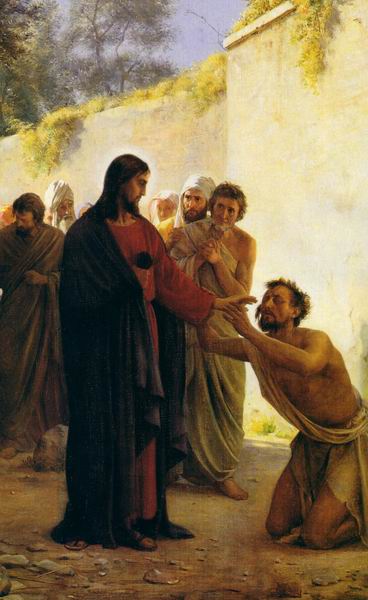
There are few things Christ could have done in the Gospel this morning that would have shocked the people of His time more than reaching out and touching a leper. All throughout the Gospels, the words and actions of Christ are powerful, sometimes shocking, and even provocative.

But more than that, they are what we call salvific; His words and actions have the power to save, to heal, to transform. The earthly life and ministry of Jesus is itself an anticipation of the work He will accomplish on the cross. The cross is the place of power, that event where Christ will come to heal the sin and suffering not only the people of His own time but also people of all time.

This power to heal is not something that Christ relinquishes after He ascends into heaven and returns to the Father; Christ continues to reach out and touch us even now. I mentioned last week that He does this in the sacraments of the Church. The Catechism of the Catholic Church says that
“in the sacraments Christ continues to ‘touch’ us in order to heal us” (CCC, #1504).

But the sacraments can become so familiar to us as Catholics, so common to our experience, that we risk taking them for granted. What is really taking place in this touch of Christ that we encounter in the sacraments?

Essentially, there are two aspects of the sacramental life that are made evident in our Gospel this morning. The first is the very power of Christ, who is able to bring about healing and manifest His grace simply by the act of reaching out to us.

The leper approaches Jesus and says, “If you wish, you can make me clean.” Christ is moved with pity for him, and He stretches out his hand, touches him, and says, “I do will it. Be made clean.” We are told that
“The leprosy left him immediately, and he was made clean.”

In sacramental theology, the term used is ex opere operato; it means that the sacraments are effected simply by the power of Christ, regardless of the worthiness or the holiness of the one administering the sacrament (the priest) or the one receiving the it.

When a child is baptized, it is Christ who cleanses that child of original sin. When the Eucharist is confected, Christ transforms the bread and wine into His body and blood. It does not depend upon us.

The great Catholic author Graham Greene, in his classic novel, The Power and the Glory, gives us a challenging example of ex opere operato. The main character is a priest who is “on the run.” He is in Mexico during that period in history when Catholicism has been outlawed, so his life is in danger at every turn.

Now, all throughout the book he is struggling with his past. He is battling alcoholism—he refers to himself often as “the whiskey priest”—and he has fathered a child; he’s struggling with the shame that comes along with that. He’s in a terrible spiritual state.

But as he continues to run from the authorities, he encounters the common people who are literally dying for the sacraments. He goes through a village and they prevail upon him to celebrate Mass for them; in another place they get him to perform baptisms. And all the while he’s in a state of mortal sin.

The book poses some very complex moral issues, but nonetheless it gives a rather dramatic example of ex opere operato, the power of Christ in the sacraments beyond the worthiness, or often unworthiness, of His people.

But there is another essential aspect of the sacramental life, and that is our response. It is possible for the sacraments of baptism or the Eucharist to be rendered ineffective, not because of any lack or shortcoming in God, but simply because we have not responded or we have responded poorly.

The leper in the Gospel this morning is told very clearly by Christ not to publicize what has happened to him. “See that you tell no one anything,” Jesus says to him. The command is very clear. He publicizes the matter anyway, and as a result Jesus can no longer minister in that town. He is forced to change His mission in that place.

Sometimes we place obstacles before the sacraments, which render them ineffective. What kind of obstacles? Our sins, our lack of preparation in receiving so great a gift, perhaps our complacency or even lack of faith in what God is able to accomplish in us through the sacraments of the Church.

It has been said that the sacrament of baptism, un-inhibited, will eventually lead to complete personal sanctity; in other words, if there are no obstacles to hold it back, our baptism will allow us to become saints. One of the greatest things we can do to grow in the spiritual life is to acknowledge those obstacles, those difficulties we encounter which may be keeping us from growing in our faith, and give them to God.

God is more powerful than any obstacle in our way. He is able to overcome whatever is keeping us from living a joyful and faithful life in Christ. The miracle of grace and the miracle of the Gospel is that, time and time again, He does exactly that!

This week, may we become more and more aware of the power of Christ who touches us personally in the sacramental life, and may we respond more completely to that touch by allowing Him to accomplish all that He desires in us.

Sunday, February 05, 2006

Once Upon a Fifth Sunday in Ordinary Time . . .

(5th Sunday in Ordinary Time-Year B;This homily was given 5 February, 2006, at Our Lady of Mercy, East Greenwich, R.I.; read Mark 1:29-39)

Do you believe in fairy tales? You know, those stories like Cinderella, Snow White and the Seven Dwarfs, Beauty and the Beast. Why do those stories have such longevity? Why are they still able to sell movies years after they are written, or fill the Broadway Shows season after season?

There is something about those stories that allows us to see that anything is possible. And every so often we read or hear about a story that sounds like something right out of a fairy tale, a real-life Cinderella Story. But did you ever think that something like that could happen to your mother-in-law?

In our Gospel this morning, St. Peter’s mother-in-law is sick with a fever, possibly on the point of death. The disciples tell this to Jesus; He immediately moves to her bedside, takes her by the hand, and lifts her up. “Then,” St. Mark says, “the fever left her and she waited on them” (Mark 1:31).


It sounds like something right out of Walt Disney, but it is more powerful than that because it’s not a fairy tale at all; it’s real. This happened; the Son of God literally walked into this woman’s house, took her by the hand, lifted her up and restored her to health!

And that was just the beginning. St. Mark tells us that before the day was through: They brought to him all whom were ill or possessed by demons. The whole town was gathered at the door (Mark 1:32-33).

And Jesus healed them. It is quite a remarkable scene, but it was never meant to be just a story. The miracle that Jesus performs in the Gospel this morning is one that touches each of our lives; it’s a reality that we all experience as members of His Church.

The Catechism of the Catholic Church says that “in the sacraments Christ continues to ‘touch’ us in order to heal us” (CCC, #1504).

Jesus knows each one of us personally, and He knows what we need; He made us, and He understands that we are made of body and soul, that we are spiritual, but that we also have physical needs.

His desire is to continue to reach out to us—body and soul—to take us by the hand and lift us up whenever we are in need. He does that in the sacraments that He has given to the Church.

In baptism, water is poured over our heads, physically, and our souls are cleansed of original sin; in the waters of baptism Christ touches us and we are given new life in the Holy Spirit.

Those of us who have been confirmed were marked with the sign of the cross on our foreheads, physically; the bishop made that sign with holy oil and said: “Be sealed with the gift of the Holy Spirit,” and we were given—at that moment—an invisible grace to fulfill more completely our baptismal call to holiness.

In the Eucharist that we celebrate here this morning, Christ is made physically present, His body and blood are made present here on this altar so that we can be fed with the Bread of Life. Christ desires here at this Mass to take us by the hand and lift us up. What a remarkable gift!

But we live in strange times. People today want the grace and the healing that Christ offers, but they do not necessarily want the sacraments through which that grace and healing are given. They want Christ and a personal relationship with Him, but they do not always want to draw close to His body, the Church.

That is never what Christ intended. Never does Christ separate our spiritual life—our spiritual relationship with Him—from our physical life and our relationships within the Body of Christ. The same One who reaches out and physically touches His people in the Scriptures, bringing them healing and strength, still reaches out to us in the sacraments of the Church. Our heart’s desire should be to receive that touch, and to embrace the One who is constantly reaching out to us.

In this Eucharist this morning, we are invited into the Cinderella Story that is more powerful than any fairy tale, because it is a story that is real; it has the power to change and transform our very lives. Might we enter more completely into that story, as Christ reaches out to us today, takes us by the hand, and lifts us up to Himself. Strengthened and nourished in the Eucharist, might we grow in our relationship with Christ, but also in all our relationships with the members of His Body, the Church.

Saturday, January 28, 2006

Voice from Afar

(4th Sunday in Ordinary Time-Year; 28 January 2006. I am on vacation this week, but had the chance to write my first homily while being timed in an Internet cafe. Very interesting; I’ll send you the bill!.)

You have probably seen the cartoon series by Gary Larson called "The Far Side." It has that unique ability to capture both the comic and the bizzarre at the same time. One of my favorite Far Side cartoons shows a man sitting down with his children, reading a book. The faces of the children are frozen in terror, as the caption at the bottom explains the reason: Stephen King, reading a bedtime story!

Our first reading this week goes something like that. Moses is relating to the people of Israel their own previous experience at hearing the voice of the Lord back when He made Himself known. He says:

This is what you yourselves asked of the Lord your God at Horeb on the day of the Assembly. ¨Do not let me hear again the voice of the Lord, my God . . . or I shall die."
-Deuteronomy 18:16-17

They were literally scared to death to hear the voice of God! God’s voice, His power and majesty, is something we should all certainly be afraid of. His righteousness, His sovereignty is overwhelming.

But is not the voice of God also the voice of a father? Even the voices of earthly fathers often bring consolation and comfort to their children. Why should God’s voice be any different?

Which brings us back to Stephen King and his children. While his daughter Naomi was still young, Stephen King realized that she did not share the same interest in his horror fiction that many others did. He decided to write a story just for her, a fairy tale that a little girl would enjoy. He called it, "The Eyes of the Dragon," and naturally it was a best seller.

At first his daughter was a little reluctant. Yet soon she found herself engrossed in the novel that had been written for that very purpose. On his website, Stephen King tells how moved he was the day Naomi finished that book. He tells how she hugged him and said that the only problem she had with the book was that it eventually had to come to an end.

Towards the end of "The Eyes of the Dragon," there is a powerful scene in which Peter, one of the main characters, is finally freed from the tower where he has been a prisoner for so long. He had been framed for the murder of his father, the King. He was the rightful heir to the throne, but no one knew it.

As he is freed there is great chaos in the square, but Peter begins to give orders and commands the people around him, so as to bring order and guide their escape. The people, who do not recognize this young man by his shabby clothing or unkempt appearance, immediately recognize that this is no ordinary voice. This is the voice of a king. They follow that voice instinctively.

In the Gospel this weekend, we hear once again the voice of God. It’s the same voice that the people of Israel heard at Horeb, but this time it has a body to go with it! It is the voice of Christ teaching in the synagogue and the people are no less amazed. That voice is proclaiming the word of God and casting out unclean spirits, freeing those who had been enslaved by evil.

St. Mark relates the reaction of the people, that they were:

So astonished that they started asking each other what it all meant. "Here is a teaching that is new," they said, "and with authority behind it."
-Mark 1:27

We live in a world that longs for that voice and desperately needs the freedom it calls forth. In our own personal lives, we also need to listen to that voice and follow it if we are to be the men and women of the Gospel God is calling us to be. It is the voice of power, the voice of authority, the voice that is calling us to a better life, a higher path.

Are we able to recognize that voice in our world and in our lives today? Christ still speaks to us, through the teaching authority of the Church. How do we receive such authority? Is it something to be feared or avoided, or do we recognize that the one who speaks to us today through His Church is the same one who is teaching in the synagogue and freeing His people in the Gospel.

This week, let us listen to that voice from afar, and come to realize that God´s teaching, His voice, and His presence among us is a lot closer than we could possibly imagine.

Sunday, January 22, 2006

“How can Bill Belichick help us increase vocations?”

(3rd Sunday in Ordinary Time-Year B. This weekend we were blessed to have Fr. Michael Najim, Assistant Director of Vocations for the Diocese of Providence, to speak with us about vocations to the priesthood and religious life. Below is a brief summary of his insightful and inspiring message.)

“How can Bill Belichick help us increase vocations?” That was the question Fr. Najim began with. Reflecting on a book he read recently on this phenomenal Patriots Head Coach, Fr. Najim described how Belichick is a man who has vision. He sees the moves that need to be made on the playing field. He sees the potential in players and coaches. He has football vision, and for that reason he has been able to lead the Pats to amazing success in the NFL.

“In the past few years, our Catholic vision of the priesthood has been blurred by scandal,” Fr. Najim explained. Many no longer recognize the priesthood for the gift and mystery that it is. He shared that the Holy Spirit is now inviting us to re-focus our Catholic vision, to see the priesthood once again as a gift and mystery.

Fr. Najim described how our beloved Pope John Paul II often reflected on the gift and mystery of the priesthood, especially as “the living and transparent image of Christ the Priest.” The Catholic priest makes Christ present through his ministry: celebrating the Sacraments, proclaiming the Word of God, and by the way he lives. Is this the way that we see the priesthood today?

“If we see the priesthood in this light,” said Fr. Najim, “then we will have a love and respect for the priesthood. We’ll also desire to see more men respond to the Lord’s call to priesthood. Together we are called to build a culture of vocations, but we can’t build this culture unless we have vision.”

In the Gospel for this week, Fr Najim pointed out, Jesus sees Simon and Andrew, He sees James and John. Then He calls them. What did He see? Christ saw their vocations, their potential, the reason He created them. When we see the gift of the priesthood, we also begin to see those who may be good priests. “Do you see?” Fr. Najim asked. He explained how we are the Body of Christ on earth. We are called to have the eyes of Christ, to see what Christ sees.

How are we to respond to such a vision? Fr. Najim challenged us to build a culture of vocations by focusing on the following:

1) Pray. We are called to pray for an increase in vocations, to pray for those who are being called, and for those who have already responded to that call. Prayer is essential.

2) Encourage. We need to offer the support and guidance necessary for those who are trying to answer the Lord’s call in their lives.

3) Identify. Who are the men God is calling to the priesthood? Are we able to see who might be a good priest? Jesus saw Simon and Andrew, James and John. Who do we see?

4) Invite. Many priests today were able to answer God’s call because people in their lives had the courage and care to invite them to discern a call to the priesthood. We need to reach out and ask the people we feel would make a good priest or religious.

Do you feel called to the priesthood or religious life? Do you know of someone God may be calling to this gift and mystery? Please pray for that person and consider asking them to answer that call as a Catholic priest or religious. For more information on the Catholic priesthood and the Diocesan Office of Vocations, check out the website at www.catholicpriest.com/

May God continue to bless Fr. Najim in his vocations ministry, and may He bless our Diocese and our parish with many more vocations to the priesthood and religious life.

Sunday, January 15, 2006

Responding to God's Call: Gift & Mystery

(2nd Sunday in Ordinary Time-Year B;This homily was given 15 January, 2006, at Our Lady of Mercy, East Greenwich, R.I.; read 1 Samuel 3:3-19, John 1:35-42)

Our readings this morning focus on the call of God, and the response to that call. One of the most frequent questions I am asked as a priest is:

“How did you know that God was calling you to the priesthood?”

To be honest, that is a difficult question to answer. I always share with people that I did not hear a voice or see a vision; but deep within my heart I simply knew that God was calling out to me. What I began to understand more and more clearly, in time, was that He was calling me to be a priest. With that said, there is still a great deal about the call of God that I do not fully understand, even now that I am a priest.

On his 50th anniversary of priesthood, Pope John Paul II wrote an autobiography describing God’s call in his life and his response to that call as a Catholic priest. The name of that book is Gift and Mystery. In the opening pages he describes how those two elements are essential to understanding the vocation of the priesthood: gift and mystery.

As Jesus says to the first apostles, on the night before He died:

You did not choose me but I chose you (John 15:16).

Priesthood is a gift given. The author of the letter to the Hebrews says that no one takes this gift of himself, but “takes it only when called by God” (Hebrews 5:4).

But God’s call and the gift of a vocation is also a mystery. A mystery is something that we do not fully understand, but something that we can still embrace and accept. God is a mystery; why should His call be any different?

One of the things that becomes clear in our readings this morning is that God involves all His people in this gift and mystery. A vocation to the priesthood or the religious life involves everyone in the Church. No one—not even the one being called—stands alone with God. God’s call involves the entire community.

In that first reading God calls out to Samuel, but Samuel doesn’t know how to answer. He doesn’t even realize that it is God who is calling. He thinks it’s Eli! We are told:

At that time Samuel was not familiar with the Lord, because the Lord had not revealed anything to him as yet. —1 Samuel 3:7

He didn’t know; but Eli knew. Although he may have been a little slow on the draw—it took him three tries—Eli is eventually able to figure out what is happening. He recognizes that God is calling Samuel, and as his teacher and mentor, he guides and helps Samuel to answer that call.

In the Gospel we have something very similar. John the Baptist is standing by the River Jordan with two of his own disciples. They are not disciples of Jesus; not yet. Suddenly Jesus walks by, and John utters that famous phrase:
“Behold, the Lamb of God” (John 1:36).

It’s as if John is saying, “There He is. The one I have been teaching you about, the Messiah I have been preparing all of Israel to receive. He is right there!” And at that point those two men—Andrew and his companion—cease to be disciples of John the Baptist and they become Disciples and followers of Christ. They call Jesus, “Rabbi,” (teacher); He is their teacher now.


Jesus invites these first disciples to follow Him; they answer His call, and become the first two Apostles . . . but not without the teaching and guidance of John the Baptist. God’s call, whether it be to an apostle, or simply to a priest or religious, involves other people; it involves the whole community.

In that book I mentioned from Pope John Paul II, Gift and Mystery, he talks about the very beginning of his vocation. Not surprisingly, there were many people who had suggested to him that God might be calling him to the priesthood. From the Cardinal Archbishop of Krakow to the laborers he worked with in the stone quarries during World War II, many people recognized that God was calling this man to something else, something different.

In our own time, are we able to recognize that God still calls men to serve Him as priests, and women and men to serve Him in religious life? I am convinced that God is calling men and women from this parish to serve Him as priests and religious in the Church. But I am also convinced that our culture is not at all set up to help them answer that call.

Let’s face it: it’s hard to answer God’s call today. We suffer from “Samuel Syndrome”. Like that scene from the first reading, God is calling but I believe men and women today are finding it difficult to hear and answer that call.

When I was 20 years old, I worked third shift at Stop & Shop in North Kingstown, just three miles from this Church. At the time I was not at all involved in the Church, and faith was not a very important part of my life. Late at night we would listen to the hard rock station on the loudspeaker, and one night a commercial came across that station, a commercial from the Diocese of Providence about vocations to the priesthood.

I remember laughing out loud, and thinking, “Don’t these people realize who listens to this station at three in the morning? People like me. They would have a better chance getting me to become a priest!”

When I finally realized—years later—that was exactly what God was calling me to, I didn’t know what to do about it. I didn’t talk to my parents, my friends, or the priests of my parish. It was only over a long period of time that the Elis and the John the Baptists began to emerge and helped me to answer this call that was both a gift and mystery in my own life.

I remember the day I finally shared with my parents that I thought God was calling me to the priesthood. We were in our kitchen, and my Dad turned to me and said:

“We’ve seen this coming for a while now, and we want you to know that, if this is what you think God is calling you to, and this is what He wants, we support you 100%.”

What a blessing in my life, to have such parents. I am a priest today because my parents, my friends, the people of my home parish and people I worked with saw something in me that I did not fully understand.

Who are the men and women that God is calling in this parish? Who are the ones that God has set apart for the work of making the Gospel message known as priests and religious? We need to pray for them daily; but we also need to make an active effort to help them recognize and answer God’s call.

What if your son or daughter, your grandson or granddaughter, stood in your kitchen and said: “I think God is calling me to the priesthood,” or “I think God is calling me to be a religious sister or brother”? What would your response be to that gift and that mystery?

Sunday, January 08, 2006

Follow the Star

(The Solemnity of the Epiphany-Year B;This homily was given 8 January, 2006, at Our Lady of Mercy, East Greenwich, R.I.; read Matthew 2:1-12)

This morning we celebrate the feast of the Epiphany. The word “epiphany” means “appearance” or “manifestation.” What we celebrate is that Christ is made manifest not only as the Messiah and King of the Jews, but as the light to all nations, the salvation of all peoples. As we heard in the responsorial Psalm: Lord, every nation on earth will adore You.

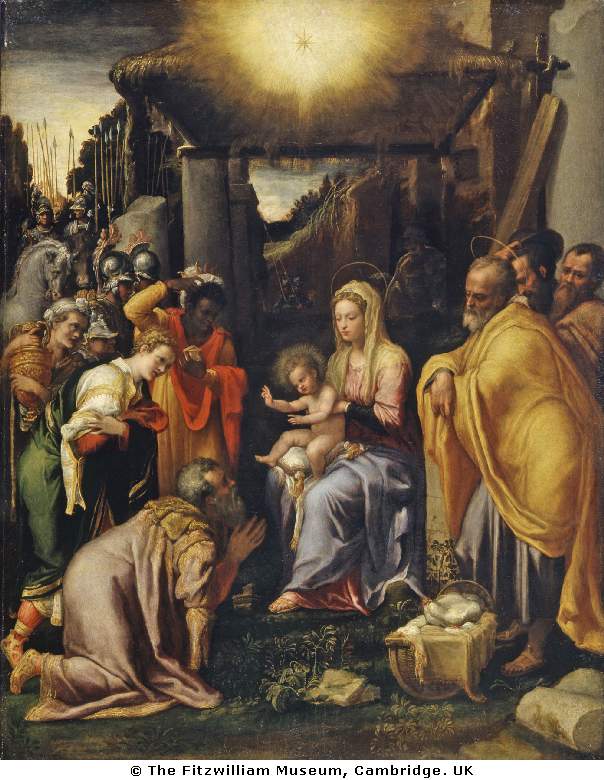
Our Gospel this morning is a familiar one: The story of the Magi, the Wise Men. God is “made manifest,” makes Himself known to them by the appearance of a star; they follow that star and come to worship Christ in Bethlehem. Their story is a remarkable journey of faith, and it is a journey that each one of us will encounter in our own way as God is made manifest to us and calls us forth to worship Him.


“We have seen his star in the East” (Matthew 2:2), the Magi announce to King Herod. In the East. The Magi are outsiders, living in a country far from the land of Israel. They were far away from the town of Bethlehem; but not far, it would seem, from God.

Many Scripture scholars believe that the Magi were from the land of Persia; the Persians devoted themselves to the study of the stars, and so it was there that God chose to reveal Himself. Seeing this great star appear in the sky they were drawn to it; they left the place where they were and they followed it.


In our own lives, God often makes Himself known in the things that are familiar. He comes to us in the midst of our ordinary lives and reveals Himself in extraordinary ways. We see this all throughout the Scriptures:

Think about Moses, tending the flock of his father-in-law as a simple and humble shepherd. God reveals Himself to him in the burning bush and Moses is never the same.

Look at the first Disciples of Christ, standing on the docks in Galilee after a long, hard day of fishing. The Son of God walks right into their lives, right into their businesses, and says, “Come, follow me.”

We see it in the Magi, who were expecting anything but the God of Israel to appear in the Persian sky. But do we really believe that the same God can make Himself known to us?

St. Jose Maria Escrivá, a saint from our own time, canonized only a few short years ago, says that:

Like the Magi we have discovered a star—a light and a guide in the sky of our soul. ‘We have seen his star in the East and have come to worship Him (Matthew 2:2).’ We have had the same experience. We too noticed a light shining in our soul and growing increasingly brighter. It was a desire to live a fully Christian life, a keenness to take God seriously.
—Escrivá, Christ is Passing By, #32

Have we experienced that desire in our lives recently? God often makes Himself known to us in the ordinary desires of our hearts. It is there that He calls us to follow Him, to lead “a fully Christian life.”

It has been said that God loves us just as we are, but that He simply loves us too much to leave us that way! If we are going “to take God seriously,” then we must be willing to follow Him wherever He leads us. The Magi in our Gospel this morning did exactly that.

But a strange thing happened on the way to Bethlehem: at some point in their journey—we do not know when—the Magi lost the star. It was no longer before them and so they were forced to do what men almost never do: they were compelled to stop and to ask for directions!

St. John Chrysostom, the great 4th century preacher, says that:

The star had been hidden from them so that, on finding themselves without their guide, they would have no alternative but to consult the Jews. In this way the birth of Jesus would be known to all.
—Chrysostom, Homily on Matthew, #7

The Magi were learned men of great pride and dignity, but they were willing to humble themselves and ask the people who knew far more than they did about this Messiah whose star they had seen in the East.


In our own time, unfortunately, this humility, this willingness to seek the Lord where He may be found, is sadly lacking. Our culture is one that desires to stand on its own authority, to seek guidance and direction from no one.

People move from star to star, from one religious experience to another: from Christianity to Kabala, from Buddhism to Hedonism, and everywhere else in between. But do they ever really find what they are looking for? W. H. Auden, in his poem “September 1, 1939”, describes it this way:

Faces along the bar
Cling to their average day.
The lights must never go out,
The music must always play . . .
Lest we should see where we are,
Lost in a haunted wood,
Children afraid of the night
Who have never been happy or good.


Maybe sometimes we, too, find ourselves moving from star to star, trying all kinds of things that will make our lives more meaningful, more worthwhile, hoping for something new that will change the direction we are going in. But all the while, what we are really looking for, what we really need is God; as St. Augustine says, “Our hearts are restless, O God, until they rest in You.”

But we will never come to truly know God as deeply as He desires if we are unwilling to humble ourselves and seek Him in the Church that Christ founded. God has given us the Scriptures, His very word to instruct and guide us. He has given us the teachings of our faith, by which we can build our lives on the solid foundation that is Christ. He has poured out His very life for us in the Sacraments—cleansed us from our sins, given us His Body and His Blood to nurture and strengthen us.

These are the things we need to turn to when the star goes out in our lives. We need to have the humility to seek the Lord where He may be found. The Magi were willing to do that. If we want to grow closer to God, we must be willing to do the same.


Matthew tells us that after they consulted the Jews, the Magi set out,

And behold, the star that they had seen at its rising preceded them, until it came and stopped over the place where the child was. They were overjoyed at seeing the star.
—Matthew 2:9-10

We may, for a time, lose sight of God; we may lose that sense of His closeness, feel as if He is not as near to us as He once was. But God never loses sight of us; we are never out of His sight. The star returned and the Magi were overwhelmed with joy! At that point they came to the end of their journey, the goal of all that they had set out for:

On entering the house, they saw the child with Mary his mother. They prostrated themselves and did him homage.
—Matthew 2:11


Literally, they worshipped Him. The word used in the Scriptures means adoration; it is translated into the Latin phrase ad-oratio. It means a mouth to mouth, face to face relationship. The Magi came face to face with the living God.

The very goal and end of our lives is to be in that same relationship. God does not want us to love Him from a distance. God did not become man so that we could remain distant from Him; Christ did not die on the cross so that we could worship Him from a distance. He wants us close. Like the Magi, we are called by God to encounter the person of Jesus, to adore him face to face.

Are we ready to do that? Are we willing to draw that close to Christ, to worship Him in a real and intimate way? 2000 years ago, these Wise Men from the East sought Jesus and worshiped Him where He was found; today, some 2000 years later, wise men and women still do.

Sunday, January 01, 2006

Mary, Mother of God

(The Solemnity of Mary, Mother of God-Year B;This homily was given 1 January, 2006, at Our Lady of Mercy, East Greenwich, R.I.; read Galatians 4:4-7 and Mary, Mirror of the Church [Liturgical Press] , Chapter 3, by Fr. Rainero Cantalamessa, OFM Cap.)

You’ve probably heard the expression “loaded question” or “loaded statement,” before, something already completely charged with meaning. The brief passage we just heard from St. Paul’s letter to the Galatians is what we could call a “loaded passage.” There is so much going on in those few short lines. St. Paul says:

When the fullness of time had come, God sent his Son, born of a woman, born under the law, to ransom those under the law, so that we might receive adoption as sons. —Galatians 4:4-5


Pope John Paul II begins his encyclical letter Redemptoris Mater—Mother of the Redeemer—with that very passage from St. Paul precisely because it is so loaded, so filled with meaning. He talks about how God the Father’s loving plan to redeem us is fulfilled in the sending of Christ, His Son (the very thing we celebrated this Christmas) and how we, in Christ, truly become the sons and daughters of God (Redemptoris Mater, #1).

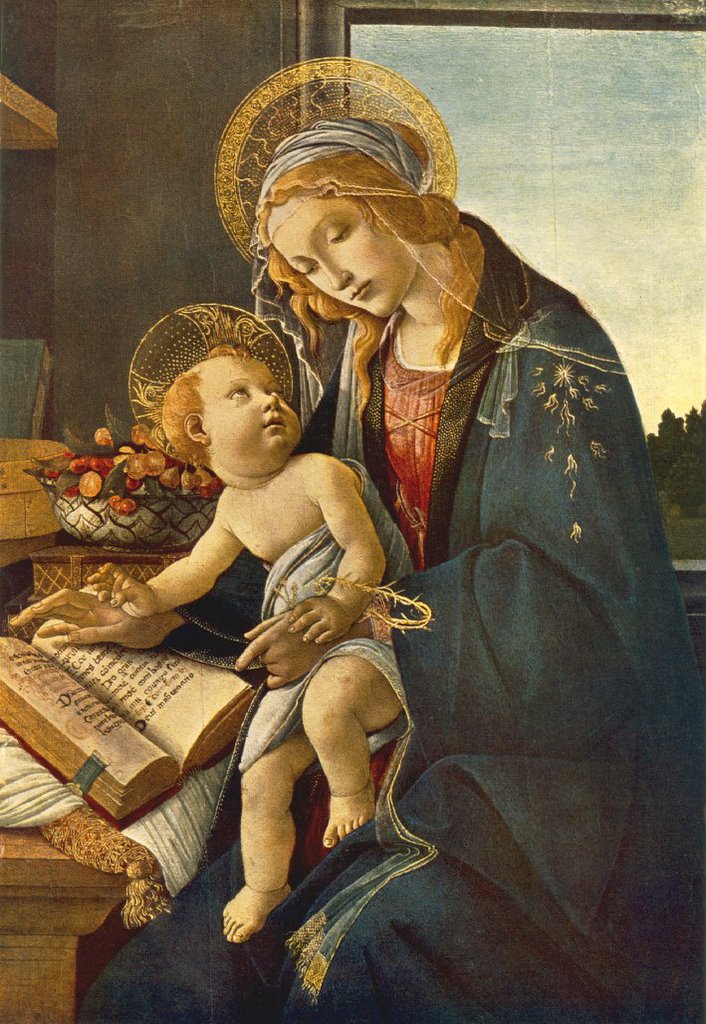
But at the heart of that passage from St. Paul, and at the heart of Pope John Paul II’s encyclical letter, is the person of Mary. She is the one through whom God enters this world. He could have come in any way He desired. How remarkable, that God would choose to come in so simple and humble a way, “born of a woman,” exactly like each one of us.

That is what today’s feast—Mary, the Mother of God— is all about. Mary gives birth to a Son, and everything that pertains to His human nature comes from her. In that sense, she is a mother like any mother here today. But her Son Jesus is unlike any other child; He is a Divine Person, the eternal Son of God. For that reason—because Mary truly gave birth to Christ—she is rightfully called the Mother of God.

But what does it mean to be a mother? In his book Mary, Mirror of the Church, Fr. Rainero Cantalamessa—preacher to the papal household—writes about how the title “mother” is one that affects the very being of a person. To become a mother changes a woman; she is never the same person again. She has become a mother forever.

Cantalamessa points out that whenever Mary’s Motherhood is mentioned in the Scriptures, there are two aspects or events that are always placed together, two things that are considered essential for motherhood: conception (to conceive) and to give birth. As the angel Gabriel said to Mary at the annunciation: “You will conceive in your womb, and bear a son” (Luke 1:21). Those two things.

Part of the very dignity of Mary is that she was constantly conceiving the Lord in her heart, and consistently giving birth to Him in the world we live in. Mary’s motherhood is not just something that "happens" in Bethlehem on Christmas morning. It is something that occurred all throughout her life: always conceiving the Lord by faith, and always responding to that faith by her actions. From the crib where Christ is born to the cross where He dies, Mary is always the Mother bringing forth new life through faith.

As followers of Christ, we are called to do the same. We, too, are called to conceive the Lord in our hearts by faith, and to give Him a place in this world we live in.

Pope Benedict XVI, in his celebration of Vespers on the First Sunday of Advent, said that the Lord is constantly asking to come into this world through us. Even as God entered into Mary’s life and made her the mother of His Son, Pope Benedict says that God “knocks at the door of our hearts [and asks]: “are you willing to give me your flesh, your time, your life?”

In this time of New Year’s resolutions, will we strive to give God a place in our lives and in our world, or will our resolutions—and our faith—remain only conceptions, and nothing more?

This morning we turn to Mary with all our New Year’s resolutions, and with the doors of our hearts wide open to the faith and works that her Son will bring into our lives in this New Year. May she who was the first to give birth to Christ in this world continue to intercede for us this New Year’s Day, and everyday of the year 2006.

Sunday, December 25, 2005

The Story of Christmas

(The Solemnity of Christmas-Year B;This homily was given 25 December, 2005, at Our Lady of Mercy, East Greenwich, R.I.)

Stories. We all love stories. Stories are what fill the movie theatres year after year. They’re the reason why mega-bookstores like Borders and Barnes & Noble stay in business. Everyone loves a good story.

In many ways our lives are very much like a story. What kind of story is your life right now? Is it a success story, where things have really come together in your business or in your personal life? If so, we thank God this morning for that story. Maybe it’s a horror story, with terrible images of Bald Hill Road, long lines, piles of wrapping paper and a really huge Visa bill!

For some this year, their story is a tragedy; we can all think of people we know whose lives, whose story, has taken a turn for the worse. This morning we pray for them, that their story will change. For most of us, though, maybe our story is simply one that is incomplete; we are waiting for what will happen next. Our story is still unfinished.

This morning we celebrate the greatest story ever told: The story of Christ. It is the remarkable story about the God who became man in order to bring us home to Heaven. For 2,000 years that story has been told over and over, in hundreds of different ways.

Just a moment ago we heard that story in narrative form, as we listened to it proclaimed in the Gospel. On Christmas Day, in 1223, St. Francis of Assisi told that story in the small Italian town of Greccio, by constructing the world’s first living manger scene. Some 800 years later we still tell the story in that same way, with crèche scenes like the one in our sanctuary this morning.

But have you ever heard the story of Christ told as a romance, as a love story? I know it sounds a little strange; we’re not talking about putting Jesus on the cover of a Harlequin Romance novel! It’s actually something that is very Biblical. All throughout the Old Testament, God is depicted as the faithful husband who makes a spousal covenant with His people; in the Vigil Mass for Christmas, the prophet Isaiah boldly declares:

As a young man marries a virgin,
your Builder shall marry you;
and as a bridegroom rejoices in his bride
so shall your God rejoice in you.
—Isaiah 62:5

The great Spanish mystic and doctor of the Church, St. John of the Cross, also writes about the birth of Christ as a love story between God and His people. It is one of his greatest poems, and he calls it—of all things—the Romances.

Basically it is a dialogue of love between God the Father and God the Son. We are allowed to kind of "eavesdrop" on that conversation in heaven. In that Poem the Father says:

“My Son, I wish to give you
a Bride who will love you.
Because of you she will deserve
to share our company,
and eat at our table,
the same bread I eat,
that she may know the good
I have in such a son;
and rejoice with me
in your grace and fullness.”


The Bride, of course, is us. We are the Father’s gift to His Son. But that gift is one that is incomplete because of the nature of God and because of our own human nature. God is pure spirit, existing from all eternity long before the material world is ever created. He is different from us.

We are made of body and soul, flesh and blood. We could never be fully united to the Son. It is an incomplete gift. The Father in the Romances recognizes this. He says:

“Now, you see Son, that your bride
was made in your image,
and so far as she is like you
she will suit you well;
yet she is different in her flesh,
which your simple being does not have.”

And so the Father proposes to the Son that He will make Him like His bride. He will give Him a body, make Him flesh and blood like the Bride He has already been given. The Son—of course—is delighted, as He is delighted in everything that the Father does. He cries out to the Father:

“My will is yours,
and my glory is
that your will be mine . . .
I will go and seek my bride
and take upon myself
her weariness and labors
in which she suffers so;
and that she may have life,
I will die for her,
and lifting her up out of that deep,
I will restore her to you.”


It’s a beautiful poem about why God became man, and what God has in mind for all of us when Christ is born in Bethlehem. We are the reason Christ becomes man. We are the Bride He comes to seek out, and even to die for. He comes to take upon Himself our weariness and our labors.

God becomes man for us. Christmas is the place where God’s story meets our story, where the Son leaves His throne in Heaven and breaks into our world in a very real and glorious way. That miracle that occured in Bethlehem is one that can happen at any time, in any place, even and especially in the midst of our own story.


Each year the national weekly publication Our Sunday Visitor invites its readers to share with them their most personal and meaningful Christmas stories. Several years ago a woman named Eileen O’Grady wrote about her experience one Christmas Eve night in 1962.

She was a young woman who found herself homeless, pregnant and very much alone. She wandered through the city, cold and in tears, until she finally came to rest at a Nativity scene in front of a local church. Eileen writes about how she felt as she sat there in the snow, looking at the statue of Mary. She says:

I knew Mary and I were very different, but I could see the similarities, too. I sat there throughout the night, at times feeling sorry for myself , at other times feeling sorry for Mary, who was also young, pregnant, and homeless. As daybreak came, a light snow began to fall, and I felt a sense of warmth, a peace, and a confidence that everything would be OK.
—Our Sunday Visitor’s Christmas Memories, Our Sunday Visitor Publishing Division, Our Sunday Visitor, Inc.

And little by little things were OK for Eileen O’Grady. She found a small apartment in that town and eventually gave birth to a beautiful baby girl. She finished high school and provided a nice home for herself and her daughter.

And finally, some 20 years after sitting in front of that Nativity scene, both she and her daughter had a deep conversion of faith and became active members of their Church. Eileen looks back at that Christmas Eve night in 1962 as the moment that made all the difference in her life.

“This is my story,” she says, “and this was my best Christmas.”

Wherever we find ourselves this Christmas, we are reminded that our stories really are incomplete unless they become part of God’s story. We are made for God, and only God can give our lives true meaning and true purpose.

This morning we can ask ourselves: Where is the Bridegroom seeking us out this Christmas Day? Where will that miracle Baby of Bethlehem find His place in our stories this Christmas?

Sunday, December 18, 2005

Decorating the House for Christmas

(Fourth Sunday of Advent-Year B;This homily was given 18 December, 2005, at Our Lady of Mercy, East Greenwich, R.I.)

Is your house decorated for Christmas? There is something exciting about unpacking those old familiar decorations: the lights, the crèche scene, setting up the Christmas tree.

You may have read in the news recently about that gentleman in Cranston, who decorated the front of his house this year with giant pictures of Paris Hilton. When asked what the display had to do with Christmas, he answered, “Absolutely nothing.” No argument there.

Just last week I asked one of the kids from the school next door why we decorate our houses, why we place lights in all the windows. She said, “Because we’re getting ready for Jesus, the Light of the world.”

Now, I am sure not everyone who places a light in their window is thinking that; but it is a beautiful—and theologically correct—way to look at this season. When we decorate our houses, filling them with light, do we really believe that we are getting them ready for God?


In the first reading this morning, King David is resting comfortably in his house, and it dawns on him that the Ark of the Covenant—the presence of God, which accompanied the people on their journey through the dessert—has no house at all. He says to Nathan the Prophet:

Here I am living in a house of cedar,
while the ark of God dwells in a tent.
—2 Samuel 7:2

God is out in the cold, so David wants to build a house for God, a temple so that the people can worship Him as they should. It is a very noble gesture. Yet, the response he receives from God is quite different than what he was expecting. God says to him:
“Should you build me a house to dwell in?”
(2 Samuel 7:5).

He reminds David that he wouldn’t even be the king if not for the blessings given to him so freely, so graciously. It was nice of David to consider, but in the end the Lord simply says, “No, thank you.”

In fact, He has something else in mind all along. Nathan the Prophet says to David:

The Lord also reveals to you that He will establish a house for you. . .
–2 Samuel 7:11

David is not going to build anything; but God is going to build David a house. The house that he promises to David is not really a house at all, but a dynasty. The same word that David was using to refer to a temple is used by God to refer to the kingship of David, and of his descendants after him.

God goes on to say:

Your house and your kingdom
shall endure forever before me;
your throne shall stand forever.
—2 Samuel 7:16


It is almost impossible to exaggerate the magnitude of that promise. There will be a descendant of the house of David ruling over the people of Israel forever. That is God’s idea of a house. It was one of the greatest promises ever given to the people of Israel. They cherished it. The Messiah himself—the people understood—was to come from the house of David.

But in the days that followed, that promise, and that house, seemed to fall apart. David himself was to fail miserably at times. His son Solomon would expose the house of David, the royal throne, to the worship of foreign gods. Some of the kings after him would do much, much worse.

There were good and faithful kings, but it was more often the case that the house of David was weakened by idolatry, apostasy, and even exile. Kings were dragged away from the land of Israel, held captive in foreign nations. Until eventually there was no king at all.

Israel became a nation occupied by the Romans; the kings of old were now nothing more than simple commoners. The lights had gone out in the house of David. So much—it would seem—for the promises of God.


That is the context for the event that happens in the Gospel this morning. In a few short words St. Luke reveals the God who once again inspires hope in a nation that might have all but given up. He says:

The angel Gabriel was sent from God . . .
to a virgin betrothed to a man named Joseph,
of the house of David.
—Luke 1:26-27


Gabriel enters quite unexpectedly into the house of a poor, simple, holy woman named Mary and says to her:

Behold, you will conceive in your womb and bear a son, and you shall name him Jesus. He will be great and will be called Son of the Most High, and the Lord God will give him the throne of David his father, and he will rule over the house of Jacob forever, and of his kingdom there will be no end.
—Luke 1:31-33

God never forgets His promises. The lights may have gone out in David’s house, but God was about to bring in the Light of the World. At the darkest moment for the chosen people, God would shine a light into their lives that would change their nation and the rest of this world forever. That is what we are getting ready to celebrate in a few short days.


So, if that’s the case, then we can ask again that same question we began with: Is your house decorated for Christmas? Are we ready to welcome the Light of the World into our houses, into our families and into our lives, this Christmas?

It will do us no good whatsoever if our houses are decorated for Christmas and we have not made room for the Son of God. Jesus Christ comes into this world to turn the hearts of all people back to God. That is why we celebrate. The coming of Christ should change us, it should move us to deepen our relationship with God.

Our hearts, our lives, our families, should be like houses that are filled with light, announcing the presence of Christ—the Light of the world—to all those who long for that Light. That little girl I mentioned earlier, from Our Lady of Mercy School, she understood that. She’s not waiting for Paris Hilton this year. She is waiting for Jesus Christ, the Son of God, the Light of the world. Who are we waiting for, and Whom are we decorating for, this Christmas?

Sunday, December 11, 2005

Gaudete! Rejoice!

(3rd Sunday of Advent-Year B;This homily was given 11 December, 2005, at Our Lady of Mercy, East Greenwich, R.I.)

It is Gaudete Sunday once again! The pink candle has been lit in joyful expectation of the coming of Christ. Gaudete Sunday is the Church’s way of reminding us that the coming of Christ is near, very near. No matter how hectic things may be in our lives, today is a day to slow down, think about what this season is all about, and to rejoice.

There is a story about a woman who had a long list of friends for whom she really wanted to buy Christmas presents. Time slipped away and she soon realized there was no way she could get to the store to purchase those gifts. As a last resort she decided to send them all a really nice card.

She went to the gift store and looked over the cards that were left, and finally found a box of 50. They were beautifully decorated on the front, and she was in a hurry so she bought them. Not bothering to look at the message inside, she quickly signed them and sent them out just in time for Christmas.

Around New Year’s, she had time to go back to two or three cards she didn’t send from that stack, and she was shocked when she read the message inside. It said, in a nice little rhyme:

This Christmas Card is just to say
A little gift is on the way

This morning we could borrow that same rhyme, and change it just a bit:

This Gaudete Sunday is just to say
A tremendous Gift is on the way


John the Baptist, in the Gospel this morning, can hardly contain himself as “the voice of one crying out in the desert, make straight the way of the Lord.” Christ is near, the One we are waiting for; He is on the way, and so we too cannot help but to rejoice!

But if we really stop and think for just a minute: How can we rejoice when there is so much suffering and sorrow in the world we live in? What are we to make of the tragedies that fill the evening news and the pages of the newspaper each day? When we say to each other, “Rejoice!” are we not deluding ourselves and hiding from the real problems that exist all around us?

The other day I was speaking with a priest friend of mine from the Diocese of Savannah, in Georgia. There was a terrible tragedy there; one of his parishioners—an elderly woman—was murdered one week ago. Her funeral was held on Thursday, the feast of the Immaculate Conception.

The pastor was the one who celebrated that funeral, and I asked my friend: “what did he say?” What could you say in a situation like that, just before Christmas? He told me that the pastor talked about how the world we live in is in desperate need of a redeemer. Then he talked about how we’ve got one: Jesus Christ, the Son of God, born of Mary.

We do not rejoice because we are hiding from the reality of the world around us. We understand that reality; all too well do we understand it. But we believe in the One who has come to change that reality and to change the world as we know it.

We rejoice because the Son of God became man and brought us hope; and most of all we rejoice because we know that this life, this world, is not all there is; we know the rest of the story, and we know how that story will end.


Once, during the Second World War, there were two friends from Scotland who were taken prisoner and placed in a concentration camp. One of them was a professor and the other was a chaplain.

A high wire fence in the middle of the prison separated the Americans from the British, so the guards placed the professor on the American side and the chaplain on the other side with the Brits. Everyday, the professor would talk to his friend through the wire fence, speaking in the Gaelic language that the Germans did not understand.

Unknown to the guards, the Americans had a little homemade radio and were able to get news from the outside. One day news came over the radio that the German high command had surrendered. The war was over. The professor took that news to his friend and then watched him disappear into the barracks. A moment later a roar of celebration came from that place.

Life in the camp was completely transformed. The men walked around singing and shouting, waving at the guards and even laughing at the dogs that growled nearby. When the Germans finally heard the news three days later, they fled in the night and left all the gates open. The next morning the prisoners walked out free men. But in reality they were already free days earlier, when they heard the news that the war was over.


This Gaudete Sunday we rejoice in the Lord, who has already begun to set us free. We are not afraid to proclaim our faith with confidence to a world that is in desperate need of a redeemer, because we know that God—in Christ—has already given us one.

Are there tremendous problems in the world we live in? Of course there are. And we are called to do everything we can to alleviate the suffering of those around us, to mourn with those whose lives have been shattered by tragedy or sorrow.

But at the same time, we have reason to rejoice because God has come into this world and set in motion the events that will bring an end to all these things. Death and war and disease and sorrow and suffering will not have the final word. God will speak the final Word, and He has spoken it. The final Word is Christ.


Isaiah the prophet, in our first reading this morning, announces with great joy the words that will ring in the coming of the Messiah; they are words of prophecy, words of longing, but most of all they are words of hope:

The spirit of the Lord GOD is upon me,
because the LORD has anointed me;
he has sent me to bring glad tidings to the poor,
to heal the brokenhearted,
to proclaim liberty to the captives
and release to the prisoners.
—Isaiah 61:1-2a

We can ask ourselves: Where are the poor in our lives who are waiting to hear those glad tidings, the Good News of Christ? Who are the broken hearted in need of a word of hope and healing? Who are the captives, held bound by a world of empty promises and meaningless pursuits? Christ is calling us this Gaudete Sunday to share with them the reason we rejoice.

Thursday, December 08, 2005

Freedom & The Immaculate Conception

(Solemnity of the Immaculate Conception; This homily was given 8 December, 2005, at Our Lady of Mercy, East Greenwich, R.I.)

Where are you most free in your life right now? Where are the places that you feel less free or perhaps not free at all?

One of the greatest gifts that we have been given by God is the gift of freedom. Many of the saints tell us that freedom is the thing that makes us most like God. Yet freedom can be easily misunderstood, easily misused; that is something we all experience each day.

Because of our fallen human nature—the fact that we are tainted by original sin—we do not always make the choices that we ought to make. It has been said that the easiest doctrine of faith to prove is original sin. We see its effects everywhere. Just look at the newspaper, or turn on the TV. Closer to home, we can all think of times when we have said or done things that we regret, things that we knew were wrong. We made the wrong choices.

Thankfully, God does not leave us on our own when we make the wrong choices; His passion and desire for our lives is forgiveness and total freedom in Christ; that is why Jesus dies on the cross, to save us and free us from sin.

God is constantly offering us His grace—supernatural help to overcome the effects of original sin—so that we can become more free and more alive in Christ. The goal of life, the point of our existence, is to accept that grace and act on it, to grow closer to God and to each other. We are called to live in an eternal relationship with God, and the only way that is possible is by the grace God offers.


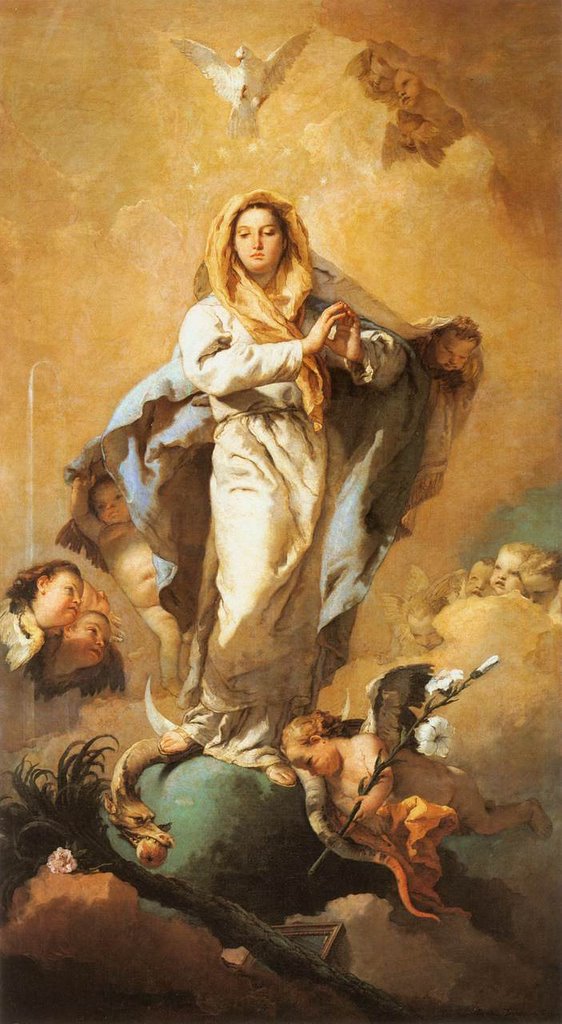
Today we celebrate the feast of the Immaculate Conception, the belief that Mary was preserved free from all stain of original sin from the moment of her conception. [Not to be confused with the conception of Jesus in the womb of Mary; the Immaculate Conception refers to Mary’s conception in the womb of her mother, St. Ann].

We believe that Mary was preserved from original sin by the merits of Christ, before He was born, and before He suffered and died on the cross. Mary is redeemed by Christ, just as you and I are. But Mary was given a special grace—in fact, filled with grace as we hear in the Gospel—because she was the one who would carry the Redeemer in her body.

Because Mary was free from original sin, and because she was filled with grace and never committed sin, she was totally free to do the will of God at all times. You could say that she was the most liberated woman who ever lived!
She shows us what it means to be fully human and completely free in this world.

I am sure it was not easy for Mary to make some of the choices she made: to say yes to an unexpected pregnancy that would change her life forever; to let her Son leave home, knowing he would never return; to stand at the foot of the cross, supporting her Son in His suffering and death. These were not easy decisions, but they were the right ones, and an example for all of us who must make choices of our own each day.

And so, we can ask ourselves again: Where are we most free in our lives right now? Where are the places that we are less free, that we find it a struggle or a difficulty to do the right thing? Through the intercession and example of Mary, may we come to realize that we are never alone in the decisions of life.

God—who filled Mary with grace and preserved her from original sin—gives us grace in our own lives to overcome whatever keeps us from being totally free and totally faithful to Christ. Might we also rejoice with Mary this day, and come to share more completely in the freedom that her Son came to bring us.

Sunday, December 04, 2005

It's Not Too Late!

(2nd Sunday of Advent-Year B; This homily was given 4 December, 2005, at Our Lady of Mercy, East Greenwich, R.I.)

It may seem like this time of year is moving along at lightning speed, but we are still only at the very beginning of the Advent season; Advent itself can seem like an odd mixture of many different things.

We wear purple and light purple candles, but it’s not Lent. And the readings are focused either on the first coming of Christ as a child, or they are apocalyptic—focused on the second coming, the last days and the end of the world.

So which coming of Jesus do we celebrate in Advent, the first one or the second? The Catechism says that we celebrate both. We share in the joyful preparation of that first coming of Christ as a child, so that we will grow in our desire to see Him when He comes again (CCC, # 524).

This is significant, because it’s easy to forget—in the secular world we live in—that Jesus really did promise to come back again at the end of time. How often do we really think about that?


In the second reading this morning, the Apostle Peter is warning the Church about those who will arrive in the last days, casting doubt upon the promise of the Lord’s return. They will begin to question—after all these years—whether Jesus has any intention of coming back at all. In response to them, St. Peter says:

Do not ignore this one fact, beloved, that with the Lord one day is like a thousand years and a thousand years like one day. The Lord does not delay his promise, as some regard “delay,” but he is patient with you, not wishing that any should perish but that all should come to repentance.
—2 Peter 3:8-9


St. Peter offers a very different perspective on a very familiar Advent theme: not only are we waiting for God, but He is waiting patiently for us, and calling us to repentance.

Advent is the time when our waiting meets God’s waiting, and we are given the chance—as we heard in the opening prayer of this Mass—“to remove the things that hinder us from receiving Christ with Joy.” This is a season to make a brand new start with Christ. I hope you have had the chance to do that this Advent. If you haven’t, the Good News is that it still is not too late. As St. Peter reminds us, God is patiently waiting, and has been for quite some time.


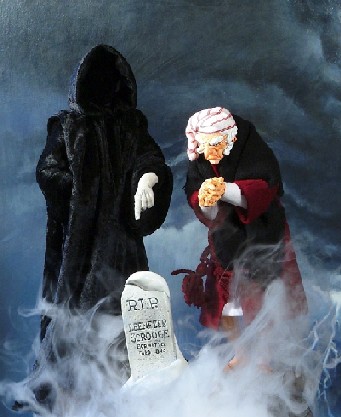
There is a very beautiful story that we always hear around this time, that classic tale from Charles Dickens called A Christmas Carol. You’ve probably watched it a dozen times on TV, and maybe even seen it in the theatre.

Ebenezer Scrooge, that crusty and obstinate old man, suddenly receives a visit in the night that will change his life forever. The Spirits of Christmas past, present and future come to reveal more about his life than he was ever willing to see.

You may remember the climax of that story, when the ominous Spirit of Christmas Future brings Ebenezer into the graveyard and points to that one, solitary stone, neglected among all the others. Scrooge becomes filled with dread and he says:

Answer me one question. Are these the shadows of things that Will be, or are they shadows of things that May be, only?


He receives no answer from the ghost, and so he moves toward that gravestone and reads the name that he already knows is on it: EBENEZER SCROOGE. And the only thing he wants to know, the only thing that matters, is whether or not it is too late.

“Spirit, hear me!” He cries. “I am not the man I was. I will not be the man I must have been but for this intercourse. Why show me this if I am past all hope? . . . Assure me that I yet may change these shadows you have shown me, by an altered life! . . . Oh, tell me I may sponge away the writing on this stone!”


And of course we know how the story ends. He wakes up in the morning, only to discover that he has been given another chance; it was not too late. His whole perspective, his entire life, has been changed and transformed in a single night.

Why do we love that story? Why does it never seem to grow old? I would suggest that A Christmas Carol is so dear to us because—at it’s very foundations—it is a story that rings true.

Again, as St. Peter tells us, "with the Lord one day is like a thousand years and a thousand years like one day." God can make up for a lifetime of mistakes and missed opportunities in a single day, in a single moment; but we have to be willing to open the door for Him. We have to be willing to repent.


In the Gospel this morning, we hear John the Baptist—as we do every year around this time—crying out in the dessert: “Prepare the way of the Lord, make straight his paths” (Mark 1:3).

What are some of the basic and practical ways God is calling us to do that this Advent? This morning I would suggest three. The first one we have heard already from St. Peter and Ebenezer Scrooge: Repent.

We don’t need a visit from the Spirit of Christmas Future, or some ghost from the past, to tell us when we have failed to love God and those around us. We know. In our consciences we know. God moves us, by His grace, to acknowledge those times and to turn away from sin in our lives and to turn back to Him. Repentance.

The second practical way that we can prepare for the coming of Christ is reconciliation. Having repented of our sins, we come to receive the forgiveness of Christ in the very Sacrament He instituted for the forgiveness of sins.

I was at Bishop Hendricken High School this past Thursday, with about 8 other priests from around the diocese, and we heard confessions for over 2 hours from students who were not obligated to be there.

They came during their lunch hour to receive the grace Christ offers in Sacramental confession and to begin a new walk with Christ this Advent. Might we learn from them how to prepare more completely for the coming of Christ in our lives.


So, repentance, reconciliation, and finally a recommitment to follow Christ more closely this Advent.

We simply make an effort to spend a few moments in prayer each day; perhaps in the morning we make an offering of our day. In some way we acknowledge that we are indeed waiting for the one who is so patient and so steadfast in waiting for us and helping us to be ready for the coming of Christ.

Sunday, November 27, 2005

He's coming . . . but is He safe?

(1st Sunday of Advent-Year B; This homily was given 27 November, 2005, at Our Lady of Mercy, East Greenwich, R.I.)

By now I am sure you have seen the ads for the upcoming movie Narnia. Based upon the series of books called the Chronicles or Narnia, by C.S. Lewis, it promises to be one of the best films of the year. If you have ever read those books, you know that it is a fantastic story.

The magical land of Narnia has been taken over by the evil White Witch, and she casts a spell over the whole land, making it a permanent winter. Four young children enter that magical world and soon find out that the great lion, Aslan, is on the move and he’s coming to break the spell and overthrow the White Witch once and for all.

The story of Narnia—as you may already know if you are a C.S. Lewis fan—is written really as an allegorical tale or metaphor for the story of our redemption. The great lion, Aslan, represents Christ who has come to save us from sin and evil—the “spell” cast over our own world—and to give us new life, a new relationship with God. It is a beautiful and highly symbolic story.

There is a powerful scene towards in the beginning of the Chronicles or Narnia, when the children first hear about the coming of Aslan. They are talking to one of the animals of Narnia, Mr. Beaver, and soon discover that Aslan is a lion.

Naturally the children are a bit nervous about meeting up with a lion, so they ask Mr. Beaver: “Is he safe?” Mr. Beaver looks at them for a moment, and he answers, “Safe? Who said anything about safe? ‘Course he isn’t safe. But he’s good.”


Today we begin the holy season of Advent, a time to prepare for the coming of Christ, the King of Kings. It’s a great opportunity for us to remember the real story of our faith. What we celebrate is the coming of the one who is not afraid to step into our lives and challenge us to live the Gospel in a radical way, even to the point of giving Him our very lives. That is who we wait for this Advent. Christ is coming, and He’s certainly not safe. But He is good.

Christ comes into a world that resists Him, even rejects Him, but remains ever in need of the help and healing that only He can give. He comes to break the power of evil in this world, to destroy sin by His own suffering and death. Christ is willing to go to the cross, to suffer a bloody and excruciating death in order to bring us back into a right relationship with God.

There is nothing safe about that! When Christ comes, He means business. That is why He tells us four times in the Gospel this morning to be watchful! Be alert! To be ready for Him when He comes.

The prophet Isaiah—who we read from every Advent—understood what the coming of the Lord meant, and even more importantly, why He was coming. In that first reading this morning, Isaiah laments the condition of the people of Israel who are dwelling in the land of captivity, far from their homeland, and far from God. He says:

Behold, you are angry, and we are sinful;all of us have become like unclean people,all our good deeds are like polluted rags;we have all withered like leaves,and our guilt carries us away like the wind.
—Isaiah 64:4-5


Isaiah understands their condition; he knows why they are in captivity. They have sinned against the Lord. Isaiah knows that. But he also knows the solution. With great longing for God he cries:

Oh, that you would rend the heavens and come down,with the mountains quaking before you.
—Isaiah 63:19

That God would rend the heavens and come down; that is the only thing that will bring hope and healing to the human condition so enslaved by sin; that God Himself would rend the heavens, come down to this earth, and set us free. He’s done that! That is the coming that we celebrate each Advent, as we sing:

O come, O come, Emmanuel
And ransom captive Israel
That mourns in lonely exile here
Until the Son of God appear


He is coming. Emmanuel is coming, and He’s certainly not safe. But He’s good. Are we ready for Him? Are we watching? The verb Christ uses in the Gospel, when He commands us to be watchful and alert, is an active verb. It does not mean that we watch like we are watching TV. We watch as people who are in need of a redeemer, and as people who are expecting one to arrive.

Like the prophet Isaiah, we are ready to admit that we are sinners in need of forgiveness, we are captives longing to be set free. Advent is a time when we make our hearts ready for the coming of Christ by clearing out the things that get in the way of our relationship with Him.

This Advent, I would recommend one gift in particular that we can give to ourselves that we will never be sorry for, something that will open our hearts up to the coming of Christ like never before: Confession. It is the very sacrament instituted by Christ to take away our sins; it brings us healing, a new beginning, and a restored relationship with God.

It may be a little uncomfortable to return to the Sacrament of Reconciliation, especially if it has been a while since we have been. But maybe Jesus wants us to be a little uncomfortable this Advent; maybe that is the very thing we need to help us grow closer to God and to make us more like Christ.

After all, He is coming, and although He may not be safe, He is good. Let us make these next four weeks the greatest preparation we possibly can as we watch and wait for the coming of the King of Kings.

Thursday, November 24, 2005

The Response of Gratitude

(This homily was given Thanksgiving Day, 24 November, 2005, at Our Lady of Mercy, East Greenwich, R.I.)

Today we celebrate a holiday that is unique to us as Americans; no other nation shares this Thanksgiving Day with us. But thanksgiving is also distinctive to us as Christians. All throughout the Scriptures and in the tradition of our faith we are called to be a people of thanksgiving—to cultivate an attitude of gratitude—thankful to God and to those around us.

But if we are honest we can admit that it is not always easy to be thankful. It is not something that always comes naturally to us. In the Gospel this morning, the 10 lepers are given the “Thanksgiving Test,” and 90% of them fail it! Jesus points out that the only one who returned to give thanks was one who was least expected to do so. He was a Samaritan.

The Jews believed that the people of Samaria—who did not worship God in Jerusalem but in a separate place, on a separate mountain—that they were not worshiping God properly. They had gotten it all wrong. But as we can see in the Gospel, this Samaritan seems to be doing quite well. Jesus holds him up as a model for those who would praise God. And so, we can ask ourselves this morning: What can we do to imitate him? What did the thankful leper do that made him such a model of thanksgiving?

I would say that the answer to that question is: absolutely nothing! That’s the point. Thanksgiving is not something that begins with us. It is, above all, a response to a gift given. It is our response to God for all the things He has given us. That is where thanksgiving comes from.

I would like to share a story that I think illustrates this point. It is a strange story; a strange, tragic and beautiful story. It happened just a year ago, last Thanksgiving. A group of college students home for the holiday came together to celebrate on a Friday night. They stole some credit cards and really began to charge up a storm. They bought DVD’s, video games; they even bought a Thanksgiving turkey!

At the end of the night, one of them—19 year old Ryan Cushing—decided to throw that turkey out the window of the car they were driving in. Picture that: a flying turkey. It would seem even comical if not for the tragic consequences of that careless act. He had thrown the turkey at another car coming in the opposite direction. It hit the windshield at a high rate of speed and struck the driver of that car, Victoria Ruvolo, who was nearly killed in the accident.

She woke up two weeks later, in a hospital with a tube attached to her throat, and looked into the mirror at a woman who she did not recognize. The impact had shattered both of her cheekbones and her jaw. It fractured one of her eye sockets, crushed-in her esophagus; doctors were afraid that she may have suffered minor brain damage. It took hours of surgery and months of painful recovery to reconstruct her face from the damage that had been done.

Just this last August, Ryan Cushing had his day in court. As I am sure you can imagine, the judge was ready to throw the book at him. The maximum sentence for his crime was 25 years in prison, and there was every indication that he would be given all of it . . . Until Victoria Ruvolo made her way to the front of the courtroom and begged the judge for leniency.

Later on, at his sentencing, she said to Ryan Cushing and to a crowded courtroom:

There is no room for vengeance in my life, and I do not believe a long, hard prison term would do you, me, or society any good.

In the end, Ryan Cushing got 6 months in jail instead of that 25 year sentence. Outside the courtroom he met Victoria Ruvolo for the first time, face to face. He was sobbing as he said that he was sorry and he begged her to forgive him. She embraced him, patted him on the back, and said: “It’s OK; I just want you to make your life the best that it can be.”

Where did she ever find the grace and strength—after all that she had been through—to reach out to that young man like that? Last month, at that sentencing, she read a statement in which she described all the pain and suffering she had endured from the events of that tragic night. But then she went on to say:

But despite all the fear and pain, I have learned from this horrific experience, and I have much to be thankful for. All of this has had a profound effect on me; I have learned to truly appreciate the preciousness of life. Each day when I wake up, I thank God simply because I am alive.

She received the grace and strength to reach out to Ryan Cushing because she realized all that God had given to her. She was responding to all that she had received, and to the preciousness of life. Later, outside the court, she said:

I gave him a second chance. God gave me a second chance at life, and I passed it on.

That’s gratitude in action. That is what it means to be thankful. Think of all the things she could have focused on, all the negative things that happened to her. Instead she focused on the gifts that God had given her, and she was grateful.

This Thanksgiving we take some time to reflect on all that we have been given; to see all that God has bestowed on us, most especially the precious gift of life. How are we responding to that gift? But, perhaps more importantly, we could ask: Who are the ones who might benefit this Thanksgiving by our response of gratitude for all that we have received from God?