Sunday, November 26, 2006

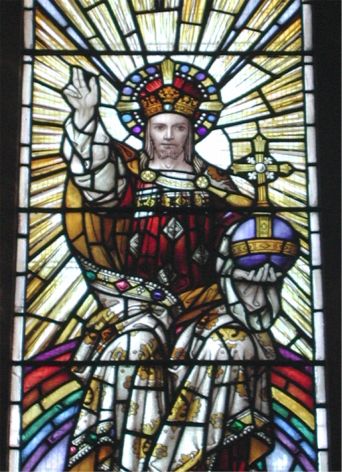
Christ the King, Redeemer of Man

(Feast of Christ the King-Year B;This homily was given 25 & 26 November, 2006, at Our Lady of Mercy, East Greenwich, R.I.; read Revelation 1:5-8 and John 18:33-37)

Our Gospel for this Feast of Christ the King is the mysterious passage from St. John’s Gospel, where Christ is questioned before Pontius Pilate. It is mysterious because it involves the Son of God being interrogated by a man, but it is also mysterious because it is difficult to understand just where Pilate is coming from.

Is he serious and sincere as he questions Christ? Is he simply curious about who this Jesus of Nazareth is, or is he outright sarcastic? Whatever the case may be, one thing is perfectly clear: Pontius Pilate does not realize who Christ really is.

Christ describes Himself as a King whose “kingdom does not belong to this world” (John 18:36). He certainly is a King in the world, but His kingdom is not of this world. With that, a light seems to dawn for Pilate. He asks, “Then you are a king?” And Jesus responds:

For this I was born and for this I came into the world, to testify to the truth. Everyone who belongs to the truth listens to my voice.
—John 18:37

It is a response that is unfortunately lost on Pilate, but it stands at the heart of today’s Feast of Christ the King, and is fundamental for understanding who Christ really is: the one who “testifies to the truth.”


In 1979, just a few months after being elected Pope, John Paul the Great issued his first encyclical letter: Redemptor Hominis—The Redeemer of Man. Re-iterating many of the foundational principles of the Second Vatican Council, he described how the key to understanding the history of humanity, and to understanding humanity itself, is found completely only in Jesus Christ. He alone is “the center of the universe and of history” (Redemptor Hominis, #1).

Directly paraphrasing Vatican II’s Gaudium et Spes, he went on to describe Christ as the one who reveals who God is, since He is fully Divine, and who also reveals the truth about man, since he is also fully human (Gaudium et Spes, #22, Redemptor Hominis, #8).

Again, we can listen to the words of Christ to Pontius Pilate:

For this I was born and for this I came into the world, to testify to the truth.

Christ comes to testify to, or bear witness to, the truth about God and the truth about man. That truth is this:

That God created us, He loves us and has redeemed us in Christ; even when we had turned away from him, even when we had sinned, God still sent Christ to suffer and die on the cross to save us so that we might live with Him forever in heaven . That is who God is, as revealed by Christ.

The truth about man is directly related to that. Because Christ came and took on our human nature, He has also raised us “to a dignity beyond compare” (Redemptor Hominis, #8). We who have been baptized into Christ have been made a part of God’s own Kingdom: Sons and Daughters of God, kings and queens in a sense, as members of His kingdom.

These are not just the pious thoughts and sentiments of Pope John Paul the Great, nor are they merely theological reflections from the Second Vatican Council. They are truths that are found all throughout the Scriptures.

In our second reading for the Feast of Christ the King, from the Book of Revelation, we hear that:

Jesus Christ is the faithful witness, the firstborn of the dead and ruler of the kings of the earth. To him who loves us and has freed us from our sins by his blood . . .
—Revelation 1:5

That is the first truth Christ reveals to us, about who God is: The one “who loves us and has freed us from our sins by his blood.” The second truth follows directly after that: He is also the one “who has made us into a kingdom, priests for his God and Father” (Revelation 1:6).

We have been made into a kingdom, raised to “a dignity beyond compare.” Because of our baptism, we share in the very life of God. What more could we possible want than that?

You may have read the book “The Lion, the Witch and the Wardrobe,” from C. S. Lewis. It is one of the books in a series called The Chronicles of Narnia and was recently made into a movie.

The story—an allegory for the Christian faith—is an endearing tale of four children who enter the mystical Land of Narnia, and meet there a lion named Aslan, who is the King of Narnia. He is the one who will eventually give his life for the sake of the people, and obviously represents Christ.

These four children serve along side Aslan, and they, too, give completely of themselves for the sake of the King and for the Land of Narnia. In a very moving scene at the end of the book, Aslan has them sit in four thrones, and he places a crown on each of their heads. With great solemnity he says,

“Once a king or a queen in Narnia, always a king or a queen.”

C. S. Lewis, a devout Christian, understood the dignity of Baptism. It is not something that can easily be revoked when we fail; it is not something we can easily lose because of our sins and weaknesses. But it is something we are called to live up to.

That is our challenge today on this Feast of Christ the King, to fulfill what John Paul II calls our “kingly service” (Redemptor Hominis, #21), following in the footsteps of Christ the King, who came “not to be served but to serve, and to give his life as a ransom for many” (Mark 10:45).

We do that—Redemptor Hominis continues—in two very practical ways. First and foremost, by being faithful within our own vocation. Whether we are called to the priesthood, religious life or the married life, we are called to be faithful and fruitfull right where God has called us.

Secondly, we fulfill our “kingly service” by using our freedom wisely. We are called to use our freedom, not for selfish gain, but to love and serve God and others. “Christ teaches us that the best use of freedom is charity, which takes concrete form in self-giving and in service” (Redemptor Hominis, #21).

Might we be found faithful in following the footsteps of Christ the King in our own kingly service here on earth, and come to discover the truth that: “Once a king or a queen in the Kingdom of God, always a king or a queen.”

Thursday, November 23, 2006

It's A Wonderful Thanksgiving

(Thanksgiving-Year B;This homily was given 23 November, 2006, at Our Lady of Mercy, East Greenwich, R.I.; read Luke 17:11-19)

There is a very powerful line in one of T.S. Eliot’s famous works called the “Four Quartets.” It is found in the final poem, “Little Gidding,” and it has to do with pilgrimages and journeys of faith.

The point that Eliot makes is that the purpose of a pilgrimage is not to change the way we look at the place we are traveling to, be it Jerusalem, or Rome, or even someplace local, like LaSalette Shrine. The purpose of a pilgrimage is to change our perspective about our point of origin. It is to return back to the place we began, and see that place with new eyes; to have a renewed vision of who and where we are.

The line is both powerful and beautiful. He writes:

We shall not cease from exploration
And the end of all our exploring
Will be to arrive where we started
And know the place for the first time.
—T. S. Eliot, “Little Gidding” (No. 4 of ‘Four Quartets’)

We find that journey of faith in our Gospel this morning in the story of the ten lepers healed by Jesus. St. Luke tells us they began that journey in a very awkward, even painful, position before Christ. He says “they stood at a distance from him” (Luke 17:12). They were not allowed to approach him, on account of their disease and condition; they were social outcasts who could only stand “at a distance.”

And yet they were close enough to cry out for help, and to ask Christ for healing. Jesus quickly answers that prayer. He says to them, “Go show yourselves to the priests” (Luke 17:14), and in that very act of obedience they come to experience the healing so desperately longed for.

One of them, recognizing not only what has happened but Who has brought about that tremendous gift, returns to the place he started. But now everything has changed. He no longer stands off “at a distance” from Christ. He draws very close indeed, and falls down at the feet of Jesus in praise, adoration and overwhelming gratitude. He has come to understand what T. S. Eliot meant:

The end of all our exploring
Will be to arrive where we started
And know the place for the first time.

It is during this time of the year that we begin to hear the same story, told in so many different ways. Whether we like it or not, the Charles Dickens classic, “A Christmas Carol,” is already showing in theatres. And how many times in the days and weeks ahead will we see the movie “It’s a Wonderful Life,” playing on TV? Really it is just the same story, with the names and the places changed.

Ebenezer Scrooge makes that journey through Christmas past, present, and future, only to come right back again to where he started on that cold Christmas Eve. But he suddenly sees the world he lives in a whole new light. He has a new understanding of himself and is overwhelmed with joy.

George Bailey, in “It’s a Wonderful Life,” comes to the end of himself and regrets that he was ever born. He thinks he has no reason to live and makes a decision to end his life entirely. And yet suddenly he is shown what life would look like without him, and everything changes. He comes back, in the end, right to the place where he started and has a renewed sense of gratitude for his job and his own place in that small town. He is filled with love for his family and all that he has been given.

This Thanksgiving, God invites us to make that same journey of faith and that pilgrimage of gratitude, to come to a new vision of all that we have received from Him. We do that in a very practical way. Sometime today, I would suggest that we find some quiet place to sit down in the presence of God and to thank Him for five things that we have been given.

It might be our family, our friends, or our Catholic faith. We may have had a great year filled with many blessings, so we should be thankful to God for that gift. Or perhaps we have had the worse year ever. Maybe we have experienced tragedies or difficulties, but we made it through. Because of our faith, or our friends and family, we were able to move forward with hope. Today, thank God for that. Whatever it may be, think of five things that you are thankful for today.

And then, in the days and weeks ahead, whenever the movie, “It’s a Wonderful Life,” or Charles Dickens’ “A Christmas Carol,” comes on the TV or you hear them advertised on the radio, thank God for five more things. Or maybe you just remain thankful for the same five things.

This day we simply ask God to guide us more completely into that journey of faith and pilgrimage of gratitude, that we may come to realize, along with George Bailey, Ebenezer Scrooge, and the leper in St. Luke’s Gospel, that:

The end of all our exploring
Will be to arrive where we started
And know the place for the first time.

Sunday, November 12, 2006

Schindler's List and the Law of the Gift

(32nd Sunday in Ordinary Time-Year B;This homily was given 11 & 12 November, 2006, at Our Lady of Mercy, East Greenwich, R.I.; read 1 Kings 17:10-16 and Mark 12:41-44)

It is perhaps the most beautiful and profound statement of the entire Second Vatican Council. It would later become one of the major themes of the life and pontificate of John Paul the Great; and it provides the only context that allows us to understand the radical generosity we find in the first reading and in the Gospel this morning.

It is called the “Law of the Gift” and it is found in Vatican II’s Gaudium et Spes:

“Man cannot fully find himself except through a sincere gift of himself.”
—Gaudium et Spes, #24

Describing how God is a Trinity of persons, each of them giving themselves to the other in love from all eternity, Gaudium et Spes went on to proclaim how we—made in that very same image and likeness—are created for love and to give ourselves away in love. By nature, we are creatures who are fulfilled only by giving to others: our families, those around us, and most especially, God Himself.

“Man cannot fully find himself except through a sincere gift of himself.”

We discover the “Law of the Gift” in the first reading this weekend, in that widow from Zarephath. Far from sitting down with her son to starve to death (as she laments to the prophet Elijah), she gives generously everything she has and instead continues not only to live, but the thrive and flourish. She has life abundantly, because she gave with great abundance to the man of God, Elijah.

The widow in the Gospel, who “contributed all she had” (Mark 12:44), is held up by Christ as the very icon of generosity and faithfulness.

And if we take a moment to consider this Veteran’s Day Weekend, and all the men and women who served and continue to serve our country so faithfully, we discover that they, too, live by the “Law of the Gift.” We honor and remember them today, not because of what they kept for themselves or what they accomplished for themselves, but for what they gave to obtain the freedoms we celebrate and enjoy today.

“Man cannot fully find himself except through a sincere gift of himself.”

You may have seen the movie, Schindler’s List, which tells the remarkable and true story of Oscar Schindler. Born in Czechoslovakia, as a young man Schindler followed the coattails of the German army into occupied Poland at the start of the Second World War. He quickly enmeshed himself in the ranks of the Nazi party, not because he espoused their ideals or wanted to follow their way of life, but because he saw a tremendous opportunity to make an awful lot of money.

He was placed in charge of a factory located about 60 kilometers from Auschwitz, where he “employed” over a thousand Jews. Basically, it was slave labor; he had to pay them next to nothing and he hardly fed them anything. He made a mint in that place.

Yet, somewhere in the middle of the war Schindler began to realize the absolute brutality of the Nazis, that they had no intention of merely holding the Jews captive or exploiting them. Their “master plan” was to simply exterminate them, every Jewish man, woman, and child. That shocked Oscar Schindler into reality.

He began to use his influence and contacts in the Nazi party, as well as his money, to save the lives of the very people he had exploited. It was dangerous business, entailing that he risk not only his resources and his name, but also his very life.

Twice Oscar Schindler was arrested under suspicion that he was working to save Jews. Both times his influence, and his money, got him out of it. Each time he immediately returned to that factory and continued what he had been doing: literally buying time, and buying Jewish people from the Nazis.

If you have seen the movie then you remember the haunting final scene, when the war ends and Schindler takes account of the whole ordeal. He gets out of his car, along with his friend, Stern. The factory and all the workers are off in the background. He turns to his friend and he says:

“I could've got more. I could've got more, if I'd just...I could've got more...”

His friend says, “Oscar, there are eleven hundred people who are alive because of you. Look at them.”

But Oscar Schindler won’t hear a word of it. He continues:

“If I'd made more money...I threw away so much money, you have no idea. If I'd just ...I didn't do enough.”

His friend continues to argue, in vain, as Schindler begins to look around him at the car they drove up in. “This car,” he says. “Why did I keep the car? Ten people, right there. Ten people, ten more people.”

He rips a swastika pin from his lapel, and says, “This pin, two people. This is gold. Two more people…At least one. One more. One more person. A person, Stern. For this. I could've gotten one more person and I didn't. I didn’t...”

Of course, no one would fault Oscar Schindler for keeping his car or a gold pin. But the point is, he convicts himself. He is himself convinced that he could have and should have given more. He was aware of the “Law of the Gift,” that we are made to give ourselves completely to others, to God. He had come to understand that “Man cannot fully find himself except through a sincere gift of himself.”

In the New Testament, in the Acts of the Apostles, there is a compelling and rather disturbing story about a married couple named Ananias and Sapphira (Acts 5:1-11). It occurs at the very foundations of the early Church, when many were selling off their lands and property and laying the money at the Apostles’ feet.

Now, nobody was under an obligation to do that. Nevertheless, many willingly gave all they had to benefit the work of the Gospel. Ananias and Sapphira had sold their property, and they, too, chose to bring their money to the Church. But they decided to keep some of it for themselves, and simply tell the others that they had given all.

St. Peter confronts Ananias and explains how the money was his, before and after he sold his property. He could have done anything he wanted with it. But what he chose to do was lie, and for what? St. Peter says to him, “You have lied not to men, but to God” (Acts 5:4). At that, Ananias drops dead!

A few hours later, his wife Sapphira comes before St. Peter, completely unaware of what just happened. He asks her about the amount, and she confirms that her and her husband have given over the whole thing. St. Peter replies: “The footsteps of those who have buried your husband are at the door, and they will carry you out” (Acts 5:9). And then she drops dead! Again, a very disturbing story.

Yet that scene is displayed, in living color, near a side altar, in St. Peter’s Basilica in Rome. A friend of mine gives tours of St. Peter’s, and one day he was doing that very thing and explaining what is called “The Altar of the Lie.” A woman in the group seemed a bit upset, and asked,

“Why on earth would the Church include that scene in a mosaic for this basilica? Of all the beautiful scenes in the Acts of the Apostles or the rest of the New Testament, why that one?”

My friend didn’t miss a beat, but simply responded that the reason for that scene in this church was because of its location. He motioned to a doorway across from the “Altar of the Lie,” and said:

Those doors over there are the doors to the sacristy, where every priest—whether he be newly ordained or a cardinal of the Church—gets ready for Mass. And every priest who comes out of that sacristy door, no matter which altar he is heading to, must first look at that scene of Ananias and Sapphira before he celebrates the most sacred mystery of our faith. And he must ask himself: ‘Have I given everything? Have I given everything, like I said I would on the day of my ordination, or have I held something back from God, or from the people of God.’

Each one of us, whether priest or not, must ask that same question before we approach the Eucharistic table this morning. Not because God will strike us down, like Ananias and Sapphira; and not because God is greedy and wants to take from us the very things we are reluctant to give.

But because we are created to give completely of ourselves and we will not be fulfilled nor complete until we do so; like the Trinity, three Persons eternally giving themselves to each other in love, we are made to give ourselves completely away, to our families, to the people around us, and to God Himself. Might we look into our hearts and into our lives this day, and simply give everything—our will, our desire, all that we can muster—because “Man cannot fully find himself except through a sincere gift of himself.”

Sunday, November 05, 2006

The Secret of Life

(31st Sunday in Ordinary Time-Year B;This homily was given 5 November, 2006, at Our Lady of Mercy, East Greenwich, R.I.; read Deuteronomy 6:2-6 and Mark 12:28-34)

What do you think is the “secret of life”? Is it hard work? Loyalty? Is it family? Scientists tell us the “secret of life” is found in DNA; if we can understand DNA then we can unlock the great mystery of life itself.

If you are a Country Music fan then you have probably heard the popular song by Faith Hill called “The Secret of Life.” It is about two guys sitting down at a bar looking for the answer to that question. They come up with all kinds of possible solutions: The secret of life is . . .

A good cup of coffee
'Keep your eye on the ball'
Monday Night Football

I kind of lean towards that last one, truth be told! But for a pious Jew in Jesus’ time, the “secret of life” could be found nowhere else but in the Law of God, in the commandments God had given to the people of Israel through Moses on Mt. Sinai. Therein, the devout Jew would say, lies the secret of life.

But the question of the day would be: Which one? There were 613 different commandments in the Torah. It was a commonly debated question, which one of these was the greatest. Any Rabbi worth his salt would have a strong opinion on that topic. And so the Scribe approaches Jesus in the Gospel this morning and asks Him: What do you think?

Which is the first of all the commandments?
—Mark 12:28


Typically, Jesus answers that question very differently than they expected. He offers a very traditional answer and an entirely new one, at the same time. Jesus begins His response by reciting the Shema.

The Shema is one of the core professions of the Jewish faith, and we heard it this morning in our First Reading from the Book of Deuteronomy. Shema is the Hebrew word for “Listen!” or “Hear!” and Jesus recites the Shema word for word when He says:

Hear, O Israel! The Lord our God, is Lord alone! You shall love the Lord your God with all your heart, with all your soul, with all your mind, and with all your strength.
—Mark 12:29-30; (cf. Deuteronomy 6:4-5)

It was a very traditional response that most Jews would have agreed with. The Shema was recited by devout Jews three times as day. They would write it out and wear it on their garments, or place it in small boxes on the doorway of their home to remind them—each time they came and went—of the great commandment to love God.

But Christ also adds a second commandment, so they will understand that the way of life God calls us to cannot be easily summarized in just one passage of Scripture or just one of the commandments. He says that:

The second is this: “You shall love your neighbor as yourself.”
—Mark 12:31


In that is the novelty or the nuance that Christ offers, His own particular contribution to the question about the greatest commandment. He combines the two commandments—love of God and love of neighbor—as one, linking them both together with the single word: love. To love both God and neighbor is greater than all the other commandments (Mark 12:31).


But with all that said, Christ is not simply the greatest Rabbi of His day providing the best teaching. He is not even the greatest teacher among all the other teachers or the apex of all the other religions. He is not even in that category. He transcends all categories.

Jesus Christ is Lord of Israel and Lord of all precisely because He not only gives us the law and the commandment to love God and love neighbor, but because He is the only one who truly lives it. Christ is the only one to live fully the love of God and love of neighbor, and in that is found the Secret of Life!

The Secret of Life is Jesus Christ, God made man, who comes down from heaven to dwell among us and teaches us how to live and how to love. Jesus Christ is the one who loves God to the fullest, giving His life to the father in the obedience of love, even to the point of death on the cross. Jesus Christ is the one who loves neighbor to the fullest possible extent by sacrificing Himself on the cross for the salvation of us all.

That is the secret of life: to give oneself away—to offer oneself as a gift—and in that to be fulfilled and complete.

Christ invites every one of us to participate in that secret of life by participating in His own life through baptism. By our baptism into Christ the Holy Spirit lives in us and helps us to live the commandments of love.

St. Paul, in his letter to the Colossians, talks about the great mystery and the secret of life, and he says it is:

. . . the mystery hidden from ages and from generations past. But now it has been manifested to his holy ones, to whom God chose to make known the riches of the glory of this mystery among the Gentiles; it is Christ in you, the hope for glory.
—Colossians 1:26-27

Christ lives in us. The Holy Spirit lives in us. We now have the ability to live out the commandment of love—to love God and neighbor—like Christ Himself because He lives in us. As overwhelming and supernatural as that sounds, we do it in a very practical way: by the things we say and by what we do each and every day.

There was a story in The New York Post just a few weeks ago about a man who was caught trying to jump off the Empire State Building with a parachute. He was arrested and charged with reckless endangerment. Of course, he pleaded innocent. His lawyer went before the court and declared that his client was innocent because he was simply “expressing himself.”

The judge asked for an explanation, and the lawyer went on to say that, “some people express themselves with words. My client expresses himself with actions.” The article did not give the outcome of the case, but we can guess what it probably was!

But that is an example of what God asks of each one of us. Not that we jump off the Empire State Building with a parachute! But that we express ourselves, that we express our love for Him and our neighbor, with words and actions. Both are necessary. What are some of the ways God is challenging us to love him and other with our words and actions this week?

What are the words God is moving us to pray in conversation with Him? Have we asked God to become more a part of our lives, more a part of our families, our workplace? Have we asked Him to make us a better father or a better mother? A better son or daughter, husband or wife? Have we spent time with Him in prayer? That is how we love God with our words.

With our neighbor, we use words to encourage, to build up; perhaps we use words to challenge each other to live the Gospel more faithfully.

And finally, we accompany our words with the actions that speak that same message. In a very practical way, we respond to the needs around us. St. Augustine was once asked, “What does love look like? You always speak about love; you write about it. But what does love look like?” He responded:

It has feet to go to the poor and needy.
It has eyes to see misery and want.
It has ears to hear the sighs and the sorrows of others.

This week we ask God for the grace to love Him and our neighbor with our words and actions. And as we do that in the everyday practice of our faith, may we enter more deeply into the very secret of life, what St. Paul says is: “Christ in you, the hope of glory.”

Wednesday, November 01, 2006

Feast of All Saints

(Feast of All Saints;This homily was given 1 November, 2006, at Our Lady of Mercy, East Greenwich, R.I.; read Matthew 5:1-12)

One of my favorite places on earth is the Basilica of St. Peter in the City of Rome. Unlike the Gothic style cathedrals, like Notre Dame in Paris, which seek to draw our attention and our imagination toward the heavens by their tall steeples and stain glass windows high up near the vaulted ceiling, the Basilica of St. Peter’s is early Baroque.

The Baroque style seeks to do the opposite: to draw heaven right down here to earth. As if in imitation of the God who becomes man and walks among us, St. Peter’s gives us a glimpse of heavenly realities right here and now.

When you walk into St. Peter’s, immediately you will find holy water fonts being held up by life-sized angels; they are close enough for you to reach out and touch.

Walking further into the Basilica, exploring the many side altars and the nave of that church, you discover the statues, images and mosaics of the saints. They are almost at eye level, and some are close enough for you to grab hold of their feet.

But more than that, the lives of the saints are physically present. The Basilica is literally founded upon the very remains of St. Peter; the bones of the Fisherman are part of the very foundation. The tombs of John Paul the Great and Blessed John XXIII, as well as many other popes and saints from throughout the centuries, are also a permanent part of that great Basilica.

St. Peter’s reminds us of what we celebrate today as Catholics: the Feast of All Saints. It reminds us that God does not want us to wait until heaven before we experience the change and transformation of our lives and our world that the Scriptures speak of. God wants to bring the power and splendor of heaven right here to this earth. The saints are the ones who allowed Him to do that. Christ constantly challenges us to do the same.

The Gospel for today is Jesus’ Sermon on the Mount, and the Beatitudes He delivers for all the people of God. Jesus does not say, “Blessed will be the poor in spirit, some day.” No, He says, “Blessed are the poor in spirit,” right here, right now.

“Blessed are the merciful.” Even now—as they imitate God’s greatest attribute—they are blessed, and in the end they will receive great mercy.

“Blessed are the peace makers.” God is especially impatient to reward those who strive for peace among people and nations. He is determined to bless them now, and already the world recognizes them as “Children of God.”

“Blessed are clean of heart.” They are blessed right here and now, those who seek to be pure and chaste even in the midst of a world and culture that mocks that purity and laughs in the face of the chaste. Blessed indeed, Christ says, are those who seek that virtue. “They shall see the face of God.”

On this feast of All Saints, Christ challenges all of us to walk in the footsteps of the saints, and to live the Beatitudes, not the attitudes of the culture around us.

Do we have the courage to do that? Do we dare to follow the examples of the saints and to give God permission to bring the power and majesty of heaven right down here to this earth, in our families, our schools and workplaces?

If the answer is, “Yes, we do have the courage to seek this grace, this gift,” then perhaps one day there will be a statue, an image, or a mosaic in St. Peter’s Basilica with us on it.

But more importantly, there will be a place for us in heaven, with God and all the angels and saints, for all eternity.

Heaven:

[Your Place Here]

Sunday, October 29, 2006

Bartimaeus and "Living the Catholic Faith"

(30th Sunday in Ordinary Time-Year B;This homily was given 29 October, 2006, at Our Lady of Mercy, East Greenwich, R.I.; read Mark 10:46-52)

We began our Fall Book Club again a few weeks ago, and this season we are discussing Archbishop Charles Chaput’s book Living the Catholic Faith: Rediscovering the basics. As the title suggests, the book explores the fundamentals of what it means to live the Christian life.

In the second chapter, Archbishop Chaput says that there are three “requirements” for those who chose to accept God’s love and live in it as followers of Christ, three things that “are continuous throughout a Christian’s life.”

The first is conversion. Think about the very first words of Christ when He begins His public ministry: “This is the time of fulfillment. The kingdom of God is at hand. Repent, and believe in the Gospel” (Mark 2:15). So the first requirement is to turn from sin and be faithful to the Gospel.

The second one flows from that: discipleship. We become disciples of Christ, walking with Him in our daily lives. And finally, as we experience that ongoing conversion and continue to walk with Christ as His disciples, we encounter the third requirement for the Christian: transformation.

Our lives become transformed as we become more and more like Christ, in the way we talk, the way we act toward others, the way we vote (especially important for us to remember with elections right around the corner). In other words, we are transformed to be Christians not in name only, but in the way we live our lives.

In our Gospel this morning, we see those three requirements—conversion, discipleship, and transformation—in a profound and beautiful way in the life of the blind beggar, Bartimaeus.


As our Gospel narrative begins, we find Bartimaeus in the very same place each of us would be in without Christ: blind and in the dark. That is here we would be, spiritually blind and lost without God.

Now, make no mistake about it; Bartimaeus is able to get by. He is not stumbling around and bumping into things. He is able to provide for himself by begging for money in the streets of Jericho. But his life falls so far short of what it could be. He longs for so much more than what he has.

He is a man without vision, without sight . . . but not without hope. We know that because suddenly he hears that Christ is passing by, and “On hearing that it was Jesus of Nazareth, he began to cry out and say, ‘Jesus, Son of David, have pity on me.’
—Mark 10: 47

The crowd tries to silence him, and therein lays a great irony. The title “Son of David” is a Messianic title. The crowds do not yet recognize Jesus as the Messiah. They cannot see that He is the Anointed One of God. But blind Bartimaeus sees it! He is able to see that Jesus is the one of whom the prophets spoke; the one who would set the captives free, and give sight to the blind. So he cries out all the more: ‘Jesus, Son of David, have pity on me.’

And suddenly Jesus responds; He instructs the crowd to call him. So they say to Bartimaeus:

Take courage; get up, Jesus is calling you.
—Mark 10:49

There we discover the very mystery of conversion. It is no longer the case that Bartimaeus is the one crying out. Now it is Jesus who is calling out to him. Long before we ever begin to call out to God—for grace and strength, for help or healing—long before the prayer of faith is ever on our lips, God Himself is already calling out to us. He is calling out to each one of us right now, calling us to a deeper conversion of heart and a renewed commitment to turn away from sin, and be faithful to the Gospel.

Bartimaeus recognizes that call and he responds immediately. St. Mark tells us “he threw aside his cloak, sprang up, and came to Jesus” (Mark 10:50). What an odd description. He threw aside his cloak. Why did he do that?
Some of the Fathers of the Church comment on this passage and say that he is throwing off the old self, and putting on Christ (as St. Paul describes in the New Testament). He is getting rid of the old way of doing things, the old Bartimaeus, and getting ready to begin a whole new life with Christ.

In the early Church, when people were baptized, they were often fully immersed in the life giving waters of rebirth. They would remove their garments completely and enter fully into the water—dying with Christ in baptism—only to emerge a new creature. They would put on a new, white garment as a sign that they had put their old, sinful ways behind and had now put on Christ.

Today God challenges each of us, as baptized Christians, to throw aside whatever sins are keeping us from living a full life in Him. We are called to throw aside our old self, and put on Christ, even as we were clothed with that white garment at our own baptism.

But more than that; being a Christian involves more than just avoiding evil. We are also called to do the good. We are called not just to let go of bad things, but even to sacrifice good things in order to follow Christ more closely.

St. Jose Maria Escrivá comments on this scene, where Bartimaeus throws aside his cloak and goes to Christ, and says it is a representation for the sacrifice we are all called to as disciples of Christ.

Escrivá describes a time in his life when he had come upon a battlefield just after a major campaign (Election Year pun intended) had been fought. He described how the entire field was literally covered in army coats that the soldiers had abandoned—thrown aside, like Bartimaeus—as the battle raged on.

There were also water bottles; sacks filled with personal items like pictures or letters from loved ones. All of these items had been left behind by the victors, those who had won the fight! They were willing to sacrifice even those good things in order to win the victory that day. How much more willing should we be to make sacrifices in our lives to win the victory for Christ?

And so, as Bartimaeus experiences his conversion and comes to Christ, we are told “Immediately he received his sight and followed [Christ] on the way” (Mark 10:52).

That was the greatest miracle of all; not that he was healed of his blindness, however remarkable that may be. The true miracle is the life of transformation Bartimaeus now experiences as he “follows Jesus on the way.”


This week, how is God calling us to experience conversion, discipleship, and transformation? Where is God calling us, in the midst of our own lives and experience, to be disciples who are transformed and immersed in the mystery of Christ?

This morning Jesus comes to us in the Eucharist and gives us the grace and strength to encounter Him in a whole new way. God opens our eyes, like He did with Bartimaeus. But more than that, He opens our hearts and gives us everything we need to “follow him on the way” in our own lives this week.

Sunday, October 22, 2006

Ambition

(29th Sunday in Ordinary Time-Year B;This homily was given 21-22 October, 2006, at Our Lady of Mercy, East Greenwich, R.I.; read Mark 10:35-45)


Our Gospel for this weekend is about ambition. We all know people that are ambitious, sometimes literally driven by ambition. And sometimes ambitious can become obnoxious. But it doesn’t have to be that way.

Ambition itself is actually neutral. It can be very good, even holy; or it can be base, self-serving, and downright ugly.

We find ambition in our Gospel this morning in the Apostles James and John. They approach Christ and say to Him:

Grant that in your glory we may sit one at your right and the other at your left.
—Mark 10:37

It is ambition almost to the point of embarrassment. After all that Christ had taught them, by word and example, about service and humility, about giving of oneself and not asserting oneself, about taking the lowest place. Instead, the Apostles James and John are seeking the highest places of all!

The other 10 Apostles catch wind of it, and they become indignant. They are furious. Sadly, they are not indignant because they want James and John to become better disciples; they are not indignant because they are offended for Christ, whose message has not been heard. They are indignant because they themselves are ambitious!

It is a very challenging Gospel, to say the least. These are the men Christ has chosen as the foundation for His Church, and they are so ambitious. But the response of Christ is important for us to consider.

Remarkably, He doesn’t squash the ambition of James and John. Instead, He takes their ambition and He purifies it. Remember, ambition itself is neutral. It can be used for selfish gain, but also for the greater glory of God. And so Jesus says to them:

You do not know what you are asking. Can you drink the cup that I drink or be baptized with the baptism with which I am baptized?
—Mark 10:38


Pope Benedict XVI, in his Wednesday audiences throughout the summer months this past year, spent time reflecting on the lives and ministry of the twelve Apostles.

At one point he focused on James and John, and he commented on this very "ambitious" scene found in the Gospels of St. Matthew and St. Mark. He says that in the response of Jesus—Can you drink the cup? Can you be baptized with the baptism with which I am baptized?—the Lord is trying to open the eyes of James and John.

Our Holy Father says that Jesus wants to open their eyes, first of all, to who He is, the Messiah that “did not come to be served but to serve and to give his life as a ransom for many” (Mark 10:45). But, at the same time, He is also opening their eyes to what He is calling them to do: to share in that very same mission of service, and to give their lives in the very same way, even unto the shedding of blood.

Jesus asks them: “Can you do this? Can you follow me and give yourself completely, even as I do?” James and John answer, very ambitiously, “We can” (Mark 10:39). Now that would seem almost too ambitious! It appears to be way over the top, except we know, historically, that they were able to do exactly that.

St. James is the first Apostle to be martyred for his faith in Christ. The Acts of the Apostles recounts how he was killed by the sword, under the reign of King Herod Agrippa, in the year 40 A.D. (Acts 12:1-2). He drank from that same cup, was truly baptized with the same baptism as Christ.

His brother, St. John, met a different fate. He was the only Apostle not to undergo martyrdom. Instead, according to one tradition, he was exiled to the obscure island of Patmos, where he spent his days in seclusion, separated from everything and everyone dear to him. Yet by the time his life was over he had written 5 out of the 27 books of the New Testament: The Gospel of John, the Book of Revelation, and three of the Catholic Epistles (1-3 John). That’s quite an ambitious undertaking.

These are the people Christ used to begin His mission of salvation: James and John, and the other 10 Apostles. That mission, some 2000 years later, has gone far beyond what any of them could have possibly imagined.

It’s not that James and John were too ambitious when they approached Christ that day. The fact of the matter is they were not ambitious enough! Christ wanted to take their ambition and purify it, to elevate it and direct it in the mission of the Gospel. He wants to do he same with each and every one of us.

This weekend in the Church Universal we celebrate World Mission Sunday. It is a chance for us to support the efforts of all those who give their lives to the spreading of the Gospel. But we also recognize that we are all called to share in the apostolic mission. God calls us all to share in the mission of the Gospel.

We do that first and foremost through prayer. We are called to share in the mission of the Gospel by praying for those who have not yet heard the message of salvation. We pray that they will have an openness to receive that message of Christ, which has the power to transform their lives forever.

Yet in prayer we also come to find that God desires our own transformation through the very same Gospel. In his message for this World Mission Sunday, Pope Benedict XVI writes that: “Only by dwelling in God do men and women burn with a flame of Divine love that can set the world on fire.”


God wants to set the world around us on fire, but first He desires that we be set on fire with His message of mercy. God wants to light a fire in each of our hearts, to place that “flame of Divine love” within us, and then to spread that flame everywhere in the world we live in. Are we giving Him our hearts in prayer so that He can do that?

Secondly, we participate in the saving mission of the Church through our financial support. Our collection for World Mission Sunday will go to support over 1100 dioceses throughout the world, helping thousands of people to be touched by the love of Christ.


And finally, we are called to share in the missionary work of the Church simply by the way we live our lives. We are living in strange times; the mission fields are no longer just in foreign lands. Each of us can think of people—perhaps living under our own roof, and certainly in the places we work—who have not heard or received the Gospel message of salvation through faith in Christ.

We are called to be missionaries to them, helping them to know and experience the love of God. Again, in his message for World Mission Sunday, Pope Benedict XVI says that we are called to do that in two ways:

By loving God first, to the very point of giving our lives for Him (like James and John learn in our Gospel).

But also by stooping down and reaching out to the needs of all; again, like James and John, serving those most in need by following the example of Christ

This World Mission Sunday we ask God to truly make us ambitious; certainly ambitious in our businesses, and in family life or our personal lives. Guided by the Holy Spirit, there is nothing wrong with that. But above all we ask Him to make us ambitious in the mission of the Gospel; and in everything we do, might we do it first and foremost for the love of God, and for His glory.

Sunday, October 15, 2006

The Good Life, the Moral Life, and Eternal Life

(28th Sunday in Ordinary Time-Year B;This homily was given 15 October, 2006, at Our Lady of Mercy, East Greenwich, R.I.; read Mark 10:17-27)

What do you think of when you hear the words “The Good Life”, or when you think of those who are living “The Good Life”? I think many of us would consider perhaps someone who has wealth; power and prestige; fame and fortune. That is what the Good Life looks like for a lot of people.

A friend of mine from the Diocese of Savannah was here visiting this past week. We had studied together for the priesthood and he had never really seen New England before, so I gave him a small tour of the great State of Rhode Island (it took about 15 minutes to get to each place we visited!).

Eventually we went over to Newport and traversed the Cliff Walk, checking out the various mansions all along Bellevue Avenue. At one point we were able to take a tour of Marble House, one of the first mansions built there.

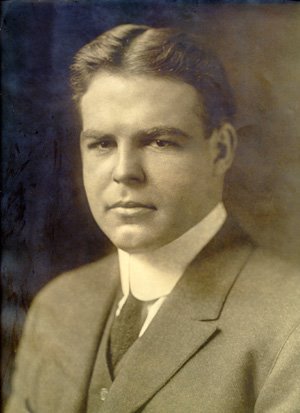
William K. Vanderbilt commissioned Marble House in the late 19th century as a gift for his wife’s 39th birthday. He wanted to give her something special, so he decided to have this “cottage” built on the shoreline in Newport. It just so happens that the “cottage” was made entirely of marble, it was enormous, and cost about $11 million.

That is the image we often have of the Good Life; those who have unlimited means to do almost anything they want. And unfortunately, in our world today, many of those who are living the Good Life—celebrities or famous people who have inherited vast family estates—those who are living the Good Life are not necessarily living the Moral Life.

Now, to be clear, those two things are by no means mutually exclusive. There are many people—in Hollywood and elsewhere—who are living the Good Life but are also very moral and upright. It’s just that we do not often hear much about them.

That is what makes our rich young man in the Gospel this morning so compelling. We know already that he is living the Good Life. St. Mark tells us “he had many possessions” (Mark 10:22). So great was his wealth, in fact, that he was unable to let go of it when Jesus called him. But more than being a man of wealth and possessions, he was also a man who lived the Moral Life.

Jesus lists a series of commandments: You shall not kill; you shall not commit adultery; you shall not steal; you shall not bear false witness; you shall not defraud; honor your father and your mother (Mark 10:19).

We soon find out that this young man has been following all of them from childhood! He was that good, that moral. Yet, remarkably, even after all his wealth and possessions, and after living such a moral and upright life, he is still able to see that something is wanting. He is not complete. There is still something missing in his life. He approaches Jesus and asks Him what he must do to find it:

“Good teacher, what must I do to inherit eternal life?”
—Mark 10:17

The Good Life and the Moral Life are simply not enough; what he is missing and what he longs for is Eternal Life. All of us—no matter how well off or how moral we are—all of us, in the very core of our being, long for Eternal Life.

In the Gospel this morning, Jesus Christ offers the rich young man, and all of us, the key to Eternal Life. That key is found in the final two words of Jesus’ response: “Follow me.”

Follow me, Jesus says, and put nothing else before that command; not wealth and possessions (as the rich young man soon finds out); not power or prestige; not even morality and your own good works and accomplishments. Follow me, and let that command define everything else in your life.

Because with Christ, there is no distinction between the Good Life, the Moral Life, and Eternal Life; when we have a personal relationship with Jesus Christ, the Good Life, the Moral Life, and Eternal Life are all the same thing. He summarizes all three of them with those two words: Follow me.

When we follow Christ, it doesn’t matter whether we are wealthy or poor; we truly live the Good Life. We are content with what we have—whether we live in Marble House with the Vanderbilt’s or in a tiny apartment on the outskirts of town—we live the Good Life because we live with Christ.

When we follow Christ, we also live the Moral Life. Following the commandments and the precepts of the Church can be difficult in the world we live in. It is not easy to live a life of sacrifice and practice self-denial. Yet when we have a real and growing personal relationship with Christ, then following the commandments of God is easy.

When we know and love Christ, and understand the depths of His love for us, obedience to the laws of God are no longer difficult because we know Who it is that has given us those commandments, and we also know why He has given them to us: so that we can be happy here in this life, and live forever with Him in Eternal Life.

To follow Christ is to have The Good Life, the Moral Life and Eternal Life.


In the year1904, as William K. Vanderbilt and many of his contemporaries were building “cottages” on the shores of Newport, a young man named William Borden had just graduated from a high school in Chicago. As one of the heirs to the Borden Family Dairy estate, he was already a millionaire, truly a rich young man.

For his graduation present his parents gave him a trip around the world. It was then, as he traveled throughout Asia, Europe, and the Middle East, that he saw human suffering and misery on a scale that he had never before imagined. He came back a changed man, and told his family:

“I am going to give my life to God as a missionary.”

Many of his friends and loved ones tried to talk him out of it; they told him he was wasting his life. William wouldn’t listen. Instead, he took out a cherished Bible, and on the inside cover he wrote two words:

No Reserves.

Years later, he graduated with honors from Yale University. Although many things in his life had changed, his determination to be a missionary for Christ had not. To the surprise of many, he entered the seminary just as focused as ever. This time he wrote two more words in the front cover of that Bible. Under the words No Reserves, he wrote:

No Retreat.

After completing his studies at Princeton Seminary he was finally on his way to China to become a missionary. But he had to make one stop in Egypt first, for some last minute preparations. It was there in Egypt, tragically, that William Borden contracted Spiral Meningitis. He died within a month.

At the young age of 25, a life filled with promise, filled with possibilities, and filled with hope, was over. But it was far from wasted. In the final days before he died, he had written two final words on the inside front cover of his Bible. Under the words No Reserves and No Retreat, he had written:

No Regrets.


This morning Christ comes to each one of us and offers us the same invitation that He offered to the rich young man in the Gospel, to William Borden, and to everyone who has ever heard the Gospel message: Follow Me.

Follow Me, Jesus says, and put nothing before that command, nothing before that invitation; not power and possessions, not your good works or accomplishments. Follow Me.

Might we do that this day, and discover that in following Christ, we gain the Good Life, the Moral Life, and Eternal Life . . . with no regrets.

Sunday, October 08, 2006

Back to the Beginning

(27th Sunday in Ordinary Time-Year B;This homily was given 7-8 October, 2006, at Our Lady of Mercy, East Greenwich, R.I.; read Genesis 2:18-24 and Mark 10:2-12)

One of the best-known commandments of the Christian faith is “You shall love your neighbor as yourself” (Mark 12:31), yet we find that spoken by Christ only once, in the Gospel of St. Mark. We are all familiar with Jesus’ exhortation to love ones enemies, yet that is found only twice in the Gospels (Matthew 5:44, Luke 6:35).

But on four separate occasions, in four places in the Gospel, Jesus gives us His teaching on the permanence of marriage and the question of divorce (Matthew 5:31-32, 19:3-9; Mark 10:9; Luke 16:18). Our readings for this weekend show us why that teaching was so important for Christ as He instructed the first disciples, and why it remains so central in our own time.

In our first reading this morning, from the Book of Genesis, we have God’s dream for the human family. It is His plan for creation and for the flourishing of life and love with Him and with each other. That dream became a reality in the Garden of Eden, Paradise right here on earth.

Man and woman were created in union with God, knowing and loving Him freely. They were also united to each other in total, self-giving love; Eve was taken from the side of Adam, bone of his bones and flesh of his flesh.

But not long after that dream became a reality, original innocence was lost and the original unity between man and woman was broken. It was the loss of God’s dream for every one of us. We experience the effects of that loss on a daily basis.

In the Gospel this morning, the Pharisees hold up that broken dream for Christ—“in order to test Him”—and they ask him what He thinks about the very painful situation of marriage and divorce. Moses allowed divorce, they tell Him. What do you say?

Jesus surprises them all by pointing out that, when you go back to the teachings of Moses, then you haven’t gone back far enough! Jesus takes them all the way back to the beginning, to the Book of Genesis, and He says:

From the beginning of creation, God made them male and female. For this reason a man shall leave his father and mother and be joined to his wife, and the two shall become one flesh.

So they are no longer two but one flesh. Therefore what God has joined together, no human being must separate.

—Mark 10:6-9


With that very unexpected reply, Christ makes it perfectly clear that the dream of God found in the Book of Genesis is far from over. God has no intention of letting go of that dream. The original plan for unity—between man and woman and between all of us and God—that plan is the priority and focus of Christ from the beginning. And marriage is central to that plan; so central that Christ raises it to the level of a sacrament.

In the New Testament, marriage becomes the very image for the love between Christ and the Church (Ephesians 5:21-32). Christ, who many times refers to Himself as the bridegroom, becomes forever united to His Bride the Church. In the past 2,000 years of Church history, through all the difficulties and even the many human failures of members of the Church, Christ has never once broken that relationship. That is the Good News of the Gospel.

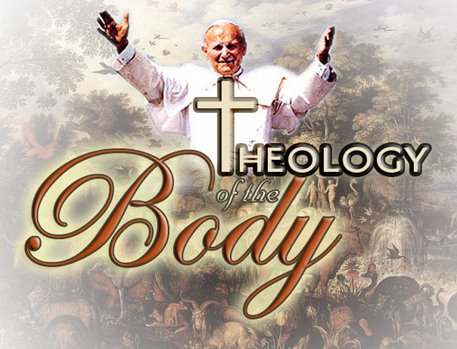
It is also one of the major themes of the teaching of our late Pope, John Paul II. From September of 1979 to November of 1984, John Paul II offered weekly presentations on the readings we just heard this morning. For that entire 5-year period, he taught at great length what would later be called the Theology of the Body.

The Theology of the Body is basically a way of looking at the original experiences of man and woman in the Garden of Eden, and seeing there the blueprint for the way God created us—body and soul—and seeing the key to what it means to live a full and blessed life right here in the present time.

Yet in light of all those insights, and after 2,000 years of celebrating the redemption Christ won for us, the question of divorce still remains a difficult and painful one in our own day and age. The statistics—in society, as well as in the Church—are daunting.

And while Christ’s reply in the Gospel regarding the permanent and unbreakable bond of marriage is the same response He gives to us today, there are a number of misconceptions that we should all be aware of, whether we are single, married or divorced.

Many believe that the Church insists a couple should remain together, no matter what the situation may be. That is simply not true. In some cases, such as abuse, where the safety of the spouses or children, physically or spiritually, is involved, the couple can and should separate (CIC, can. 1151-1155). No one should have to live under conditions like that.

Secondly, people sometimes refer to an annulment as a Catholic divorce. It isn’t. An annulment is simply a recognition by the Church that the union of two persons, while begun in good faith and perhaps even bearing great fruit in their relationship together, did not have the requirements necessary to make it a sacrament.

It is by no means a personal judgment on the character of the couple, or a matter of blame. It simply means that the consent between them, or their understanding of the sacrament, or some other essential factor for the sacrament was not present when they began their life together; the sacramental bond of marriage never existed.

Obviously this is too complicated to explain here, but anyone who has a question on annulment and marriage should feel free to contact their parish priest about that matter.

One final misunderstanding that people often have is that those who have gone through a divorce cannot receive communion. Again, this is not true. Those who are divorced and remarried—if their previous marriage has not been annulled—are not able to receive the Eucharist.

This is one of the most difficult and painful consequences of divorce and remarriage, and while many regard it as a “Church rule” or a man made law, it is based upon the words of Christ Himself in the Gospel this morning.

We do not have the authority to change those words; we are bound by them. But we are also bound by the rest of Christ’s words and teaching, as well. I began this homily with the Christian commandment: “You shall love your neighbor as yourself” (Mark 12:31). That love is due to all people: single, divorced, married, re-married, all.

As people of faith and followers of Christ, we need to constantly evaluate our lives to see if we are following that commandment. Who are the people in our lives perhaps struggling in their marriage and in need of our prayers and help?

Who are the people in our lives who have experienced the terrible tragedy of divorce, and need to know that we are there to help them? How is God calling us all to go back to the beginning, and see His plan of love and life for the family and for each individual as men and women made in His image and likeness?

That’s God’s dream, from the beginning, and He invites every single one of us today to make that dream a reality, beginning now, and fulfilled ultimately in heaven.

Sunday, October 01, 2006

The Holy Name of Jesus

(26th Sunday in Ordinary Time-Year B;This homily was given 1 October, 2006, at Our Lady of Mercy, East Greenwich, R.I.; read Mark 9:38-48)

How many times, in the course of an average week, do you hear the name of Jesus Christ spoken in public? There are many different ways of announcing that name; many different contexts in which that sacred name can be mentioned: in reverence, in devotion. But we can also hear that name spoken of in great irreverence, and with no devotion at all.

In St. Mark’s Gospel this morning, we hear the name of Jesus being used by a person who does not even follow the Lord. Yet because he uses that name with respect, and apparently with faith, it is able to wield tremendous power.

The apostles, St. John among them, are perplexed and even bothered by the use of Jesus’ name. John says to our Lord:

"Teacher, we saw someone driving out demons in your name, and we tried to prevent him because he does not follow us." Jesus replied, "Do not prevent him. There is no one who performs a mighty deed in my name who can at the same time speak ill of me.
—Mark 9:38-39


There is remarkable power in Jesus’ name. Later on in John’s Gospel, Jesus promises:

If you ask anything of me in my name, I will do it.
—John 14:14

Now, that is quite a promise indeed. Do we take that promise seriously? We are able to ask Jesus anything at all in His name, and He will respond to that need.

St. Paul, in His letter to the Church at Philippi, says:

At the name of Jesus every knee should bend, of those in heaven and on earth, and under the earth.
—Philippians 2:10


So exalted is the holy name of Jesus! St. Bernard of Clairvaux says that “To speak of it gives light; to think of it is the food for the soul; to call on it calms and soothes the heart.”

The Church we are worshipping in this morning was founded in 1853 as the Church of the Holy Name, only later to be changed to Our Lady of Mercy. In 1965, the current building we are in was dedicated, and the men and women who built it held the holy name of Jesus is very high esteem. We know that because if we look around the Church the morning, there are many different images of Jesus’ name still present.

In back of the altar, on the front of the canopy above the cross, in blue and gold, is the image of the “Chi-Rho.” It looks like an “X” with a “P” in the middle of it. Those are the first two Greek letters in the title of Christ or Хρίστος. That symbol was used widely in the early centuries of the Church, and still is popular today.

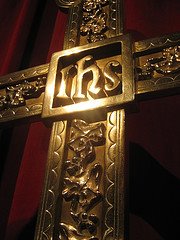
Off to the left of the sanctuary is a large sunburst with the letters “IHS” in the middle of it. That is taken originally from the Greek and then later became the Latin rendering of the same holy name of Jesus (it was later mis-translated as an abbreviation for Iesus Hominum Salvator, or “Jesus, Savior of man,” but Fr. Lolio and I have already clarified this misconception with a well spirited debate).

And finally, on each one of the 10 lights that illuminate our congregation, we find the same monogram: IHS. Obviously the men and women who built this place had great respect for that holy name. We can ask ourselves this morning: how well do we esteem the name of Jesus? How are we to approach the holy name of Christ in our own lives?

I would suggest three ways that we can honor Jesus’ name as people of faith, called to bear that name in the world around us.

First and foremost, we should never use that name in vain. This should be rather obvious, since that involves one of the Ten Commandments, yet unfortunately in our culture it is not something we can take for granted. We should be very careful not to fall into the habit of using Jesus’ name as a mere throw-away word, or worse.

In 1846, Our Blessed Mother appeared to two small children in the French Alps, near the mountain called LaSalette. It is that apparition that the Shrine up in Attleboro, Massachusetts is named for. Yet of all the apparitions of Mary—Fatima, Lourdes, and several others—it is the only one where Mary appears seated.

She is sitting down, with her face in her hands, weeping. The children, Maximim and Melanie, approach Our Lady and ask her why she is so sad. Her response to them was that the people had forgotten her Son. They no longer worshiped Him as they once did; no longer participated at Sunday Mass. They were so caught up in materialism, industry and other things that Christ was no longer central to them.

One of her chief complaints was that many of the men and women of that area, in the work places and in the fields, had begun to use the name of her Son in vain. She told them how much this disturbed her; how it was a sacred name, and should be kept holy.

Do we keep the name of Jesus sacred? Is it holy to us, and do we use it for good, and for God in our daily lives? That is important, because it brings us to the second way we should observe the holy name of Jesus: We should use that name frequently, calling on the name of Christ daily whenever we find ourselves in need.

There is a Country song out—quite popular right now—by the artist Carrie Underwood called, “Jesus, take the wheel.” Like many Country songs, it tells a story. It is about a young girl who is driving across the country to see her mother and father (her momma and daddy, if you are reading this from the South). Her little baby is buckled up in the back seat.

Suddenly, as she is driving far too quickly and is somewhat distracted, she hits a patch of black ice and the car begins to spin out of control. More out of fear and a gut reaction than anything else, she cries out, “Jesus, take the wheel.”

The car winds up safely on the side of the road and no one is hurt; yet, suddenly she begins to realize that her life is a lot like that car ride: it’s filled with distractions, and moving way too fast. She has made some big mistakes and she finds herself very much in need. So right there on the side of the road, she bows her head and devoutly prays the very words she had blurted out as a reaction only a few moments before:

Jesus take the wheel
Take it from my hands
Cause I can’t do this all my own
I’m letting go
So give me one more chance
To save me from this road I’m on
Jesus take the wheel

That is one clear example of the way we are called to live as people of faith. Whenever our lives are moving way too fast, when our minds are filled with distractions and we have made big mistakes—or perhaps a lot of little ones—we should not hesitate to call upon the name of Jesus. As we have already seen, there is tremendous power in that name, because it belongs to the person who can truly transform our lives and set us on the right road once again.

And finally, as men and women who bear the name of Christ, who are called "Christ-ians" by our very Baptism and eternal relationship with Him, we need to make sure that our words and actions are worthy of such a name.

The question has been asked before: If Christianity was suddenly outlawed in the place where we live, would there be enough evidence to convict us of that crime? Our words and actions speak volumes to those around us, people who know that we belong to Christ.

As we enter a whole new week with Christ, we ask for the grace to hold the name of Jesus in great esteem, never using that name in vain. May we call upon Jesus frequently, as He continues to guide us ever closer to eternal life. And may those around us recognize that we are worthy of the name of Christ, not only because we have His name on our lips, but because of the way we live and the way we love in the world around us.

Sunday, September 24, 2006

The Way to Heaven

(25th Sunday in Ordinary Time-Year B;This homily was given 24 September, 2006, at Our Lady of Mercy, East Greenwich, R.I.; read Mark 9:30-37)

There is a very endearing story about St. John Vianney, patron saint of parish priests. Immediately after his ordination to the priesthood, he was assigned to a small parish in an obscure French village called Ars.

As he made his way, on foot, towards that village, he came to a crossroads and did not know which way to go. There was a little boy there, so the saint asked him,

“Young man, which one of these roads leads to Ars?”

“It’s that way, Father,” he replied.

St. John Vianney then smiled at the boy and said,

“You have shown me the way to Ars. Now, I will show you the way to heaven.”


In our Gospel this morning, Jesus shows the disciples and all of us the way to heaven, and the way to greatness in the Kingdom of God.

He takes a small child—perhaps the same age as the one who showed St. John Vianney the way to Ars—and shows them that this is the way to greatness in the Kingdom of God.

If you want to be great in the Kingdom, then you have to think small! If you want to be exalted to the heights of heaven, then you have to be willing to take a step down in humility. You have to become the least, and the last, and the servant of all. That is how we reach the heights of heaven.


One of the greatest stories ever written about the journey from this earth to the heights of heaven is The Divine Comedy by Italian author Dante Alighieri. It begins on a very somber tone. The narrator, Dante himself, is telling us where he is: not only geographically and physically, but spiritually, as well. He writes:

Midway on our life’s journey, I found myself
In dark woods, the right road lost.

He had lost the way; lost his bearings; he was in the dark and all alone. Then suddenly, in those opening lines of the poem, his entire perspective changes. He looks up, and off in the distance he sees the mountain of God shining in the sun. He knows which way he must go, the path he must walk to find that eternal destination for which all of us are created.

Yet he quickly discovers, as he begins to ascend that mountain, that the road to heaven will not be an easy one. Three ferocious beasts block the way: a leopard, a lion, and a ravenous she-wolf.

The leopard, beautiful to behold but very dangerous indeed, represents the sensual pleasures of this life. She remains ever before his face, forcing him back down the path at every turn.

The hungry lion, with his head held high and threatening, represents pride, arrogance and our own self-importance deep within. These are the very things that the disciples encounter on their journey in the Gospel this morning, arguing about who is the greatest; who is the most important; who is the alpha-dog in the pack.

The she-wolf is the embodiment of all those cravings we have for the things of this life only; she is greed, avarice, and the insatiable longing for the things of this world.

There is no getting past these beasts, and Dante must retreat back down the mountain, devastated. Whether he likes it or not, he must humbly take a step down and curtail his ascent to that mountain height.

But just at that moment, the poet Virgil appears; a figure from the ancient world, a person whom Dante knew about and very much respected. He approaches Dante and assures him that he will be a guide to the ascent of that mountain, but that the direction they must go to begin that journey is down!

In fact, they must go all the way down to the depths of hell itself. Virgil takes Dante into the heart of the Inferno, and points out the entire history of sin and all its awful consequences. Dante is forced to witness utter depravity and the hopelessness that reigns in that place; it is enough to make him physically sick.

Yet Virgil, his guide, is relentless as he makes Dante confront the reality of sin, forces him to look it in the face, and take accountability for it. Dante must understand the overwhelming need has for a redeemer and for the mercy and the grace of God.

It is then and only then that Dante begins to move upward to the realm of the Purgatorio, where the souls of the just, those made right with God through faith, are being purified and purged of all selfishness and self love.

Until, finally, a new guide, Beatrice, leads him into the realm of the Paradiso, paradise itself, where he enjoys the beatific vision along with all the saints and the angels of God. It is a beautiful story about a man’s journey to the heights of heaven, even though he had to go through hell—literally—to get there!


Today, where do we find ourselves on our own journey towards God’s Kingdom? Are we experiencing, perhaps, what Dante writes about: darkness, confusion, the right road lost? Or have we begun to see the path God wants us to follow, beckoning in the distance?

Like Dante, we, too, must acknowledge that the sensual pleasures of this world, the insatiable greed and avarice that so easily beset us, and our pride and self importance are not the way to true happiness in this world, nor in the world to come.

If we were to walk with Virgil through the Purgatorio, or even through the Inferno, what are the sins he would point out to us today? We must acknowledge those places where our path to God has become obscured.

Because this morning, Christ Himself—not Virgil the poet—comes to us in word and in Sacrament. He comes to each one of us and says:

Show me where you have left the right road that leads to me.

Show me the sins that are in your life, the ones that are keeping you from growing closer to me and perhaps keeping you from my Kingdom.

And most importantly, show me your sorrow for those sins; the true repentance without which there is no forgiveness.

Show me that. Show me the way of humility.

And I will show you the way to heaven, and the way to eternal life.

Sunday, September 17, 2006

The Scandal of the Cross

(24th Sunday in Ordinary Time-Year B;This homily was given 17 September, 2006, at Our Lady of Mercy, East Greenwich, R.I.; read Mark 8:27-35)

Our Gospel this morning, from St. Mark, reveals what theologians often call the “scandal of the cross.” Long before it was ever a religious symbol, before it was the symbol of the Christian faith, the cross was a symbol of violence, suffering and death.

It was an instrument of torture used by the Romans as a deterrent to any and all opposition to the laws and regulations of the empire. The cross sent out a clear message to the subjects under Roman authority: if you transgress the laws of the state and challenge this empire, then that will be your fate; disgrace, humiliation, suffering and death.

And so it is for good reason that St. Peter comes out so strongly against Christ on this very subject. He wants to dissuade Christ from even considering the possibility that His life could end like that. St. Peter wants to remove the cross far away from the life and experience of Jesus of Nazareth.

Yet St. Peter discovers, very quickly, what we already know to be the truth: that you cannot remove the cross from the life of Christ; nor can you remove the cross from the life of the Christian.

Immediately after rebuking Peter in the strongest of terms—“Get behind me, Satan. You are thinking not as God does, but as human beings do” (Mark 8:33)—Christ turns to the disciples and says to them the very thing He says to each of us:

Whoever wishes to come after me
must deny himself,
take up his cross,
and follow me.
—Mark 8:34

You cannot remove the cross of Christ from the life and faith of the Christian.

About 20 years ago, in 1986-1987, the “scandal of the cross” and discussion about removing the cross, were front page headlines right here in East Greenwich.

Some of you remember the small traffic island that used to be at the intersection of Cedar Avenue, where it meets Kenyon Avenue and Middle Road. On that traffic island there used to be a wooden cross, a memorial to Dr. Eldridge, the famous “horse and buggy doctor” of East Greenwich.

There were great stories about the late Dr. Eldridge, how he would travel as far as Jamestown to visit patients in need, or how he once delivered three separate babies in a single night before returning to his simple home for a well earned rest.

Now that cross, dedicated in his memory, suddenly became the focal point of an intense debate, and eventually led to a lawsuit from the American Civil Liberties Union and the American Jewish Congress against the town of East Greenwich.

Of course, before a resolution was reached, it was discovered one morning that the cross had been removed. It was gone without a trace. A young man—who later turned himself and the cross in—had come by with a chain saw, cut it down, and carried it away in the night.

By now you may be wondering how I know so much about the history of the Wayside Cross of East Greenwich. After all, I have only been at the parish here for two years, and when those events took place I was in high school.

Truth be told, the reason I know so much about those events is because that young man who cut down the Wayside Cross (no, it wasn’t me) sat next to me in homeroom! He was my high school classmate.

If you followed the outcome of those days in the media, then you remember that he had the best of intentions for doing what he did. Far from being a vandal or disturber of the peace, he was trying to put an end to the debate and controversy surrounding the Wayside Cross by removing it. Unfortunately, it did not end the debate; it only prolonged it.

Like St. Peter in the Gospel this morning, and like all of us, he discovered that—even with the best of intentions—you cannot remove the cross, even if you try. It cannot be removed from the Town of East Greenwich, and it cannot be removed from the life and experience of each and every one of us.

The cross is a reality that all of us will experience at one time or another throughout our lives. It may come in many different forms: a physical sickness or disease, spiritual or mental anguish, the death of a loved one, fear and anxiety about the future, sorrow about the events of the past, an addiction, a broken relationship . . . it could be almost anything. But all of us experience the cross in some way.

The Good News, the miracle of the Christian faith, and the one thing that separates us from all other religions, is that God—who is in heaven, far removed the experience of suffering and pain, who is totally self-sufficient and complete in Himself, lacking nothing—suddenly comes to earth in the person of Jesus Christ and takes on our human nature.

Christ enters directly into our suffering and with the obedience of love He embraces the cross . . . and transforms it.

The cross is no longer the instrument of torture, a hollow symbol of violence, suffering and death. Suddenly it becomes the very instrument of our salvation. It is the means through which God forgives our sins, and opens the gates of paradise to invite each of us to eternal life. It is God’s greatest gift to the human race: the gift of Himself on the cross in love for all people.

The cross changes everything. We are no longer alone in our suffering, in the sorrow and pain that often plague us in this world. Christ has drawn near to us in our suffering. He has the power to change us, and the world we live in; it is the power of God flowing from the cross of Christ. And God wants to return that cross, not to a traffic island on Middle Road and Cedar Ave., but to the very places where we live and work each day.

How is God calling us, in a very real and practical way, to make the power of the cross—His mercy, forgiveness and grace—known in the world we live in? Where are those places that God is sending us forth to make His presence known in the world through lives of service, fidelity and faith?

There is a great poem by George MacLeod that speaks to this very need; it hits upon the sad reality that the cross of Christ is so often conspicuously absent, not only from the public square, but from the private and public lives of Christians, as well:


Return the Cross to Golgotha
By: George MacLeod, Focal Point, January-March, 1981

I simply argue that the cross be raised again
at the center of the market place
as well as on the steeple of the church,

I am recovering the claim that
Jesus was not crucified in a cathedral
between two candles:

But on a cross between two thieves;
on a town garbage heap;
at a crossroad of politics so cosmopolitan
that they had to write His title
in Hebrew and in Latin and in Greek . . .

And at the kind of place where cynics talk smut,
and thieves curse and soldiers gamble.

Because that is where He died,
and that is what He died about.
And that is where Christ’s men ought to be,
and what Church people ought to be about.


Today we ask God for the grace to return the cross of Christ to the place where it most needs to be: in our workplace, in our schools and homes, at the very heart and center of our lives; not as some roadside display but in lives of discipleship and faithfulness to Christ, so that those with whom we work and live can look at us, and know that we belong to Him.

Sunday, September 10, 2006

Fr. John Koroma, Diocese of Makeni in Sierra Leone

This weekend we were joined by Fr. John Koroma, a priest from the Diocese of Makeni, one of three dioceses in the country of Sierra Leone in West Africa.

Below is a brief description of Fr. Koroma's homeland, followed by the homily he gave here at OLM this weekend.

THE CATHOLIC CHURCH IN SIERRA LEONE


I come from Sierra Leone, a small West African country (a former colony of Great Britain), that has witnessed one of the bloodiest wars in Africa. This senseless war, from hindsight, has left massive scars on the land and its infrastructure; but more so, on the bodies, souls and minds of the already impoverished population due to years of inept and corrupt governance.

The country has a population of about five million. Of this, 10% are Christians (Catholics make 4% of the population) and about 60% are Muslims including my family. The rest are followers of indigenous beliefs.

Pastoral activity in Sierra Leone is manned by both Missionaries and Diocesan clergy. Besides the celebration of the Sacraments, pastoral work consists of building small Christian communities at grass-root levels, the formation of Priests and Religious, the training of Lay leaders and Catechists.

Due to the massive devastation of the country, pastoral agents are also actively involved in the day-to-day programs of human promotion and development. In concrete terms, they are rebuilding institutions and structures destroyed during the decade-long war such as churches, catholic schools, vocational centers and hospitals.

They are also setting up rehabilitation centers for rape victims, orphans, amputees and ex-child combatants and establishing Justice and Peace centers that help to educate the resilient population along the ways of justice, peace and genuine reconciliation. On the whole, the Church in Sierra Leone is helping to restore hope and dignity to a war-ravaged and traumatized people.

In the light of the salvific mission of Jesus Christ, this is Evangelization at its best:
Working passionately and relentlessly for the integral salvation of the human person, not just for the salvation of his/her soul. By virtue of our baptism, this is the sacred mission we are all called to undertake (wherever we find ourselves) with profound conviction and abiding commitment.

Fr. Bob John Koroma
Instituto degli Oblati di Maria Vergine
Via Casilina 205
00176 Roma
Italy.


(23rd Sunday in Ordinary Time-Year B; This homily was given by Fr. John Koroma on 9 and 10 September, 2006, at Our Lady of Mercy, East Greenwich, R.I.; read Isaiah 35:4-7 & Mark 7:31-37)

I would like to start by expressing my profound thanks and gratitude to Fr. Lolio, Fr. Chris, the Religious of the Parish, and to all of you, God’s people, for giving me this grace-filled opportunity to be in your midst in this splendid parish.

I feel blessed to be invited to come and pray with you within the context of the Mass. That I, a West African priest, can come here and feel such a tremendous sense of belonging; the feeling of being part of this parish family is a clear indication of the universality of the Church—this huge family of God that transcends color, race, nationality, and status. What a beautiful gift, to be a part of the Church, this new people of God.

At the heart of the Christian faith is the conviction that the God, who revealed Himself in the person of Jesus Christ, is not an abstract being; a self-knowing and self-loving god who merely contemplates himself; a god who is merely a figment of our imagination. No! The God who manifested Himself in the person of Jesus Christ is a personal, loving, and caring God who heals and saves. This is vividly demonstrated in today’s Gospel, which narrates, in a dramatic fashion, the healing by Jesus of a deaf and dumb man.

When Jesus heals, the purpose is not simply to cure the physiological ailment of the person, to restore his or her physical health and wholeness; it goes beyond that. The primary motive of Jesus’ healing ministry is always to restore the dignity and worth of the person, to integrate him or her back into the life of society.

During the time of Jesus, the sick and the handicapped were often ostracized. People thought that they had been controlled by demonic forces. When Jesus heals them, he integrates the person back into the life of the community.

My dear brothers and sisters, what Isaiah prophesied in the first reading today is what the entire mission of Jesus Christ is meant to bring: a radical transformation, an integral liberation from the shackles of sin in all its tragic manifestations of suffering, pain, division, terror, anguish, hatred, greed, and war.

Like the deaf and dumb man in the Gospel, we all need the healing touch of Jesus. But, first and foremost, we must humbly acknowledge that as humans, each and every one of us is sick. Our ailments might not necessarily be physiological ones; they could be emotional, psychological, spiritual, or moral, like anxiety, resentment, frustration, and guilt.

Just as the people brought the deaf man to Jesus for healing, we also need to reach out in faith and trust in Jesus; we need to allow Him back into our lives with His healing and restorative power. Jesus, who is present among us in this celebration, the doctor par excellence, will certainly do the rest. What a privilege we have as Christians! What a grace! What a treasure! May the Lord bless us all.