Sunday, February 18, 2007

A Man After God's Own Heart

(7th Sunday in Ordinary Time-Year C; This homily was given on 17 & 18 February, 2007 at Our Lady of Mercy, East Greenwich, R.I.; See 1 Samuel 26:2-23, 1 Corinthians 15:45-49 and Luke 6:27-38)

One of the more compelling—and perhaps more complicated—persons in the Old Testament is a man we find in the first reading this morning: King David. One of the first times we are introduced to David in the Scriptures is in that well-known encounter with the giant Philistine named Goliath. David takes down Goliath with just a sling and a stone, and he goes on to quickly win the hearts of the people. He becomes the most beloved king in the history of Israel.

But again, although he is a compelling man, a charismatic leader, he is also somewhat complicated. We know David is far from perfect. As well known as the story is of David and Goliath, so also is the infamous story of David and Bathsheba. To cover up the sin of adultery, David commits the sin of murder by sending Uriah the Hitite, Bathsheba’s husband, to the front lines in battle.

Yet even after that colossal failure David is able to come back again, full circle, and return wholeheartedly to the Lord. In his tremendous sorrow and deep contrition he writes one of the most beautiful hymns of repentance and renewal ever recorded in the Book of Psalms (Psalm 51). He is, in many respects, a towering figure in the Old Testament.

But it is in the New Testament, in the Acts of the Apostles, that St. Paul reminds us of the greatest accolade David ever received. St. Paul quotes the beautiful words of God Himself, who said “I have found David, Son of Jesse, to be a man after my own heart” (Acts 13:22). Can you imagine how we would feel if God were to say those words about us, if He were to say that we were men or women after His own heart?

Our first reading this weekend, from the First Book of Samuel, gives us a glimpse of why God might have said that. It is the story of King Saul, Israel’s first king, who has gathered 3,000 men to hunt down David in the desert of Ziph. He is seeking to destroy David not because he is an enemy of the state, or a threat to the people of Israel, but because David is a threat to Saul’s own pride! The people had quickly taken to David, they loved him; and Saul feared that David would soon take the throne so he seeks to take David’s life.

But in our reading the tables have turned. God has delivered Saul into the hands of David, to do with him as he chooses. David now has his chance to even the score. Yet, remarkably, he doesn’t do it! Just as surprising is the language David uses when he addresses King Saul. Holding the spear that could have easily ended Saul’s life, he says to him:

Today, though the Lord delivered you into my grasp, I would not harm the Lord’s anointed.
—1 Samuel 26:23

Notice that he does not say, “I would not harm you, the one who came out to harm me,” or “I would not harm you, my enemy,” or “You who are filled with jealousy and pride.” No. He says to Saul “I would not harm the Lord’s anointed.” That is whom David sees: the one chosen and anointed by God to lead the people of Israel. David looked at King Saul and saw what God saw. David loved King Saul the way God loved him. That is what is at the very heart of our very challenging gospel this weekend. Jesus challenges all of us to look at the people in our lives the way David looked at Saul. He addresses us in that Sermon on the Plain and says:

Love your enemies, do good to those who hate you, bless those who curse you, pray for those who mistreat you . . .Be merciful, just as your Father is merciful.
—Luke 6:27-28,36

Do those words sound difficult to you? Think of the people in your life that you have had conflicts with. Think of those who have said or done things to you that were harmful or perhaps even hateful. Christ is saying so much more than “Do to others as you would have them do to you” (Luke 6:31). We certainly hear that “Golden Rule” in this Sermon on the Plain. But what Jesus is saying to us is that we are to look at these people in our lives and see them as God sees them.

That is not something that is difficult. It is nearly impossible, without the grace and help of God. What God is asking of us is that we love like He loves, and forgive as He forgives. Who among us could do that? We would have to have a heart like God’s. He would literally have to give us a heart like His. What we need is a heart transplant. St. Paul, in our second reading, tells us that we’ve got one!

He speaks of the first Adam and the earthly image that each of us are created in. But he goes on to talk about the last Adam, Jesus Christ, and the heavenly image that we are all called to share. God has come to us in the person of Jesus Christ and taken on a human heart: a heart that could be broken, and rejected, and scorned, and hated. With that heart, God’s only response, in Christ, is to love: He loves those who persecute Him, prays for those who oppose Him, forgives those who come out against Him. Jesus Christ follows His own counsel and command to the letter as He is being crucified, and prays,
“Father, forgive them, for they know not what they do.”

The reason why Christ endures such agony and loves so deeply is so that, in taking on our human nature and our human heart, He might bring us to share in His divine nature. He comes to give us all a heart like God, a heart filled with love and compassion. It is only by the grace and mercy of God that we can truly love our enemies, and do good to those who hate us.

This week, might this gospel challenge us to seek the supernatural help and strength we need to see the world the way God sees it, and to love the way God loves. And when the people in our lives look at us—even in the midst of our own imperfections and failures—might they also see what God and St. Paul saw in King David: that we, too, are men and women after God’s own heart.

Sunday, February 11, 2007

The Inconsolable Secret

(6th Sunday in Ordinary Time-Year C; This homily was given on 11 February, 2007 at Our Lady of Mercy, East Greenwich, R.I.; See Luke 6:17-26)

In this morning’s gospel we hear some of Jesus’ most challenging teachings on the Christian life: the Beatitudes. The Beatitudes have been described as shocking, even disturbing: How is it possible that those who are poor, hungry and weeping can be blessed? It is a teaching that is not immediately appealing to us.

There are two different accounts in the gospels where Jesus proclaims the Beatitudes. In St. Matthew’s Gospel, Christ gives His well-known Sermon on the Mount; He goes up on a high mountain and presents to the people eight Beatitudes or blessings.

In the gospel we listened to this morning, from St. Luke, it is different. Jesus gives not the Sermon on the Mount, but the Sermon on the Plain. St. Luke tells us He “Stood on a stretch of level ground.” In a striking way He “levels” with the people gathered there, and instead of eight Beatitudes, he relates only four Beatitudes (blessings):

Blessed are you who are poor,
for the kingdom of God is yours.

Blessed are you who are now hungry,
for you will be satisfied.

Blessed are you who are now weeping,
for you will laugh.

Blessed are you when people hate you,
and when they exclude and insult you,
and denounce your name as evil
on account of the Son of Man.
Rejoice and leap for joy on that day!
Behold, your reward will be great in heaven.

—Luke 6:20-23

But then, in direct contrast to those blessings, Jesus announces four woes:

Woe to you who are rich,
for you have received your consolation.

Woe to you who are filled now,
for you will be hungry.

Woe to you who laugh now,
for you will grieve and weep.

Woe to you when all speak well of you,
for their ancestors treated the false prophets in this way.

—Luke 6:24-26

Again, it is a very challenging and perhaps even disturbing teaching. Is Christ saying there is something wrong with being wealthy? Is there something wrong with having riches or possessions? Is there something wrong with those who laugh in this world? Didn’t Christ Himself laugh when He was among His disciples and those whom He loved? Of course He did. There is nothing wrong with those things. The problem comes when we take those very things and use them in place of the things we should want and desire most of all: the things of heaven and the things of God.

The key to understanding that danger, and to understanding the blessings and the woes in this morning’s gospel, can be found in the first statement of woe that Jesus mentions:

Woe to you who are rich,
for you have received your consolation.
—Luke 6:24

The word Jesus uses for “have received” is the very same word used to describe someone who has been given payment in full on a loan. It means they have received all they have coming; there is nothing left. It is like having a bank account that not a single dime more can be added to, or like having a brand new computer that is fast and efficient, but can never again be upgraded or replaced. These are simply full, and that’s it.

Jesus is not saying woe to them because they have wealth, laughter, and abundance. No, He is saying woe to them because that is all they have! They have no room left for anything else:

They have left no room left for the Kingdom of God.
No room left for Christ.
No room left for eternal life.
They have already received what they wanted.


The Blessed are different.

Jesus says blessed are poor, for the Kingdom of God will be theirs. They still have room left for the Kingdom and for Christ. Yes, they are hungry now, but they will be satisfied. Now they weep, but they will laugh because they have faith in a life that goes beyond this one. They realize that this life is not all there is!


St. Paul, in our second reading this morning, says very much the same thing. He says,

If for this life only we have hoped in Christ
we are the most pitiable people of all.
—1 Corinthians 15:19


Even a full Christian life here on earth, with all of its benefits and blessings in this life, is as nothing compared to what awaits us. We are called to a life of eternity with God. Nothing else can ever take the place of that.

One of the best-known sermons of the late C. S. Lewis was one given at Oxford back in 1942. It is called “The Weight of Glory.” In that sermon, he describes what he refers to as the inconsolable secret in each one of us. He says we each carry within us this secret that is so personal and so deep that we are almost embarrassed by it and afraid to speak about it openly. It is the secret desire we have—even when we are content and filled with life’s blessings, or when we find ourselves completely in want—the desire still for something more. He says we long for a “far-away country” where we will finally be fulfilled. It is a place so deep within us that God alone can reach it.

Ultimately, what C.S. Lewis is referring to is the reality that we are made not for this life only, but for eternal life in God. As we look at our own lives in light of the teachings of Christ in the Beatitudes, are we able to recognize that inconsolable secret within us? Are we able to share it with the One Person who has the ability and the desire to satisfy that longing and yearning for eternity?

If so, then in the words of Jesus, blessed are we. Blessed are we indeed, for the Kingdom of God is ours.

Sunday, January 28, 2007

Familiarity breeds...the Gospel!

(4th Sunday in Ordinary Time-Year C; This homily was given on 28 January, 2007 at Our Lady of Mercy, East Greenwich, R.I.; See Jeremiah 1:4-19 and Luke 4:21-30)

In St. Luke’s Gospel this morning, we hear about one of the saddest and most perplexing events in the public ministry of Jesus: the rejection at Nazareth. In one of the other gospels, Jesus’ reaction to their rejection of Him is described in terms of amazement: He was amazed at their lack of faith (Mark 6:6).

The scene is amazing and perplexing because Jesus reveals Himself not to the pagans, or to strangers, or those who are ignorant of the things of God. He makes Himself known to His own people, in His own hometown, and He is rejected because He is altogether too familiar. They know Him all too well…or so they think. They ask themselves:

Isn’t this the son of Joseph?
—Luke 4:22

In other words, we know this man. And Jesus responds, sadly, that:

No prophet is accepted in his own native place.
—Luke 4:24

That is one of the reasons, incidentally, that priests are almost never assigned to their own home parish after they are ordained. The Church, in Her wisdom, seeks to avoid a repeat of the kind of rejection we hear about this morning. But nonetheless, one of the challenges our gospel communicates to us today is that God makes Himself known, often times, in things familiar.

Two of my biggest supporters in my life and vocation are my parents. They have never ceased to offer prayers and encouragement before, during and after my ordination.

About one year after I was ordained, I went home on my day off and my mother said to me, “Oh, Christopher! We heard the most beautiful homily the other day.”

I said, “Oh, that’s nice. What was it about?”

She replied, “The new priest was talking about Jesus, who was asleep on the boat when a big storm came up.”

I said, “Yes, I remember that from last week.”

She continued: “And he was telling us how the disciples waited too long to wake Jesus up. They should have woken Him up before the storm began. Father said that Jesus wants us to wake Him up, and talk with Him, and watch the sunrise with Him and . . .”

It all sounded very familiar. And suddenly I said, “Wait a minute. Mom, was that last Saturday’s Mass?”

She said, “Yes.”

I said, “Mom?! You were in my parish last Saturday. That was my homily!”

She said, “Oooh. Yes, that’s right. It was good.”

I said, “Good! A minute ago it was the most beautiful homily ever! Now it’s just good?”

I think we all have a tendency to react that way when it comes to our own family. And let’s not forget that it’s a two way street. I would be a lot better off in my life if I listened to my parents as much as I listen to other people.

But the point is this: God can choose to reveal Himself any way He wants to. Yet so very often, He chooses to do so in things—and especially in people—that are familiar. God can, and does, reveals Himself in the Scriptures, in the mystery of the Eucharist, but He also makes Himself known in our parents, and in our children. Are we open to that? We need to be careful that we do not reject Christ, like the people at Nazareth, simply because He makes Himself known in things familiar.

Our Winter Book Club is about to begin again, and this year we are studying C.S. Lewis’ classic fiction novel, The Great Divorce. The title itself is a bit misleading; it’s not about marriage and divorce, but about the divorce or separation between heaven and hell. The main characters in that book find themselves on a bus ride somewhere between heaven and hell. It is not at all unlike purgatory. As the story unfolds, they come to discover that God has sent them helpers from heaven, to guide them on their way to Him.

The main character suddenly recognizes that the one sent to him is the great Christian author, George Macdonald. He is familiar with the writer’s works, his books and essays, even if he hasn’t really followed them in his own life. But Macdonald becomes a faithful and effective guide simply because he is known to the main character already.

Now, not all the people in the book are that fortunate, or that open. In one of the more famous scenes there is a woman who has never learned to let go of the things of earth; she had been far too possessive. The one sent to her is her own brother, who died years before and has already made it to heaven. Her reaction to him when he comes on the scene is quite revealing. She says:

“Oh…Reginald! It’s you, is it?”

Not exactly a warm welcome! You can tell there has been a little history there. But he patiently and lovingly tries to guide her anyway. He tells her how she has to let go of all the things of earth so that she can love God first, and above all things. Then, he assures her, she will get everything back that she had left behind. She will have all things in God.

It is a beautiful message. Unfortunately, she’s not buying it! She says:

“Oh, you mean religion and all that sort of thing? This is hardly the moment…and from you, of all people.”

As the scene ends she is still unable, or unwilling, to listen to the message, partly because she simply cannot or will not accept the messenger.

God makes Himself known to us in things familiar. Are we able to receive that message? Are we able to overlook the faults and weaknesses of our family members, members of our Church, or the people we work with—and I am not talking about grievous sins; that’s something completely different—are we able to overlook the common faults and weaknesses that we all experience, and receive the Good News that God wants to give to us? Are we able to receive God’s perfect message through the imperfect people He so often uses to communicate it?

Because, ultimately, we are not only called to listen to that message and hear that Good News. We are called to proclaim it, and very often to those who are closest to us. In spite of our own faults and weaknesses, God wants to use us to proclaim His gospel.

In the opening chapter of the Book of Jeremiah, where our first reading this morning is taken from, the prophet is complaining to God about his inability to carry out the mission he has been given. He has already told the Lord how he is too young, he’s too inexperienced, too weak. God’s response to Him is completely unsympathetic!

He says, basically, “Jeremiah, I don’t care how young you are, or how inexperienced or how weak. You will go where I send you, because it is my word and my message. It’s not about you, Jeremiah. It’s about me, and my word to my people. So stand up and tell them what I command you.”

As Jeremiah himself relates it:

Stand up and tell them all that I command you. Be not crushed on their account, as though I would leave you crushed before them; for it is I this day who have made you a fortified city, a pillar of iron, a wall of brass…for I am with you to deliver you, says the Lord.
—Jeremiah 1:17-19

The word of God is that powerful; it is able to change our lives and transform the world we live in. But, in His infinite wisdom, God chooses us—even in the midst of our imperfections—to spread that word and proclaim that gospel.


This week, who are the people that God will use to speak His word to us? And who are the ones, in our own families, businesses and schools, that God is sending us to, to share with them the Gospel of Jesus Christ?

Sunday, January 21, 2007

Most Excellent Theophilus

(3rd Sunday in Ordinary Time-Year C; This homily was given on 21 January, 2007 at Our Lady of Mercy, East Greenwich, R.I.; See Nehemiah 8:2-10 and Luke 1:1-4)

Have you ever been disconnected—physically—from the places and people that you feel closest to? I think many of us have had that experience; whether it be going away to college, or perhaps our profession takes us away from our home for long periods of time.

One of the opportunities I am most grateful for is to have studied four years in Rome in preparation for the priesthood. I consider it to be among the happiest years of my life. And yet, there were also many challenges that accompanied that experience, being so far away. While I was there, both my parents had emergency open-heart surgery. Thankfully they made out all right, but it was hard to be so far away, missing so many events—good and bad—and missing so many people.

I remember the first time I came back, on break, after about two years of being away. I stood on the back deck of our house, and looked out into my own back yard: I was looking at a lawn, trees and a home that I had grown up with. And I had this overwhelming sense of peace, this sense of joy. I was finally re-connected with the people and places that were most dear to me.

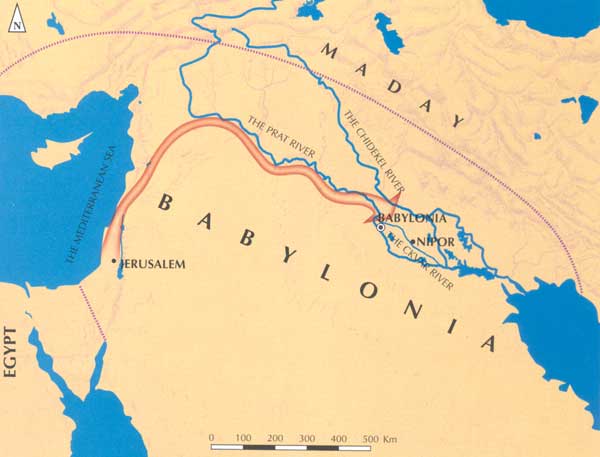
That is something like what we find in the first reading this morning, from the Book of Nehemiah. The people of Israel had just returned from Babylon. They had not been studying abroad and they weren’t there on business. They had been dragged off in exile, and they lived as slaves for over 50 years. Finally, when the Persians came and defeated the Babylonians, the Jews were allowed to return to Jerusalem; they went home to a land that was so familiar and so sacred to them.

But nothing in that place could signal their re-connection and their identity as a people more than the book of the law: The Torah, the writings of Moses, the prophets, the covenant and the promises God had made with them.

Nehemiah describes their reaction to that reading of the book of the law, how they became emotional. They began to weep. They recognized that they, and their fathers before them, had not listened to the word of God, they had not been faithful to the covenant. That is the reason they had been in exile.

But Nehemiah and Ezra the scribe intervene and say to the people: “Do not weep.” The time for sorrow and sadness is over. The period of exile is over. You were not faithful to the covenant of God . . .but He was! This word of God is meant for consolation. It is given to them to build them back up again, and reconnect them to God and to each other. And so, Nehemiah and Ezra say to the people:

Do not be saddened this day, for rejoicing in the Lord must be your strength.
—Nehemiah 8:10

Our readings for this Third Sunday in Ordinary Time speak to us about the power of God’s own word in the midst of our everyday lives. Like the people of Israel, we, too, need to listen to God’s word and let it transform us and reconnect us to God and to each other. God’s word to us is every bit as personal and intimate as it was to the people of Nehemiah’s day. In the Scriptures, God speaks to us as children; He speaks to us as friends.

St. Luke, in the gospel this morning, begins his account of the life of Christ in the form of a personal letter. He writes:

Since many have undertaken to compile a narrative of the events that have been fulfilled among us . . .

He is referring to the events of the life, death and resurrection of Christ.

. . . I too have decided, after investigating everything accurately anew, to write it down in an orderly sequence for you, most excellent Theophilus, so that you may realize the certainty of the teachings you have received.
—Luke 1:1-4

Theophilus. That is a strange name, isn’t it? Many scholars say that Theophilus is perhaps the name of the person who is sponsoring St. Luke as he writes his Gospel, the one financing the project. The name “Theophilus” means, literally, “friend of God” or “Lover of God.”

St. Ambrose is quick to point out that the Gospel of St. Luke can be understood as a personal letter to anyone who is the friend or lover of God. All of us are Theophilus, if we are open to and respond well to the word of God and His message of salvation.

I would suggest this morning three ways that we can do that, three ways we are called to be lovers of God by responding well to His personal word for us.

Firstly, we come here to Mass each week fully expecting God Himself to speak to us. Do we do that? Do we really expect God to speak to us in the readings, in the responsorial psalm, and in the Gospel? This word proclaimed has the power to change our lives. Do we come here expecting God to do exactly that?

Secondly, we set time apart each day to read and listen to the word of God. A friend of mine has a great expression he uses to describe this commitment to spending time with God’s word each day, in the morning and in the evening. He says:

No Bible, no breakfast. No Bible, no Bed.

Are we able to spend even a small amount of time each day, perhaps a couple of minutes, reading the word of God and opening ourselves up to what God is trying to say to us?

And finally, something very practical and even entertaining: Christian music. There are so many different Christian artists out these days. Many of them are Evangelical Christians. Several are Catholic, as well. But nearly all of them are entirely focused on the Scriptures. The songs are often renditions of the psalms, or some passage from the New Testament. We can listen to that message in the car on the way to work, or on our ipod when we exercise, or when we are simply sitting around the house.

Just like secular music, that often gets stuck in our heads and bounces around in there, instead of having the Beatles or the Red Hot Chile Peppers, we have the word of God echoing within us. It is another way of exposing ourselves to the transforming word of God, the word that has the power to change us and reconnect us to God and His people.


These are just three suggestions of how we can respond well to God’s word in our own daily lives. Might we continue to open ourselves up to Him and His personal word to each of us as we come to recognize, more and more, that we are “Theophilus,” the friend of God and the lover of God, whenever we hear and respond to that life-giving word.

Sunday, January 14, 2007

God Saves the Best for Last

(2nd Sunday in Ordinary Time-Year C; This homily was given on 13 & 14 January, 2007 at Our Lady of Mercy, East Greenwich, R.I.; See Isaiah 62:1-5 and John 2:1-11)

It is called dramatic irony, and we see it all the time on television and in the movies. It is what happens when the entire audience can see what is happening in a particular scene, even though one or all of the characters in that scene cannot. It’s what makes sit-coms work, and leaves us on the edge of our seat, yelling into the TV set, because we can see exactly what is taking place while they don’t seem to have a clue.

St. John the Evangelist uses dramatic irony in today’s gospel to tell the story of Jesus’ first miracle. Jesus changes the water into wine at that wedding in Cana, and immediately He gives it to the servants to bring to the headwaiter. The headwaiter, of course, has no idea what just happened. He tastes that wine and is thoroughly impressed. He calls the bridegroom over, and proudly announces:

Everyone serves good wine first, and then when people have drunk freely, an inferior one; but you have kept the good wine until now.
—John 2:10

Of course, he’s wrong. Everyone, including the bridegroom, knows that. But without even realizing it, he praises not the bridegroom but Jesus Christ, and expresses one of the deepest truths of the gospel: that God really does save the best for last!

The fathers of the Church comment on the miracle of the water into wine and they say it represents the relationship between the old covenant—the Mosaic Law and the precepts that followed it—and the new covenant that is Jesus Christ Himself.

St. John describes the scene at the wedding in Cana, and how there were six stone water jars for ceremonial washings. They represent the old covenant, and how the Jewish people would wash and purify themselves in preparation for the wedding feast.

Jesus comes and changes that water into wine, because He is the new and everlasting covenant. He comes to suffer and die on the cross to obtain for us the forgiveness of sins and new life in the Holy Spirit. His sacrifice cleanses not our hands and bodies, but our souls as well. Jesus, who is that new covenant, cleanses us from sin.

Just as wine is so much more substantial than water, even so is Christ more substantial than the old covenant. He is that new wine, flowing in abundance from the merciful heart of God. He really does save the best for last!

It is significant, though, that Jesus reveals this new covenant at a wedding. There is a deeper dramatic irony being played out here, because the theme of the wedding is one of the richest biblical themes in both the New and Old Testaments. Isaiah the prophet, in our first reading today, talks about the marriage between God and the people of Israel.

The background is that Israel has just returned from exile in Babylon. They return to a land that is desolate, abandoned. Many of them had felt abandoned, and struggled to trust in the promises of God. Did God still want them for His chosen people? Would He join them now that they had finally returned home? God answers those questions through the prophet Isaiah:

No more shall people call you “forsaken,” or your land “desolate,” but you shall be called “my delight,” and your land “espoused.” For the Lord delights in you and makes your land his spouse. As a young man marries a virgin, your builder will marry you; and as a bridegroom rejoices in his bride so shall your God rejoice in you.
—Isaiah 62:4-5

Of course God has not forgotten them. He will always be their divine Husband, watching over them with care. It is truly beautiful imagery, but could it ever be more than that? Israel could never really be married to God. None of us could ever be joined to God in that way. We are not divine. In order for that to be a true spousal relationship, a real and living marriage, God Himself would have to become human . . .and that is what we just celebrated two weeks ago.

God has become man in the person of Jesus Christ so that we could be wedded to God for all eternity. All throughout the New Testament this spousal imagery is used to describe how we, the Church, are the Bride of Christ, and how we are called to an eternal union with our divine Bridegroom. That’s the goal of the Christian life.

Now, that sounds very theological; it sounds like something beyond us, out of this world and our own everyday experience. In some ways, it certainly is. Yet God gives us signs right here on earth that remind us of that union that we are called to in heaven with Him. One of the clearest signs is celibacy.

Celibacy is not a sign that is welcomed or appreciated in the world and culture we live in. People often ask the question: Why can’t priests be married? They want to know what the value or purpose is for celibacy. Whenever I am asked about that, I mention the practical aspects of celibacy. Celibacy allows the priest or religious to be radically available to serve God and His people.

Priests are sometimes called in the middle of the night to go to the hospital and anoint those who are dying, or to pray with a family that has just lost a loved one. Other times circumstances might warrant the priest or religious to drop everything and take care of some pressing need that simply doesn’t fit into the average daily schedule. As a priest I am “on call” 24 hours a day, 7 days a week. To be honest, I love that about my life. That is part of what it means to be a priest. And so radical availability is a very practical and relevant aspect of celibacy.

But when Jesus Christ talks about celibacy—and He does talk about celibacy—he doesn’t mention any of the practical aspects at all. When Christ talks about celibacy, He talks about the Kingdom of God; He talks about heaven; He talks about eternal life.

In chapter 19 of St. Matthew’s Gospel, verse 12, Jesus mentions three reasons why some people remain in a celibate state. He says:

Some are incapable of marriage because they were born so.

On account of some defect from birth, there are some who simply are unable to have marital relations. They remain, from birth, celibate. Secondly He says:

Some, because they were made so by others.

Jesus lived in the time of kings, and the king would often have servants whose entire work was to wait on the queen and serve her hand and foot. Naturally, he wanted to make sure that was all they did! Therefore, these servants would be “made” celibate. They called them eunuchs. But finally Jesus says:

Some, because they have renounced marriage for the sake of the kingdom of heaven. Whoever can accept this ought to accept it.

Celibate men and women are a sign of the Kingdom of God. They are a reminder to us that God’s plan for redemption and to make us His own forever begins here in this world, but that it doesn’t end there. Celibacy is a sign—and right now, in the midst of the world we live in, a very loud and clear sign indeed—of the eternal relationship and the heavenly calling we all share with God.

This week is Vocations Awareness Week, a time when we focus in a particular way on the vocations to the priesthood and to religious life that God has never ceased to bring forth in every age and time in the Church. I would ask you this week to please pray for two things:

Please pray for the men and women of this parish whom God is calling right now to serve Him in the Church as priests or religious. Secondly, please pray in gratitude to God for all of the men and women whom God has given to this parish in great abundance as priests and religious throughout the years. We are blessed at Our Lady of Mercy to have many religious sisters, Brother Roger who leads us in music so faithfully each week, and the numerous priests that have served here in this parish.

Let us thank God for that, because they are signs pointing us to eternal life. They remind us that this world is not all there is. This is not the final chapter of our lives. We have a place in heaven, and a Divine Bridegroom who is waiting for us. Because God has saved the best for last.

Sunday, January 07, 2007

Journey of the Magi

(Feast of the Epiphany; This homily was given on 6 & 7 January, 2007 at Our Lady of Mercy, East Greenwich, R.I.; See Isaiah 60:1-6 and Matthew 2:1-12)

Today we celebrate the Feast of the Epiphany. That word means manifestation or appearance, and what we celebrate is the appearance of Jesus Christ here on earth, the Son of God and Savior of the world.

In our first reading this weekend, Isaiah the Prophet describes that appearance and sums up God’s entire plan of salvation: That Christ, the Son of God and Light of the World would come to redeem and illumine the nation of Israel, and then from there to shine out to all the nations of the world:

Rise up in splendor, Jerusalem! Your light has come, the glory of the Lord shines upon you. See, darkness covers the earth, and thick clouds cover the peoples; but upon you the Lord shines, and over you appears his glory. Nations shall walk by your light, and kings by your shining radiance. Raise your eyes and look about; they all gather and come to you.
—Isaiah 60:1-4

This coming of the nations, the great gathering of kings to adore the Christ, the glory of Israel, is the scene we are given in St. Matthew’s Gospel today. The Magi travel a great distance from the east to see that manifestation, that appearance of Christ.

And if it can be said that Christmas is God’s coming to us in the person of Jesus Christ, then Epiphany in many ways indicates our coming to Him. Like those Magi from the east, we come out of ourselves and set out on that journey towards Christ, responding to the manifestation of the Child born for us in Bethlehem.

But one of the challenges to a gospel passage like the one we hear today is that it can become almost too familiar. We have all heard the story of the Magi since we were children. We have seen hundreds of Christmas cards with the three Wise Men on them. But that journey we hear of in St. Matthew’s gospel would not have been an easy one. It would not have been a Christmas card. It would have been long and arduous, a journey involving sacrifice and determination.

And so is the story of our own journey of faith. It is never easy to let go of the things of this world and to seek out Christ. The journey of faith is often a difficult one, involving sacrifice and ongoing conversion.

One of the more famous converts to the Christian faith in the last century was the great author and poet T. S. Eliot. Born in St. Louis Missouri, he enjoyed tremendous success as a writer both here and throughout Europe. He was a student of Hindu and Buddhist philosophy, yet converted to Christianity in his late 30’s. That conversion took many of his contemporaries by surprise. Perhaps many of them were not ready for that T.S. Eliot.

Whatever his personal experience might have been, it is a well-known fact that his initial conversion was not an easy one. Less than two months after he was baptized into the Anglican Church, he wrote one of his most profound and personal poems, “Journey of the Magi.” Generally accepted as an autobiographical account of his own conversion to the Christian faith, he describes that journey we heard about from St. Matthew’s gospel:

'A cold coming we had of it,

Just the worst time of the year
For a journey, and such a long journey:
The ways deep and the weather sharp,
The very dead of winter.'
And the camels galled, sore-footed, refractory,
Lying down in the melting snow.
There were times we regretted
The summer palaces on slopes, the terraces,
And the silken girls bringing sherbet.

Then the camel men cursing and grumbling

And running away, and wanting their liquor and women,
And the night-fires going out, and the lack of shelters,
And the cities hostile and the towns unfriendly
And the villages dirty and charging high prices:
A hard time we had of it.

It is a sobering account indeed of how those Wise Men may have experienced that journey on their way to Bethlehem. It describes T.S. Eliot’s own difficulty, letting go of a world that was so familiar, and embracing an entirely new way of life in Christ. He encountered trials and difficulties within and without; opposition from the people around him who no longer understood him, and opposition from within, having to embrace that internal struggle of faith that is indicative of every disciple of Christ. He continues:

At the end we preferred to travel all night,

Sleeping in snatches,
With the voices singing in our ears, saying
That this was all folly.

Did the magi ever think to themselves: “This is all folly”? Did they ever doubt the decision they made to follow that star and leave everything else behind? Did they ever ask themselves: “Is it all worth it?”

As a priest, not infrequently people will say to me, “I am trying to follow Christ, and trying to do the right thing, but it seems so often that things get more complicated and difficult instead. Why are things so hard, then, if I am trying to follow Christ and do the right thing?”

I always want to say—I usually don’t, but I want to say, “Maybe things are sometimes difficult because you are following Christ.” Jesus always did the right thing. He always said what needed to be said. And look what happened to Him! They crucified Him! That’s the truth. That is the reality of the Christian life. Maybe not all the time, but often when we follow Christ the road for us is not at all easy. That journey can be a painful and difficult one. Jesus Himself tells us in the gospel:

Whoever wishes to come after me must deny himself,
take up his cross, and follow me.
—Matthew 16:24

He was not being cynical or negative. He was being real. The Christian life involves suffering. It is worth noting that T.S. Eliot came to that conclusion so early after his initial conversion and baptism. He realized almost immediately the truth that we can never separate the crib of Christ from the cross of Christ. Those two mysteries are always taken together.

He continues that poem by describing the
descent into the valley, into Bethlehem. The Magi are approaching the manger and the birth of the Child, but off in the distance they recognize three trees standing out on the horizon. It is a clear reference to Calvary, to the death that awaits that Baby who came for the very purpose of redemption and atonement for sin. We can never separate the birth of Christ from the death of Christ.

The conclusion of Eliot’s poem is haunting, as one of the Magi looks back on that journey with troubled introspection:

All this was a long time ago,

I remember, And I would do it again, but set down
This set down
This: were we led all that way for
Birth or Death? There was a Birth, certainly,
We had evidence and no doubt.
I had seen birth and death,
But had thought they were different; this Birth was
Hard and bitter agony for us, like Death, our death.
We returned to our places, these Kingdoms,
But no longer at ease here, in the old dispensation,
With an alien people clutching their gods.
I should be glad of another death.

What the Magi in Eliot’s poem experienced was the death on an entire way of life. All they had previously believed, about gods and religion and their own lives, had come to an end. They had met the God-Man, Jesus Christ, and nothing was the same.

So it is with us. Once we have truly encountered Christ we must inevitably come to see that our old self, our old way of living, our old way of looking at life, must die. We come to the end of our own life, and then see that new life in Christ is just beginning. When we meet God, everything changes. We are never the same again. And that is where St. Matthew ends his own biblical description of the journey of the Magi. He tells us that:

Having been warned in a dream not to return to Herod, they departed for their country by another way.
—Matthew 2:12

Once we have encountered the Living God, we are never the same again. We walk “by another way.” Like those Magi, we do not walk the same way; we do not follow the same paths we used to. We do not see things the same way. We are changed, because we have met Jesus Christ, the Living God.

We come here to this place today, like those Magi, to adore and worship Christ. We bring here to this altar not gifts of gold, frankincense and myrrh, but the gift of ourselves. We bring before God all the struggles and difficulties that make up our own journey of faith. We bring those things in our lives that need to die in order for Christ to truly live in us.

Might we make that offering to God this day, and receive from this altar the strength we need in the Eucharist to follow Christ with newness of life. May we leave this encounter with a new perspective, walking in a different way, for we have met Christ and been touched by Him.

Monday, January 01, 2007

Integritas and the Mother of God

(Solemnity of the Blessed Virgin Mary, Mother of God; This homily was given on 1 January, 2007 at Our Lady of Mercy, East Greenwich, R.I.; See Luke 2:16-21)

Today we celebrate the Solemnity of the Blessed Virgin Mary under the title Mother of God. That title is one that goes back to the early centuries of the Church, and was disputed towards the beginning of the 5th century.

At that time there was a great deal of controversy about how we should refer to Mary. Some said that she was the mother of Christ, the Son of God, so she should rightly be called the Mother of God. Others said that “Mother of God” was going too far. She gave birth to His human nature, and should simply be called Mother of Jesus of Mother of Christ.

To resolve that dispute and answer that question of what title we should use to refer to Mary, they recognized that what was needed was to go back one step further. They needed to ask the question not “Who is Mary?” but “Who is Jesus Christ?”

In our gospel this morning, the shepherds make haste to see the child born in Bethlehem. Who did they go out to see? Or, as the Christmas carol asks, “What child is this?” Was he just a man? Was He God? Perhaps half man and half God? Who is this child born in Bethlehem?

The Fathers of the Council of Ephesus, in the year 431, looked to the creeds and the foundational beliefs that had been developed centuries earlier. They looked to the Council of Nicea, in the year 325, from which we derive the Nicean Creed which we recite each week; they looked to the Apostle’s Creed. Jesus Christ is not simply human; nor is He only divine. He is fully human and fully divine, true God and true Man.

Furthermore, whenever we look at the person of Christ, we never do so in slices or in pieces. We never say, “Here is His human nature. That belongs to Mary. Now, here is His divine nature and divine personhood. That belongs to God.”


No. We look at Christ in His entirety: fully God and fully man. In Latin, the term for that is integritas. It means whole, sound or complete, and it is where we get the words integrated and integrity.

When we look at Christ we look at the whole person, in all His integrity. Mary conceived and gave birth to a child, and that child was the eternal Son of God. Therefore Mary is the Mother of God.

But when we reflect on Christ and Mary as persons of integritas, we need to look much further than their titles, how we refer to them. They were the most integrated persons who ever walked the face of the earth. In everything they did, Jesus and the Blessed Virgin Mary were persons of integrity.

Look at the gospels. Jesus always does the right thing; He constantly speaks and acts in the most necessary and integrated way. He knew when to be patient, and when it was time to act. He knew how to be silent, and still, and at prayer; and He knew when it was time to speak up and be heard. He knew how to challenge and exhort, and how to listen and welcome and forgive. He was the most integrated man who ever lived.

Mary herself was also a woman of integritas. She always knew when and how to say “Yes,” to God. She knew just how and when to support Christ and to be involved in His life. She was the one who initiated His first miracle at the wedding in Cana. She said to Him, “They have no more wine.” When He replied, “What has that to do with me?” she deferred to the waiters and focused the attention on Christ. She knew when it was time to speak, and time to stand by in quiet attention and love, like at the foot of the cross. Jesus and His Mother were the epitome of integritas.

Today we begin a whole new year in 2007. how is God calling us to be people of integrity? Where do our lives need to be more fully integrated?

One of my favorite theologians and authors is a priest from the Archdiocese of Chicago named Fr. Robert Barron. Many times in his books and talks he uses the example of the rose windows that we find in medieval cathedrals.

Many of the old churches and cathedrals contain large, stain-glassed windows with the image of Christ in the center, often seated on the lap of His Mother. All around that central image are oval medallions, like petals, depicting the virtues of faith, hope, and love, or the prophets of the Old Testament, or other great biblical figures. The rose window represents the well-ordered soul. We are called to put Christ in the center of our lives, and look to Mary for the supreme example of how to live a well-ordered life. The virtues, our plans, our will, our actions and words, these should all be ordered around our relationship with God. That is integritas.

How is God challenging us this New Year to be men and women of integritas? Are there times in our lives that we experience dis-integration, or dis-order when it comes to our relationship with God and others?

This morning we gather around this altar to celebrate the Eucharist, and to give ourselves completely to God in 2007. Might we receive from Him all that we need to live a well-ordered life in this New Year. May we be persons of integrity, following in the footsteps of Jesus Christ, and His Mother, Mary, the Mother of God.

Sunday, December 31, 2006

The Holy Family

(Feast of the Holy Family-Year C; This homily was given on 31 December, 2006 at Our Lady of Mercy, East Greenwich, R.I.; See Luke 2:41-52)

One of the most popular movies we this time of year, every year, is the film “Home Alone.” You have probably seen that movie about the mischievous boy, played by Macauley Culkin, who gets lost in the shuffle as his family leaves for a Christmas vacation. As the title suggests, he is left home alone, and comically defends the house against robbers, gets into all kinds of trouble, and has an all around great time. In the end, it becomes an endearing Christmas story about a young boy who comes to appreciate his family in a whole new way.

A few years after “Home Alone,” that same child actor, Macauley Culkin, starred in a very different movie, called “The Good Son.” He played a troubled child who was typified by violence and dysfunction; it was a very dark story indeed. The title, “The Good Son,” was meant to be ironic, since he was about as far from a good son as one could get.

Those two films offer us two very different perspectives on the family, two very different views of family life. This morning we celebrate the Feast of the Holy Family—Jesus, Mary, and Joseph—and we are reminded that we take our definition of family from no particular aspect at all in the culture around us.

We do not derive our vision of the family from popular opinion and beliefs, from the multitude of sit-coms we find on TV, nor from any of the movies in Hollywood, be they endearing tales like “Home Alone” or dysfunctional and violent stories like “The Good Son.” We receive our definition of the family from God himself, the author of life, and the founder of the family.

It is so important that we recognize that this morning, since we are living in a culture that has begun to redefine the family on every level. Many couples today are choosing to take children for themselves, as a right, through such means as in-vitro fertilization (IVF), instead of receiving children as a gift from God. Children are given by God as the natural fruit of married love or through adoption, not through any means legally and medically available.

On other end of the spectrum, many couples choose to limit the size of their families through artificial contraception, blocking God out of the equation entirely. Instead of seeking God’s plan for family life, based on his design of the human body, they decide upon an alternate plan that goes against the way God intended us to live and love.

Finally, we can see in almost every state throughout the country a redefining of the traditional understanding of marriage. No longer is it a covenant of love between a man and a woman; now it is being changed to include a relationship of love between any two persons at all: two men, or two women.

None of these are the design or definition of the family that God has given to us; none of them are based upon God’s design for our temporal and eternal happiness. In our gospel this morning we see God’s vision for family life based upon the person of Jesus Christ, His Son.

St. Luke describes the scene of the finding of the child Jesus in the temple. In many ways, it could be seen the Biblical version of “Home Alone.” Jesus is the child who is lost in the shuffle, inadvertently misplaced by Mary and Joseph, who think He has been left with someone else. They finally journey back to Jerusalem itself, and after searching for Him for three days they find Him teaching in the temple.

Jesus’ response is very revealing. He says to them:

Why were you looking for me?
Did you not know that I must be in my Father’s house?
—Luke 2:49

Jesus is focused first and foremost on His heavenly Father, and the Divine Family of the Holy Trinity. Another translation of His response says, “Did you not know that I must be about my Father’s business?” Jesus is obedient to His heavenly Father first, above all things . . . but NOT to the exclusion of his earthly family in Joseph and Mary.

St. Luke tells us that, after that scene in the temple, “He went down with them and came to Nazareth, and was obedient to them” (Luke 2:51). Jesus Christ is The Good Son in the fullest and most beautiful sense of that expression. He is faithful, obedient and true to His heavenly Father, and faithful, obedient and true to Joseph and Mary here on earth.

There is no separation for Christ between those two realities, because that is God’s definition of the family: our family life here on earth is the very reflection of the Divine Family that we find in the Holy Trinity.

Just as the Father, Son and Holy Spirit pour themselves out to each other completely, loving each other completely, willing the good in the other completely, even so we care called to live in our own families. We, too, are called to live for the other, to give and forgive and seek the good of the other members of our family. Our families should reflect the same love that we see in God.

Does that sound a bit overwhelming? Does it seem like too exalted a view of the family, perhaps one that is unattainable? I would suggest that it is not only challenging and difficult, but that it is impossible, without the help and the grace of God.

One of the greatest gifts that I have received personally as a priest is to be able to celebrate Mass for my parents, to give the Bread of Life to the man and woman who gave me the gift of life. My father, a number of years ago, built a small chapel in our basement. With the permission of the local pastor, I am able to celebrate Mass there for my parents whenever I am home on my day off. It is a gift that has brought us closer together and helped us to experience the truth of what our faith teaches is the “domestic church.” In a real and practical way it has helped us to live out our family life on a whole new level.

I mention that because each week we gather here around this altar as a parish family to receive that same gift of God Himself in the Eucharist. We are given that same supernatural help and strength to live out our own family life as a reflection of the love within the Divine Family of the Holy Trinity. Strengthened in that sacrament, might we continue to follow God’s plan, God’s design for our human family, as He continues to lead us ever closer to the Trinitarian love of heaven itself.

Monday, December 25, 2006

Christmas and The Happy Prince

(Solemnity of the Nativity; This homily was given on Christmas Morning, 2006 at Our Lady of Mercy, East Greenwich, R.I.; See John 1:1-18)

There is a beautiful short story written by Oscar Wilde called “The Happy Prince.” The Happy Prince is a statue that stands on top of a tall column overlooking the city. He is magnificent, covered in gold leaf, with sapphires for his eyes, and there is a large red ruby that is set in the hilt of his sword. All the people of that city have great admiration for the Happy Prince.

As the story begins, a small swallow is flying through the city on his way to meet his friends in Egypt for the winter. He decides to rest for the night and so he sets himself at the feet of the Happy Prince. Suddenly a drop of water falls upon him, and he looks up, only to discover that the Happy Prince is crying.

“Why are you weeping?” he asks him.

The Happy Prince goes on to explain that while he was alive he used to live in the Palace and he never saw what life was like in the city. But now that he is high above the city, he can look out and see all of the misery and suffering that are there, and he cannot help but weep.

Far away he can see a woman who is poor and in need, unable to help her family; but he is fastened to the column and can do nothing to give her any assistance whatsoever. He asks the swallow to bring her the ruby from the hilt of his sword. Although the swallow complains that he has to be going, and cannot be delayed by such errands, the Happy Prince prevails over him and the swallow brings the ruby to her.

When he returns the Happy Prince tells him of another person in that city, a young man trying to write a play. He is poor and hungry, and there is no heat in the place where he lives.

“My eyes are all that I have left,” he tells the swallow. “Pluck out one of them and take it to him.” The swallow reluctantly does so, and finally the Happy Prince sends him on another errand, this time with the other sapphire.

When he returns, the Prince thanks him and tells him that he may go now and join his friends in Egypt. But the swallow says to him: “You are blind now, so I will stay with you always.”

The Happy Prince then tells him to fly throughout entire city, and to return and describe what he sees. The swallow witnesses all the suffering and pain that the Happy Prince had seen, and when he returns and tells the Prince about it, he is sent out again and again, to bring the people all the gold leaves that had covered him so decoratively.

By the end of that story the Happy Prince is looking quite shabby, and the little swallow has lost the opportunity to join his friends, but the entire city has been changed and transformed. Not everyone recognizes it, and not everyone appreciates it, but things are different. They will never be the same again.

In many ways that story of the Happy Prince is what we celebrate this morning on the Solemnity of the Nativity. Jesus Christ is the Happy Prince who is not content to remain in His palace in heaven. God looks out and sees all of the suffering, sorrow and pain in the world, and he sends Christ to come and take on our human nature, to take on our sufferings and our sorrows.

Jesus Christ is the Happy Prince who is stripped not of gold leaves, sapphires and rubies, but is stripped of glory and stripped of heaven in order to come among us here on earth. In the end, He is stripped of His garments and nailed to a cross, in order to bring us forgiveness and the hope of eternal life. That is the miracle we celebrate this morning on the feast of Christmas.

And that is the miracle that God wants to continue right here among us even now. Like that swallow in the story about the Happy Prince, we are called to be the eyes of Christ looking out upon the suffering and pain of this world. It can be so discouraging sometimes to see all of the darkness in the world, and feel like things are never going to change. But St. John reminds us in the gospel this morning that Jesus Christ is “the light that shines in the darkness, and the darkness has not overcome it” (John 1:5).

We are called to bring that light to a world that desperately needs to hear the gospel message. Like the swallow, we are called to bring the treasures of our faith and the vision of hope and love to the world around us.

What are the very practical ways that God is calling us to do that this Christmas? As we look out “over the city,” what do we see? Where are the places that sorrow and pain have entered the relationships, families and people around us? How is God calling us to carry His message of mercy and forgiveness to a world that so often sits in darkness? Might we leave this Church this morning, carrying the treasures of God to those who long for Him.

Saturday, December 23, 2006

Bethlehem and the Baptist: Finding God in the Small Stuff

(4th Sunday of Advent-Year c; this homily was given 23 & 24 December, 2006, at Our Lady of Mercy Church, East Greenwich, R.I. See Micah 5:1-4 and Luke 1:39-45)

Does today’s Mass “count” for Christmas?

How many times do we have to go to Mass this weekend?

If I go on Christmas, does that count for the Sunday Mass too?

These are the questions that people have been asking all week, and for the most part they have been asked by people sincerely looking for the right answers! They are not looking for loopholes, but for some clarity on what to do, since Christmas this year falls on a Monday. Sometimes, when a Holy Day of Obligation falls on a Monday, it is not an obligation. How do we sort all of that out?

In 1991, an assembly of the National Conference of Catholic Bishops for the United States approved changes in the way we observe certain Holy Days of Obligation. They specifically looked at January 1, the Solemnity of Mary the Mother of God, August 15, the Solemnity of the Assumption of the Blessed Virgin Mary, and November 1, the Solemnity of All Saints.

It was decided—on account of the shortage of priests in some places and a number of other factors—that if these days fell on a Saturday or a Monday, then they would no longer be obligatory. We were certainly encouraged to attend Mass, but not obliged to.

But the Solemnity of the Nativity of Christ does not fall under that rubric. Along with Easter Sunday, it is one of the most important days of the year for us as Catholics. Therefore, whichever day it falls on, we are obliged to gather together and celebrate that great event.

Now, with all of that said, some people have asked one additional and very important question: Does God really care about all those details? Does it make a difference whether we come to Mass once or twice this week? Do these things really matter? Based upon our readings for this Sunday and the teachings of our faith about how God continues to guide the Church, I would say, unequivocally, YES! All of these things matter to God a great deal.

If we seek and search for God in the small things of life, than we will find Him also in the greater things, as well. But if we are not attentive or faithful in the small things—like how and when we come together for Mass on Sunday and Holy Days of Obligation—then chances are that we will not be faithful in the larger matters of our faith lives, as well.

Now that is not just pop-psychology, and it is not simply my own personal opinion. Those are the words of Jesus Christ Himself, from the Gospel of St. Luke. He says:

He who is faithful in a very little is faithful also in much; and he who is dishonest in a very little is dishonest also in much.
—Luke 16:10

Our readings this Sunday challenge us to see, in that message from Christ, not so much a juridical statement about a God who is hovering over the most minute details of our lives, as much as it is an invitation to discover God in the small things of life.

Our first reading is from the Book of the Prophet Micah. Micah is one of the smallest books of the Old Testament; it’s about 5 pages long. And in that book we hear about the little town of Bethlehem. All of us are familiar with that beautiful Christmas carol; we all know the story.

But it reminds us of the fact that God could have been born anywhere in the world that He wanted to: in Rome, the center of the Empire; in the great cultural centers of Egypt or Greece. But He chose to be born, instead, in the little town of Bethlehem, because God delights in the small stuff. He is celebrated in the little things, and if we want to recognize Him in the greater designs of the world we live in, then we have to be attentive to God in the little things.

In the gospel we heard the moving story of the Visitation, when Mary went in haste to see her cousin Elizabeth, who had herself conceived a child in her old age. Suddenly, as that story unfolds, John the Baptist recognizes the presence of Christ and he begins to rejoice! He is not yet born, and he is able to discern the presence of God in the voice of the Blessed Virgin Mary, and He is filled with joy. Are we that attentive to the presence of God in our own lives?

One of the great classics of Western spirituality is a small book by a 17th century monk named Brother Lawrence. The name of that book is “Practicing the Presence of God,” and it was inspired by an event that happened when Brother Lawrence was 18 years old. He was looking out into a field in winter, and noticed a large tree covered in snow.

It occurred to him, as he meditated on that scene, that in a few short months that tree would take on leaves and it would look fully alive and fruitful. He suddenly felt the overwhelming sense of God’s presence, as if God were showing him how life and fruitfulness is the very work that takes place deep within the soul touched by God.

Brother Lawrence was transformed by that experience; from that day forward he set out to daily practice the presence of God in the smallest and most ordinary experiences of life: cooking in the kitchen, walking outdoors, or sitting quietly in the chapel.

Our challenge for this 4th Sunday of Advent, in these few short hours before Christmas, is to search for and find God in the small stuff. Like Brother Lawrence, and John the Baptist, and the Little Town of Bethlehem, we are called to find the presence of God in the most ordinary and often remarkable circumstances of our lives.

Which brings us back to one of the questions from the beginning of this homily: Why does coming here two days in a row really matter? Why do we come here for the 4th Sunday of Advent, and then again on Christmas itself? Because God Himself is present here in a way that He is not fully present anywhere else this Christmas. He is present here—body and blood, soul and divinity—in the Eucharist. The God of the universe will become present here in the form of bread and wine. We will receive that tiny piece of bread, and receive the same Christ who was recognized by John the Baptist and born in the Little Town of Bethlehem (which means, literally, “house of bread”).

May we open our eyes and our hearts to recognize the presence of Christ in that great mystery of our faith, and so be open to recognizing Him everywhere God sends us in the days and weeks ahead.

Sunday, December 17, 2006

Harmony, Joy and the Holy Spirit

(3nd Sunday of Advent-Gaudete Sunday-Year C;This homily was given 17 December, 2006, at Our Lady of Mercy, East Greenwich, R.I.; read Zephaniah 3:14-18, Luke 3:10-18 and CCC #376)

It has been said that the easiest teaching of our faith to prove is the doctrine of original sin. All one has to do is read the morning paper or watch the evening news—or, perhaps at this time of the year, take a nice ride up and down Bald Hill Road and the Mall parking lot—and you can’t help but see the effects of original sin. It can become so familiar, in fact, that we sometimes forget that God never intended for us to live that way.

If you go all the way back to the Book of Genesis and the story of creation, there is a description of the original state of man, what the Council of Trent calls “original justice” or “original holiness.” That state has often been described quite beautifully and even musically as a state of harmony. There was harmony between the created world and God; there was harmony between the first man and first woman; and there was harmony deep within the human person (Catechism of the Catholic Church, #376).

Think, for a moment, how many times in a day you feel yourself being pulled in a hundred different directions; that is not the way God intended us to be. We were created for harmony. Perhaps you have been to a philharmonic orchestra before, or something like it. Dozens of different instruments and a cacophony of notes and chords all combine to produce a magnificent symphony that reaches right into the depths of our souls. That is an image for the way we were created.

That harmony, of course, was shattered by original sin. Suddenly there was discord, disharmony in the universe, in our relationships, and deep within our own souls. Yet at this time of the year, in a particular way, we celebrate the God who chose to enter directly into that discord. Jesus Christ is the one who enters into the world torn by original sin in order to bring us back into harmony with God and with each other.

We can see that musical story of salvation played out in a wonderful way in our first reading this morning, from the prophet Zephaniah. The Book of Zephaniah is one of the shortest books of the Old Testament, and it carries a hard message indeed. Against the backdrop of Israel’s idolatry, Zephaniah announces the impending judgment of God and the imminent Day of the Lord.

But the section we hear this morning comes at the end of that book, and Zephaniah announces to the people that the judgment of God is now over, and the time has come to sing. He says,

Shout for joy, O daughter Zion! Sing joyfully, O Israel! Be glad and exult with all your heart, O daughter Jerusalem! The Lord has removed the judgment against you.
—Zephaniah 3:14-15

But more than that, Zephaniah announces that God Himself will come among them, and He Himself will sing!

The Lord, your God, is in your midst, a mighty savior; he will rejoice over you with gladness . . .he will sing joyfully because of you.
—Zephaniah 3:17

It is a prophesy about the Messiah, who would come to bring harmony between God and His people once again. It is the song of salvation, and one that all of us are called to participate in. We are all called to sing that song.


St. Paul, in our second reading, says:

Rejoice in the Lord always. I shall say it again: Rejoice!
—Philippians 4:4

The Latin word for “rejoice” is Gaudete, and it is where we get the title for this Third Sunday in Advent, Gaudete Sunday. This Gaudete Sunday, we can ask ourselves: What does St. Paul mean when he tells us to “Rejoice in the Lord always”? What does it mean to say that we should all “sing the song of salvation”?

What if we do not feel like singing? What if we have seen and experienced enough of the effects of original sin in our own lives that we scarcely feel like rejoicing? Is St. Paul encouraging us to have a Pollyanna-type attitude, to pretend that we do not live in a world where there is suffering and pain? I would suggest today that St. Paul is talking about something much deeper than that.

I was at a party recently, and a person asked me quite directly: “Are you happy?” There were several other people standing nearby, and most of them stopped what they were doing to hear the answer to that question. There is an expectation (obsession?) in our culture that we should all be happy, all the time, and that if we are not happy then there must be something wrong. I thought about the question for about 5 seconds, and then I answered: “No, I am not happy. I have had a number of events happen in my life today that are not “happy” things, so I am not happy . . . but I am joyful.”

He asked me, “What’s the difference?” And I went on to explain that happiness comes from the circumstances we find in our lives; it happens as a result of the people around us, or it can be based upon the way we feel at any given moment of the day. But joy is different. Joy does not come from us, or from the people around us, or from the circumstances of our lives. Joy is a supernatural gift, and it comes from God.

God is able to give us joy regardless of the circumstances of life. God can give us joy in the midst of all kinds of situations and experiences that are not “happy.” Joy is a supernatural gift that comes to us from God Himself.

St. John the Baptist, in the Gospel this morning, talks about that supernatural gift. He denies that he is the Messiah, and is quick to point out that he himself has come only to baptize with water. But with the Messiah, it will be different:

He will baptize you with the Holy Spirit and fire.
—Luke 3:16

Think about the day of Pentecost, when the disciples received those tongues of fire and were filled with the gift of the Holy Spirit. God set their hearts on fire with the gospel, and they rejoiced abundantly in Him. Following that day, they were to go through all kinds of trials and tribulations.

All of the Apostles—with the exception of St. John—were martyred. The Church was persecuted without mercy. They were despised by everyone in the world around them. But they were absolutely filled with joy! They had been given the supernatural gift of the Holy Spirit, the gift of God Himself, and they overflowed with joy.

St. Philip Neri, the great Italian priest who has often been called the “Apostle of Joy” has a great way of expressing this very truth. He says, “Joy is the infallible sign of the presence of the Holy Spirit.” When you see joy in the life of a Christian, then you know that the Holy Spirit is alive and active in that person’s life.

The Christian preacher and author, Walter B. Knight, put it this way: “Joy is the flag that flies over the castle of our hearts, announcing that the king is in residence today.” What a beautiful way of acknowledging that the joyful life of the Christian has its point of origin not in us, but in God. The people of Israel in the Book of Zephaniah do not sing because they are happy. They sing because “the king is in residence,” because He has come among them and brought harmony and joy into their lives.

This Gaudete Sunday, we ask God for that same grace and that same supernatural gift in our own lives. Might God raise the flag over the castle of our hearts, so that those around us may recognize that the King lives here. And may we listen and heed St. Paul’s exhortation to "rejoice in the Lord," not just when we are happy, but to "Rejoice in the Lord always."

Sunday, December 10, 2006

O Come, O Come, Emmanuel!

(2nd Sunday of Advent-Year C;This homily was given 10 December, 2006, at Our Lady of Mercy, East Greenwich, R.I.; read Baruch 5:1-9 and Luke 3:1-6)

One of the themes we see in the liturgy all throughout the year, but one that is more pronounced in the season of Advent, is our spiritual connection to the people of Israel. Just as they were longing and yearning for the coming of the Messiah, for a Savior, a Redeemer, even so we wait for and long for the coming of Christ.

Every year at this time we sing anew that hauntingly beautiful 9th century hymn:

O come, O come, Emmanuel
And ransom captive Israel
That mourns in lonely exile here
Until the Son of God appear


Captive Israel . . . in lonely exile . . . Those words, of course, allude to the Babylonian Exile, one of the darkest and most traumatic events of the Old Testament. To Israel, brought into the Promised Land so long ago, to be taken away from that land was unthinkable.

Yet, because of their sins, their infidelity to God, their lack of faithfulness to His covenant and His commandments, they fell further and further away from Him. Time again God sent them the prophets, trying to draw them back to Himself. But they had not listened. Finally, He allowed the Babylonians to conquer Israel, and they carried them away captive. Only those who were too weak or unable to make the journey were left behind.

And along with them was left everything Israel cherished: the temple and everything that was so central to their worship and faith; their entire way of life. For years they were held captive in Babylon . . .

In our first reading today, from the Prophet Baruch, the Lord announces that Israel’s captivity is at an end; her time of exile is over. Speaking to the people of Jerusalem, the ones who were left behind, Baruch exclaims:

Look to the east and see your children gathered from the east and the west at the word of the Holy One, rejoicing that they are remembered by God. Led away on foot by their enemies they left you: but God will bring them back to you born aloft in glory as on royal thrones. For God has commanded that every mountain be made low, and that the age-old depths and gorges be filled to level ground, that Israel may advance secure in the glory of God.
—Baruch 5:5-7

God will create a direct route through the desert, a straight path for the people to return. He will level the mountains and fill in the valleys and make a level road for them to come back to Jerusalem. Baruch says “God is leading Israel in joy” (Baruch 5:9).

No longer is it Moses who leads the people through the desert and into the Promised Land. Now it is God Himself who enters into the desert and brings Israel back home, rejoicing.

The return from exile is a remarkable journey of hope; it speaks of the majestic and extravagant love of God, of His tender and merciful care for His people. And that is the very same message we celebrate each Advent.

Whether we realize it or not, we ourselves are in Exile. Even when things are going well for us, even when we experience relative peace and joy, even then we long for something more. We yearn for something beyond this place, a better life and a permanent home with God. We are in exile.

So often the sins of others, and the faults and failures of those around us cause us sorrow and pain; we realize all too well that this world we live in is far from home.

But never is that exile, that captivity, felt more than when we separate ourselves from God by our sins. Because of our own faults and failings, because of our own sins against God and against each other, we exile ourselves from God. We are held captive by our own words and actions, and we remain there, in exile.

The Good News of the gospel is that God doesn’t leave us there! God Himself becomes an exile from Heaven, in a certain sense. God becomes man, and enters directly into our captivity in order to set us free. Jesus Christ is captivated by His own love for us, and surrenders Himself into the hands of wicked men. He is bound and brought before Pontius Pilate, and badly mistreated. He is bound to the wood of the cross so that we might be set free from our own captivity to sin and death. This is the message of the gospel! This is the God who saves us and redeems us!

O come, O come, Emmanuel
And ransom captive Israel
That mourns in lonely exile here
Until the Son of God appear

Advent is a time of celebrating the answer to that prayer, that cry of the heart. Jesus Christ is the Son of God who has come and will come again. This morning, St. Luke announces His arrival. He sets up quite beautifully the historical context.

Tiberius Caesar was the Emperor of Rome, the king of the world as it was know at that time. Pontius Pilate was the governor of Judea; and then he names the local kings, Herod, Philip, and the other tetrarchs. These were the secular rulers. He goes on to name the religious leaders, the high priests, Annas and Caiaphas. And the word of God came to none of them! Instead, St. Luke tells us,

The word of God came to John, son of Zechariah, in the desert (Luke 3:2).

In the desert! In the desert, where God had met the people of Israel to lead them back from exile. And the message of the Baptist is the same message we hear from the Prophet Baruch: that God wants to make a direct route and a straight path for His people to walk on. Quoting the prophet Isaiah, St. Luke relates the mission of John the Baptist with the deepest yearning of God Himself:

Prepare the way of the Lord,
make straight his paths;
every valley shall be filled, and
every mountain and hill shall be made low.

The Lord is coming, and He expects us to be ready for Him when He arrives. John came “proclaiming a baptism of repentance for the forgiveness of sins” (Luke 3:3). Our preparation this Advent cannot be anything else than that: repentance and the forgiveness of sins.

What are those sins that have placed us in exile from God? Where do we feel that exile the most at this time in our lives? Where is God calling us to turn away from sin and turn back again to Him? We ask for the grace of repentance in our lives, and a return from the exile of sin.

God wants to grant us the forgiveness of those very things that have separated us from others and separated us from Him. But He will never do that, He will never grant us His forgiveness, if we do not ask Him for it!

He has prepared a way in the desert, a place for the forgiveness of those sins, in the Sacrament of Reconciliation. When is the last time we made a sacramental confession? When was the last time we heard the words:

God, the Father of Mercies,
through the death and resurrection of His Son,
has reconciled the world to Himself
and sent the Holy Spirit among us
for the forgiveness of sins;
through the ministry of the Church
may God grant you pardon and peace,
and I absolve you from your sins
in the name of the Father, and of the Son,
and of the Holy Spirit.


Christ is coming. Whether we are ready or not, He is coming. God comes to us in our exile, but we must be prepared. He comes to us today in the Eucharist. He will come into our bodies this Mass in the Blessed Sacrament. He will come into our lives this Advent. Are we ready for that?

The God who comes to us in the desert, and who makes a way for us to return home to Him, reminds us today that we are not made for exile. We are not made for captivity. We are made for God. We are made for Heaven. And that is something to rejoice in. As that 9th century hymn tells us:

Rejoice! Rejoice! Emanuel
Shall come to you O Israel.

Friday, December 08, 2006

The Immaculate Conception

(Solemnity of the Immaculate Conception; This homily was given 8 December, 2006, at Our Lady of Mercy, East Greenwich, R.I.)

We are still just at the beginning of Advent, that time of preparation for the coming of Christ into our world. Today on this Solemn Feast of the Immaculate Conception we are reminded that we are not the only ones who celebrate Advent. God Himself prepares, in a particular and beautiful way, for the coming of Christ into the world. His preparation is Holy Mary, the Immaculate Conception.

Now, the Immaculate Conception is often mistaken for the conception of Christ in the womb of Mary. That is a popular mis-conception. The Immaculate Conception refers to Mary’s being conceived in the womb of her mother, St. Ann. We believe, as Catholics, that Mary was preserved free from all stain of Original Sin because of the merits of Christ, who suffered and died on the cross to defeat sin and death for us all.

The question we can ask ourselves today on this feast is: Why? Why did God choose to do that? What is the reason for the Immaculate Conception?

Centuries of the Church’s teaching and wisdom have given us two distinct and fitting replies to that question. Firstly, when God was preparing to send His Son into the world, He desired for Christ to be untouched by sin. He wanted Jesus to be born of a woman who was not just really good, or even 90% free from sin. He wanted the person who gave life to Christ in this world to be a virgin totally free from all stain of sin. “And that virgin’s name was Mary” (Luke 1:27).

But more than that, there is a second fitting reason for the Immaculate Conception. Mary is free from Original Sin and all actual sins so that she would be totally free to say “Yes” to God’s plan at all times. Mary did not just say, “Yes,” to be the mother of Christ and give birth to Him. She said, “Yes,” to caring for Him and raising Him with great love and devotion. She said, “Yes” all throughout her life, and perhaps never more than when she stood at the foot of the cross. Mary stood in the icy shadow of the cross and cried out with her whole heart, “Yes,” while her Son was giving life to the world.

That is Mary, the Immaculate Conception! And that is God’s Advent, God’s preparation for the coming of Christ into this world. It should come as no surprise that our Advent and our preparation for the coming of Christ is very much the same thing.

God wants to come into our lives, just as He came into Mary’s. The same body of Christ that entered into Mary’s body, will enter our own body in the sacrament of Holy Communion. Have we truly prepared for that? God’s desire for us is the same as it was for Mary. He wants to enter into a person who is free from sin.

Obviously, that is—in a certain sense—a problem. You and I are not the Immaculate Conception. We have all been born with Original Sin. But God has taken care of that, hasn’t He? Through the gift of baptism, we have been cleansed of Original Sin.

And for the sins we have committed since then, God has also provided. He has given us the Sacrament of Reconciliation, by which we are forgiven of actual sins committed against God and one another.

As we enter more deeply into the season of Advent, have we taken the time to make a good confession? Have we given God the opportunity He desires to make us more completely free from sin and totally open to His call and His work in our lives?

Through the prayers of Mary Immaculate, may we continue to open our hearts up more and more completely to God. May our lives be free from sin and free to follow God’s plan for our lives and for all that He wants to accomplish in the world around us.

Sunday, December 03, 2006

Waiting and Watching for Christ

(1st Sunday of Advent-Year C;This homily was given 3 December, 2006, at Our Lady of Mercy, East Greenwich, R.I.; read Luke 21:25-36)

Today we begin the holy season of Advent, four weeks of preparation for the celebration of the birth of Christ; we celebrate with great joy the coming of Christ among us. This Advent we can ask ourselves one important question:

Are we waiting for Christmas, or are we waiting and watching for the coming of Christ? There is a difference.

Most of the people in the world around us are waiting for a chance to come together with family and friends. It is a time when we all give gifts to the ones we love and care about; and this time of year is always filled with a sense of joy and tremendous expectation.

Hopefully we will all be able to experience those things in these days to come. But none of these things are distinctively Christian. You could belong to any faith denomination—Jewish, Muslim, you could even be an Atheist—and still wait for and enjoy those things.

This Advent the Church reminds us that, for those who belong to Christ and follow Him, we are not just waiting for a holiday or merely anticipating a joyful season. We are waiting and watching for a person. That person, of course, is Jesus Christ.

In the Gospel this morning Jesus challenges us to do more than wait. He calls us to “Be vigilant!” He says,

“Be vigilant at all times and pray” (Luke 21:36).

Against a spirit of malaise and spiritual laziness, Jesus cautions us to be alert and ready. Be vigilant! Be watchful!

Beware that your hearts do not become drowsy from carousing and drunkenness and the anxieties of daily life, and that day catch you by surprise like a trap.
—Luke 21:34-35

Advent is a time that we wait and watch for the coming of Christ, because He has already told us clearly that He is coming.

There is a true story about a small farming town in the Midwest that was experiencing a severe drought. It had not rained in weeks, and they were afraid of losing the entire crop for that year. The pastor of the local church called for a prayer meeting, and encouraged all the people to come together and pray to God for rain.

On the night the service was held, the church hall was full. The pastor was pleasantly surprised to see so many of his parishioners gathered together; many were talking and catching up on old times. There was a genuine sense of community and even some laughter in that place.

He made his way to the podium to call the meeting to a start, when suddenly he stopped right in his tracks. There, on the front row, was a little 8 year-old girl, and she wasn’t talking to anyone. She was sitting, by herself, with her head bowed in prayer, and she was wearing a little red raincoat. In her small hand she clutched a little red umbrella.

Suddenly the pastor began to realize that all those people had come together, with great sincerity and faith, to ask God for rain. But this girl had come expecting God to answer. She had come to that place expecting God Himself to show up.

When we pray, do we have that kind of faith? When we spend time alone with God, do we expect Him to show up? Do we have that same humility and trust in the promises of God, who tells us “Where two or more are gathered in my name, there am I in the midst of them”?

In Israel, in the time of Christ, how many people were waiting for the Messiah? They knew the promises of God; they knew that He had said He would come among them. Suddenly He appeared and walked through their streets; He taught in their synagogues and in their towns and villages. But so many of them missed Him! They were waiting for the Messiah, they were waiting for God, but they were not watching, they were not vigilant.

This Advent we ask God for the grace not to make that same mistake. Might we remain vigilant, watchful, and ready for the coming of Christ. The first and most important way we do that is prayer.

But we cannot simply remain there. We are called to put our prayer and our faith into action. Part of being vigilant and watchful for the Lord means being busy. We need to be about the business of the Gospel.

I saw a bumper sticker not too long ago that was referring to the second coming of Christ. It said: Jesus is coming back . . . Look Busy! There is some truth to that. We need to be vigilant as we wait for His return, and one of the ways we do that is by responding, in our families, our workplace, and everywhere God sends us, to the needs and the demands of the Gospel.

I worked for Stop & Shop, in the Produce Department, for 9 years. One of the first things we would do each day was to call the voicemail of the district manager for Produce. He was the one in charge of the entire Rhode Island division, and he would record instructions each day about which items needed to be on sale, what to watch out for, things of that nature.

But ultimately, we would call that voicemail because he would always end by giving a list of the stores he was going to be visiting that day. And if we were on that list, then we better be ready! If not, experience taught us all too well, things would be very unpleasant for us indeed!

And so we would do almost anything to make sure that we were ready: we would sacrifice coffee breaks, sometimes lunch breaks. We would call in extra help from outside, so that when he arrived, the apples and oranges were all stacked meticulously; every leaf of lettuce was perfect!

This Advent we are not waiting for the district manager of Produce for Stop & Shop; we are waiting and watching for the coming of Jesus Christ, the Son of God. What are the sacrifices that we need to make in our own lives as we prepare for that coming? Where is God calling us to be more vigilant, in prayer and in our personal lives this Advent? How are we called to be busy about the Gospel wherever God directs us this week?

We ask Him here, in this place, for the grace to be vigilant and watchful; here, where we gather and pray together each week, we know that God Himself shows up. Here, on this altar, He becomes present to us—body and blood, soul and divinity. Might we be strengthened in this Blessed Sacrament today, so that we will be more vigilant, more watchful for His coming in our lives this Advent.