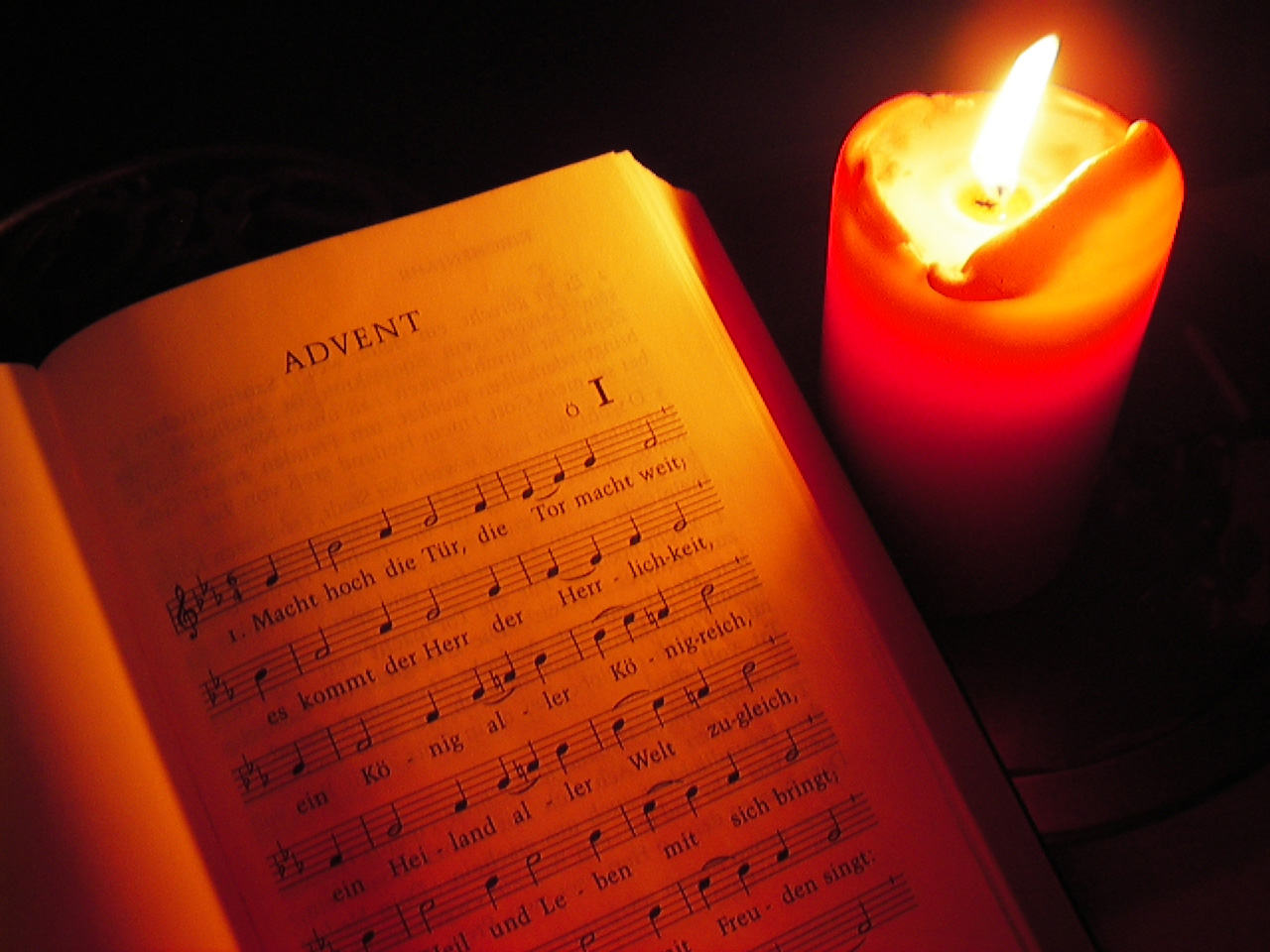
Tuesday, December 25, 2007

The Perfect Christmas

(Solemnity of the Nativity; This homily was given on Christmas Eve and Christmas Morning, 2007 at St. Mary's Church, Cranston, R.I.)

One of my favorite movies is a film that came out about ten years ago called The Spitfire Grill. It’s about a young woman named Percy Talbot, who is struggling to let go of a troubling and difficult past and so she tries to make a brand new start in a small town in Maine (it could be any town, anywhere; it could be Knightsville in Cranston!). So she gets a job in that small town working at the Spitfire Grill.

But her arrival in that place disrupts everything. They don’t know a thing about her past, or what she’s doing in their lives now. The owner of the Spitfire Grill doesn’t want her. The townspeople are all suspicious of her (and it’s one of those towns where everybody knows everything about everybody else). The arrival of Percy Talbot turns everything upside down.

But before long something begins to happen in that small town. Percy begins to open up to some of the people; she begins to share her life with them. They discover that it is a life of brokenness and sorrow, but also one of hope and tremendous love. And little by little they begin to change. They start to look at her, and each other, in a whole new light; and in a very brief time the entire town is transformed. Of all the unexpected possibilities, this stranger from the outside gives them a whole new outlook on life; nothing will ever be the same since Percy Talbot entered their lives.

Today we celebrate the birth of Christ. It’s a miracle that goes beyond our ability to comprehend: God, who exists in eternity, before all things, and outside of time, suddenly enters into our world and becomes man. And His desire is that our lives will be transformed, just like those people in The Spitfire Grill, and that we, too, will have a whole new outlook on life.

We’ve all heard the story; we’ve all seen the images of the baby in the manger, the shepherds adoring Him and the angels singing. When God entered the world that night, everything was perfect . . . or was it?

Was it really perfect, or was God’s arrival here perhaps a bit more like Percy Talbot’s arrival to that small town in Maine? Jesus comes to Bethlehem, and they have no room for Him at the Inn. They don’t want Him. Most—if not all—the people in that town don’t have a clue who He is. And when King Herod hears of His birth he sends out soldiers to destroy Him. This is not a good start! St. John’s Gospel says it best: He came to what was his own, but his own people did not accept him (John 1:11).

That first Christmas was far from perfect (so if your life is not perfect this Christmas, then let this be a source of comfort and consolation. Be at peace; His first Christmas wasn’t perfect either). What Christ encountered when He came here to this earth was hostility and even rejection, but that should not surprise us. The Christian author, C.S. Lewis, in his classic book Mere Christianity, says that this world we live in is “enemy-occupied territory.” It is ruled by forces and powers that are opposed to the things of God. We do not need to be convinced of this truth; we just need to read the paper or watch the evening news.

“Christianity,” he goes on to say, “is the story of how the rightful king has landed…in disguise.” God sneaks in behind enemy lines, unknown to the “powers that be” and the rulers of this age. King Herod and Caesar Augustus have no idea that He has arrived.

But Christ has not come into “enemy-occupied territory” to do battle with them. He has come out to fight an enemy much more powerful and much more destructive than that. Christ comes to save us not from any earthly power, but the power of Satan and the forces of evil. More than that, Jesus Christ has come to “save his people from their sins” (Matthew 1:21). He comes to undue all the damage that has been caused by our sins and the sins of those around us.

And make no mistake about it: to do so will be a very messy and bloody ordeal. There is nothing sentimental about Christmas. This child born in Bethlehem will grow up and be nailed to a Roman cross. He will suffer and die…and rise again, to “save his people from their sins,” and give us a new start and a new beginning with God.

Like Percy Talbot, Christ comes to us from the outside and seeks to share Himself with us; He wants to transform us from the inside, out. We cannot have the perfect Christmas by trying to make the world we live in perfect. We cannot have the perfect Christmas by making our families or ourselves perfect. If we could do that, then we wouldn’t need Him!

We experience the perfect Christmas when we realize that He who is perfect came here for us, to reconcile us to each other and to God. We can have the perfect Christmas when we allow Him into our lives and into our hearts, and let Him do whatever it is He wants to. We ask ourselves today:

Are we able to recognize Christ and welcome Him in the ways that He comes to be among us?

What are we willing to do to acknowledge our need for a Savior, and to allow Him to save us from our sins?

How can we allow Christ to transform our small town, our families, and our lives this Christmas?

Sunday, December 23, 2007

Be Not Afraid!

(4th Sunday of Advent-Year A; This homily was given 22 & 23 December, 2007, at St. Mary's Church, Cranston, R.I. Read Isaiah 7:10-14 and Matthew 1:18-24)

As we draw ever closer to the celebration of the birth of Christ and ponder the readings for this Fourth Sunday of Advent, I would invite you to reflect on the lives of three men; all of them born in different periods of history.

The first one was weak, the second was strong, and the third was, quite possibly (with the exception of Jesus Himself) the holiest man who ever lived.

The one who was weak appears in our first reading this weekend: King Ahaz. He was the leader of the people of Israel, and to understand why he was weak we need to go back a few verses before the passage that we hear this weekend. Our reading includes the middle section of Chapter 7 in the Book of the Prophet Isaiah.

But if you read the beginning of that same chapter, Isaiah describes the political and historical background: The nation was being threatened by nearby Assyria, who had made an alliance with the enemies of the king and planned to invade Jerusalem. Isaiah tells us the reaction of King Ahaz and the people when they discovered that horrific news:

The heart of the king and the heart of the people trembled as the trees of the forest tremble in the wind.
—Isaiah 7:2

The people and the king were terrified…but that is not what made him a weak leader. It was his lack of faith and trust in God in the midst of that conflict that made King Ahaz weak.

As soon as word reaches them that the attack will happen, God sends the prophet Isaiah to Ahaz to strengthen and reassure him. God wants the king to know that he will be supported; he will not be abandoned. He even tells him to ask for a sign from heaven that things will be all right, gives him permission to ask for anything at all…but Ahaz refuses!

“I will not ask,” he says. “I will not tempt the Lord!”
—Isaiah 7:12

He presumes to rely on his own strength and the strength of his allies, but not on the strength that comes from God. That was his weakness.

Thankfully God does not leave the king and his people in their weakness. He comes to them anyway, sending Isaiah out first with a reprimand for the king:

Is it not enough for you to weary people, must you also weary my God? Therefore the Lord himself will give you this sign: The virgin shall conceive, and bear a son, and shall name him Emmanuel.
—Isaiah 7:13-14


Emmanuel means “God is with us,” and that would be the sign. God would be with the king and the people of Israel and His strength and might would see them through. Thanks be to God that our Lord does not leave us in our weakness, but comes to us anyway! That was the man who was weak.

The second man, I said, was strong. He was physically strong, growing up as an athlete and even working for a time as a laborer. But he was also spiritually and morally strong. He began studying for the priesthood around the time of the Second World War, and many years later became the Cardinal Archbishop of Krakow. We would all come to know him as Pope John Paul II, and he was one of the strongest leaders the Church had seen in centuries.

In his biography on Pope John Paul II, Witness to Hope, George Weigel tells the story about the conclave in which the cardinals of the Church elected the Polish Cardinal as our new pope. They had been praying and discerning for days when finally it seemed that God was guiding them all in the direction of the young Cardinal from Krakow. As they counted the ballots it became clear that he would be the next pope.

Eyewitnesses say that he looked visibly shaken as he bent over and placed his face in his hands, overwhelmed at the grave responsibility that was about to fall to him. Seeing him then, some of the cardinals began to fear that he would not accept the nomination!

Yet moments later the entire demeanor of this man would change dramatically. When he greeted the world as the new successor of St. Peter, he addressed them all with the words that would mark and define his papacy:

“Be not afraid!”

What had changed between that first recognition that the office of the papacy had been entrusted to him, and the proclamation to the entire world that we have nothing to fear? How could he be that confident, that courageous?

I believe he understood what King Ahaz and the people of Israel had learned in that first reading: Emmanuel. That God is with us. God would guide him and our Church, just as He always had; we need not be afraid.

Which brings us to the final man I mentioned: the one who was, quite possibly (with the exception of Jesus Christ Himself) the holiest man who ever lived: St. Joseph, Husband of the Blessed Virgin Mary and the Foster Father of Jesus the Christ.

The circumstances in which we find St. Joseph and the Holy Family this weekend are more than a little awkward. Joseph has just discovered that Mary is pregnant, and he decides to divorce her quietly.

We do not know what Mary has said to him, or what he believed about what she said, but we know he has decided to let her go. And somewhere in the midst of that decision, we know that he was afraid. We know that to be the truth because St. Matthew tells us that the angel of the Lord appeared to him and said: Do not be afraid!

Joseph, son of David, do not be afraid to take Mary your wife into your home.
—Matthew 1:20

Now there are a couple of different opinions on why Joseph might have been afraid to remain with Mary. The first and obvious one is that he didn’t know who the father was. The second possibility is that he did know who the father was, and he was terrified! Being a father is difficult enough, but what man could be the father of God?

Either way, Joseph faced a future that was uncertain and quite different than what he thought it would be. And into his fear and uncertainty God reveals to him a plan that will change the world forever: That this child to be born of Mary will be Emmanuel—God with us—and the savior of the world.

On this Fourth Sunday of Advent, as we reflect on these three very different men, we can ask ourselves: What about us? What are the things in our world, and in our lives, that we are afraid of? What are the things that cause us fear?

We live in a culture often dominated by fear, with terrorism on a global scale and our nation even now at war. We all know of courageous men and women serving in Iraq and Afghanistan, people we pray for on a daily basis.

There are a thousand things we could be afraid of: our own death; the loss of loved ones; health concerns; fear of being alone; fear of being with other people; fear of almost anything that threatens our safety, peace and security in this fragile world we live in.

God reminds us today that He is Emmanuel, God with us. God is with us in the midst of all our fears. We can take to heart the words of Jesus Christ all throughout the gospels, the words that Pope John Paul II made his own and shared with the world on the first occasion he addressed us as our Holy Father, and words that he took to heart right up until his own entrance into eternal life: Be not afraid. God is with us.

Sunday, December 16, 2007

What Are You Waiting For?

(Gaudete Sunday, 3rd Sunday of Advent-Year A; This homily was given 15 & 16 December, 2007, at St. Mary's Church, Cranston, R.I. Read Matthew 11:2-11)

It’s Gaudete Sunday, that time in Advent when we catch a glimpse of the joy that will be here in just a few weeks; the pink candle is lit and it’s a chance for us to check in and see how our time of waiting has been. And so, with less than two weeks left before Christmas, allow me to ask one question: What are you waiting for?

Maybe it’s a relative, returning home for the holidays, or perhaps the chance to come together with family and friends. Hopefully we are not only waiting for, but even longing for, the person of Jesus Christ. He should be at the center of our watching and waiting…

But while we’re waiting, let’s take a look into that dark prison cell we heard about in the Gospel, the one where John the Baptist is sitting. What’s he waiting for? We’re not told, exactly, but we do know that he has grown weary, waiting. And finally he sends out a message for Jesus that might seem a little strange:

Are you the one who is to come, or should we look for another?
—Matthew 11:3

How do we make sense out of that question? Isn’t this the same John the Baptist who, at the Visitation, leapt in the womb of his mother as he sensed the presence of Jesus in the womb of the Blessed Virgin Mary?

Wasn’t John the first one to recognize his own cousin as the Christ when he came out to the Jordan River? John had seen Him and proclaimed with certainty: “Behold, the Lamb of God, who takes away the sins of the world!”

Was John beginning to doubt Jesus as he sat there alone in that prison cell? I don’t think he was so much doubting Jesus, as he was beginning to doubt himself, and all that he had understood earlier about the Messiah.

John’s message was one of repentance: “Repent, for the Kingdom of Heaven is at hand.” And just last week we heard him say, “The axe lies at the root of the trees. Therefore every tree that does not bear good fruit will be cut down and thrown into the fire.”

The justice of God was coming. John preached it. He lived it. He even called King Herod to task for not living it! He held the king accountable for an adulterous affair with his brother’s wife. Now he finds himself in a prison cell, and Herod is out living the good life. Where’s the justice in that? The coming of the Messiah was supposed to change the world, to right all the wrongs, to set things straight.

And so, it is very likely that John is thinking to himself, about Jesus: “What is he waiting for?” A good question. What is He waiting for? The answer, I believe, is found in Jesus’ reply to John’s disciples:

Go and tell John what you hear and see: the blind regain their sight, the lame walk, lepers are cleansed, the deaf hear, the dead are raised, and the poor have the good news proclaimed to them.
—Matthew 11:4-5

The Messiah had come to change the world. There was no doubt about that. And He was changing it, transforming it, making all things new. But He was not changing the world with the judgment of God as much as He was changing it with the mercy of God.

He came to open the eyes of those who had been blind to the ways of God, to bring healing to those who had been broken by sin, and to transform every aspect of our fallen nature. When God became man in Christ and came to this earth everything changed. Everything.

But let’s be fair. John was right to preach repentance, because without repentance there can be no mercy. Mercy is only available to those who are willing to receive it, those who understand that they are in need of it. And that is what Jesus is waiting for! He is holding back on the judgment required by perfect justice for the sake of complete repentance. As St. Peter says in his 2nd Letter:

The Lord does not delay his promise, as some count “delay,” but he is patient with you, not wishing that any should perish but that all should come to repentance.
—2 Peter 3:9


And so, finally, the question comes to us: What are we waiting for? If it is true that God wants to pour out His mercy into our lives, that He is that patient and that willing to transform us and set our hearts on fire, what are we waiting for?

As He was in the days of John the Baptist, so He is doing now: seeking to open the eyes that are blind, to heal those who are broken and in need. He is offering Himself to us here today in the Eucharist, and asking that we be totally united to Him, totally committed, totally faithful. God can transform our entire lives, if only we will let Him.

So what are we waiting for?

Friday, December 14, 2007

Feast of St. John of the Cross

(Feast of St. John of the Cross; This homily was given on Friday, 14 December, 2007 at the Carmelite Monastery, Barrington, R.I.; readings for the feast-celebrated solemnly in the Monastery-are Isaiah 43:1-5, Romans 8:14-18, 28-30 & John 17:11, 17-26)

Our reflection today is taken from the 17th Chapter St. John’s Gospel, and is known as the High Priestly Prayer of Jesus. In that great prayer to the Father, Christ pleads for His disciples on the night before He suffers and dies, seeking to secure us with the gifts that He considers to be the most important of all.

One of those prayers—in fact, the one that runs like a mantra throughout that entire chapter—is the prayer for unity. Over and over again, He prays “that they may be one” (John 17:11, 21, 22, 23).

But this unity which Christ calls us to is not something of our own making. It does not happen because we will or desire it. We are not united around some given set of principals or ideals; we are not one because we all like each other and consider it splendid to spend time together (although I hope we do!).

Christ tells us in that prayer to the Father that we are united as one in Him. He prays to the Father “that they may be one as we are one” (John 14:11), and “As you, Father are in me and I am in you, may they also be in us” (John 17:21). Again, He continues to pray to the Father before them all, “I in them and you in me, that they may be completely one” (John 17:23). We are united as one because God lives in us and we have life in Him.
We are united in union with God.

That is the one driving force behind the life, ministry and prayer of St. John of the Cross: Union with God. It is his passion, his one great desire, his purpose for living...and dying…and living forever in God. Union.

But union with God, we find in our second reading from St. Paul, is conditional. The love of God is unconditional; God simply loves us. Period. But union is different. We cannot live however we want and expect to be in union with God. We cannot follow our own way, our own path, and then invite God to join us to Himself. We must constantly surrender to Him, be guided and directed by Him, submit to His will and His plan for our lives.

St. Paul offers another condition in that second reading. He says that we will share in the very Glory of God. Through Christ we have become sons and daughters in the Son; we call God “Abba, Father.” We inherit eternal life in God with Christ if…if….

If, in fact, we suffer with him so that we may also be glorified with him.
—Romans 8:17

Union with God and sharing in the eternal glory of God cannot be separated from the cross of Christ here on this earth. Sharing with Christ in His suffering and in His glory is the essence of our union with Him. And so it is throughout all the writings of St. John of the Cross.

One of the great images that St. John of the Cross uses to describe this union—in glory and in suffering—is the image of night. We are all familiar with the image of the Dark Night of the Soul.

People will often use, or mis-use, that image. They will say things like, “Oh, that was an awful year. It was my Dark Night” or “I am going through the worse time ever. I’m in the Dark Night.”

But St. John of the Cross never refers to the Dark Night as a negative experience. It is never something to be avoided or overcome. It is the very place where we experience the presence of the Living God.

In The Ascent of Mount Carmel he offers three reasons or purposes why God draws the soul into the journey of the Dark Night (Ascent, Book I, Chapter 2).

The first reason or purpose is so that the soul may undergo a purgation of the senses. We need firstly to be purged from our earthly attachments: purged from attachments to sin, purged of our attachment even to things which are good but are not God.

Secondly, the soul, in the darkness, discovers what it means to live by faith. We do not rely entirely on what we sense and feel when it comes to our relationship with God. We do not live by what we see happening around us, nor do we base our spiritual lives completely on external situations and experiences. We live by faith in the promises of God in the Scriptures, in the teachings of our Church, and in the Sacraments. In the darkness we live, and grow, by faith.

Finally, when the soul is purified and learns to grow in faith, it is then, in the night, that God unites Himself to her. Night is the time for lovers. It is in the night when husband and wife come together in that most intimate of unions. Night is the place where God unites Himself to the soul that seeks Him and yearns for Him, even and especially in suffering and in darkness.

As we celebrate this Feast of St. John of the Cross, we can ask ourselves:

Where is God purifying me at this time in my life? Where do I experience the purgation of the senses that always leads me closer to Him?

Where is God challenging me to grow in faith, to trust in Him and His promises and not in myself, my feelings, or the things around me?

That is the place where He is calling us to union with Himself. May we be drawn ever closer to union with God in the darkness of faith as we continue to yearn and wait for Christ, the Light of the World, this Christmas.

Sunday, December 09, 2007

Are You Holier Than a 2nd Grader?

(2nd Sunday of Advent-Year A; This homily was given 8 & 9 December, 2007, at St. Mary's Church, Cranston, R.I. Read Isaiah 11:1-10 and Matthew 3:1-12)

Are you smarter than a 5th Grader? I am sure you have heard of, or maybe even seen, the TV show on Fox that is centered around that question. It is a quiz show hosted by TV personality and comedian Jeff Foxworthy that invites adults to answer questions that never go beyond the 5th Grade level.

Sure, it sounds easy enough. But if you have seen that show then you know eventually they come to a question that you do not know, or one that you used to know and have since forgotten…and you get it wrong! Suddenly you find yourself having to admit—like most of the contestants on that show—that sometimes you, too, are not smarter than a 5th Grader!

Today, on this Second Sunday of Advent, I would like to ask a similar question: Are you holier than—or at least as holy as—a 2nd Grader? Right now our 2nd Graders at the school, as well as those in the CCD program on Sunday morning, are preparing to make their First Penance. They are also looking ahead to their First Communion this coming May. It is a very exciting year for them, so please keep them in you prayers.

I was over to the school last week, and I met with the 2nd Grade class and their teacher to answer any questions they may have about their first confession. I read to them (and to our CCD students this morning) that popular children’s book, The Velveteen Rabbit.

You may have read that story as a child. A young boy loves his stuffed bunny rabbit so much, and so unconditionally, that the bunny becomes real. Even after the bunny has become ragged and worn, and his stuffing is starting to come out, the boy still loves him more than ever.

I told them that the way God loves us is very much the same. God loves us so much that we become real. As St. Augustine says, God does not simply bring us into existence; He loves us into existence. It is that same unconditional love that stays with us all throughout our lives. Even when we feel ragged and worn, like the bunny in the story, God still loves us and cares for us. He will never abandon us. That knowledge is at the heart of reconciliation, and the forgiveness we experience in that sacrament.

And do you know what? Those 2nd Graders were wide open to that story of God’s unconditional love! They were excited about their First Penance coming up, and filled with joy about making their First Communion in just a few short months. They rejoiced in what God was doing in their lives.

I began to ask myself:

“Am I that open to the way God is working in my life? Do I rejoice that much in the sacraments and in the unconditional love of God for me? In short: Am I as holy as a 2nd Grader!”

It’s not an option, you know. We do not have a choice when it comes to the way we see God and the world around us. Jesus Christ Himself says, in the Gospel of St. Matthew:

Unless you turn and become like children, you will not enter the kingdom of heaven.
—Matthew 18:3


Unless you have a child-like trust and faith, and unless you can see the kingdom of God as a child would, than you will not see it at all!

Another way of putting it would be: Unless you are as holy as a 2nd Grader, you will not enter the kingdom of heaven!

This call to holiness is central to our gospel this Second Sunday of Advent. We hear the voice of St. John the Baptist as he prepares the way for Christ with that familiar cry: Repent!

Repent, for the kingdom of heaven is at hand!
—Matthew 3:2

Obviously, the command “repent” has a strong connection to our moral life. We are called to turn away from sin and turn back wholeheartedly to God. But the word itself in Greek—metanoiete—entails much more than just morality. Repentance or Metanoia means literally to change one’s mind, one’s entire attitude. It means to change the way we look at the world, the way we see God and those around us.

Now that Christ and His kingdom have come into this world, nothing is the same. We are challenged to see everything in the light of Jesus Christ, to behold all things with new eyes and a new vision.

That vision is one we find in our First Reading this weekend, from the Prophet Isaiah. Isaiah is writing about the Messianic times; he describes for us what the world will look like when the Messiah comes. It is a remarkable and radical worldview:

Then the wolf shall be a guest of the lamb, and the leopard shall lay down with the kid; the calf and the young lion shall browse together, with a little child to guide them.
—Isaiah 11:6


That peace, harmony and tranquility is something that will only be complete when Christ comes back again and His kingdom and will are done “here on earth as it is in heaven.” Yet we as Christians are called to embrace that vision right here, right now.

For those who have the courage to live the Gospel, the courage to forgive, and to be forgiven, then we will experience already here on this earth that inner peace, harmony and tranquility. We will begin to see the world around us in a whole new light, and grow in our child-like trust and faith in God…which brings me back to our 2nd Graders.

At the end of this week I received a stack of thank you cards from them. I would like to share with you two of them.

The first one said:

“Thank you, Father, for reading us the book. I loved it so much and I can’t wait until we receive First Penance.”

Now, I can tell you honestly that I have never had an adult say something like that to me! No one has ever said, “Father, I just can’t wait until Saturday rolls around so that I can finally go to confession again.” But imagine what our parish would look like, and what our world would look like, if more people did.

The final card said:

“Dear Father, we are looking forward to our First Communion. Oh! And that story you read was great. I think we all learned from that wonderful book.”

Do we have that same attitude in our lives, that same excitement when it comes to hearing the story of God’s unconditional love for us, over and over again? Do we ever tire of hearing that story in the gospel week after week? Are we continuing to be transformed by it?

Are we looking forward to the next time we will receive the Sacrament of Penance or the Sacrament of the Eucharist?

This Second Sunday of Advent, we can all ask ourselves:

“Are we as holy as a 2nd Grader?”

Saturday, December 08, 2007

The Problem, the Solution, and the Apple

(Solemnity of the Immaculate Conception; This homily was given 8 December, 2007, at St. Mary's Church, Cranston, R.I.; read Genesis 3:9-20 and Luke 1:26-38)

This morning we celebrate what is our country’s patronal feast day: the Solemnity of the Immaculate Conception. What we celebrate is the Blessed Virgin Mary, who was conceived without any stain of original sin so that she could be found worthy to be the Mother of God.

Our readings for this great feast include both those “theological concepts” of the Immaculate Conception: the “concept” of original sin itself and God’s solution to that problem: the coming of Christ, our Savior, through the Blessed Virgin Mary.

The opening chapters of Genesis tell the story of our first parents, Adam and Eve, who had eaten from the tree of which God had forbidden them to eat. It was that act of disobedience that brought original sin into the world we live in, and along with it, all of the sin, the pain, the suffering and the brokenness that we all experience on a daily basis. It is, quite simply, The Problem that has plagued us from the dawn of creation.

But in our gospel today we hear also of the solution to that problem: How God was to send a Savior to redeem us, Jesus Christ His Son, through the Blessed Virgin Mary. In place of the disobedience of Eve, Mary freely gives herself wholeheartedly to the work and the will of God.

That act of obedience opened the way for our Redeemer and for our salvation. As St. Irenaeus of Lyon has said so eloquently: And thus also it was that the knot of Eve's disobedience was loosed by the obedience of Mary. For what the virgin Eve had bound fast through unbelief, this did the Virgin Mary set free through faith (Adversus Haereses, Book III, Chapter 22).

This feast we celebrate today gives us tremendous hope, because we discover how much God wants each of us to be a part of what He is doing to loose that knot of disobedience. Through Mary’s obedience, Christ came into this world to save us from our sins; He still comes to us today, whenever we freely give ourselves to Him, like Mary.

There is a beautiful story that was re-told in the Christian periodical "First Things" last January. It is a parable or fairy tale of sorts, written by the French authors Jerome Tharaud and Jean Tharaud.

The story takes place on the night that Christ is born in Bethlehem. The shepherds and wise men have all come and gone, and suddenly an old woman appears in the doorway, dressed in rags. Mary is alarmed at the appearance of this haggard visitor, who is bent over as if weighed down by an impossible load. She makes her way toward the manger, each step seeming to take centuries to complete.

Mary is surprised to see that none of the animals are even slightly agitated by this uninvited guest. It is as if they knew she was coming all along. Suddenly, as she reaches the crib, she bends down towards the child, slowly producing something from beneath her filthy rags. Mary wonders what this new gift might be. The old woman smiles knowingly at Mary as she departs; no longer bent over, her head now held high. The authors continue:

Finally Mary could see the mysterious present. An apple, a little apple, having within it all the sin of the world, given to the baby Jesus by Eve, for it was her, the old woman, who had come to worship the Child born of her blood, who would save her from her sins. The apple of the original sin, and the sin of so many who would follow her.

On this Feast of the Immaculate Conception, what are the sins that God is challenging us to offer back up to Him, acknowledging His forgiveness and mercy? As we set up nativity scenes in our own homes and Church this season and remember that Child in the manger, born of Mary, what is the apple that God is asking us to give back? This Advent season, as we prepare more completely for the coming of Jesus Christ, may we also see the knot of disobedience loosened in our own lives, and in the world we live in, by the forgiveness of Christ and our obedience and love for God and those around us.

Sunday, December 02, 2007

The Three Advents

(1st Sunday of Advent-Year A; This homily was given 1 & 2 December, 2007, at St. Mary's Church, Cranston, R.I. Read Matthew 24:37-44)


This weekend we begin the beautiful and holy season of Advent. The word advent is not one we hear very often in English. It comes from the Latin, Adventus, which means arrival or coming, and what we celebrate in this season, of course, is the arrival or the coming of Christ.

There are several ways that the Church understands this coming of Christ among us. The obvious one is His first coming, as a child. In a very real and visible way, the invisible God entered into our world. As we say each week in the Creed:

By the power of the Holy Spirit
He was born of the Virgin Mary
and became man.

I would venture to guess that most Christians, in a particular way in these next few weeks, will celebrate that coming. Certainly we rejoice in that arrival or coming of Christ, yet what we celebrate primarily at Advent is the Second Coming of Christ, when He will come again at the end of time. That is why the gospel this weekend from St. Matthew, is focused on the final return of Christ in glory. It is a real event that we wait for and even seek to hasten whenever we pray the Our Father. Indeed, each week in our Creed we also profess.

He will come again in glory
to judge the living and the dead.

But there is a third coming, a third advent, which St. Bernard of Clairvaux—the great 12th century monk and Doctor of the Church—talks about. He says that only those who are able to recognize Christ within themselves, within their own lives, will see this advent. Comparing it with the first two advents, he says:

Because this coming lies between the other two, it is like a road on which we travel from the first coming to the last.
—St. Bernard of Clairvaux

St. Bernard says that this advent is a hidden or invisible one, unlike the first two. When Christ was born as a child of the Blessed Virgin Mary, His cries could be heard, His little hands and feet seen. As a young man, people would listen to Him speak; they saw Him heal the sick and raise the dead. Many watched Him suffer and die on the cross. They saw Him after He had risen from the dead.

In His Second Coming, Christ will be even more visible! The Scriptures talk about how He will come in great power and glory on the clouds of heaven (Luke 21:27, Matthew 25:31), and all will recognize Him: every Muslim, every Jew, every Atheist, every Protestant, every Catholic. Everyone living on the face of the Earth will see and recognize the coming of Jesus Christ, the Son of God.

Not so, this third advent! Not so, this third arrival or coming of Christ! It will happen in a much more subtle way, and so we must be prepared for that coming in all the everyday and ordinary aspects of our lives…which is exactly what Christ is warning us about in the gospel this weekend!

He challenges each of us to be alert and awake, so that we do not miss Him:

Stay awake! For you do not know on which day your Lord will come.
—Matthew 24:42

It is not only in the great and dramatic events of life that we come to know and recognize God. He comes to us often in the most ordinary and everyday things, and it is precisely there that we risk missing Him; precisely there that we need to keep awake and alert for the coming off the Living God.

Jesus uses the example of the days of Noah:

In those days, before the flood, they were eating and drinking, marrying and giving in marriage…
—Matthew 24:38

Now what, you may ask, is wrong with those things? Nothing! There is nothing wrong with eating and drinking. Certainly there is nothing wrong with celebrating marriage and rejoicing with those we love. Those are all good things.

But the people of Noah’s day were concerned with only those things. They left no room for God. They left no room for the word of God and the message of God. They did not heed the warning of God, and they missed the boat…literally! They did not make it into the Ark. They all perished in the flood.

Christ draws the immediate conclusion:

So will it be at the coming of the Son of Man. Two men will be out in the field; one will be taken and one will be left. Two women will be grinding at the mill; one will be taken and one will be left.
—Matthew 24:39-41


Again, Christ speaks of the ordinary stuff of life: grinding at the mill…working in the field…We could add: Working at the office…shopping at the mall…meeting with friends and family…

It can be so easy, in this busy season, to get caught up in so many of these activities, all of them good!

But if we focus on these things, and only these things; if we leave no room for God, no room for the Sacraments, especially the Eucharist each week, in which we are made new and strengthened in Christ; if we leave no room for daily prayer, in which our relationship with God is sustained; if we leave no room for the teachings of our faith and the practice of that faith in the everyday circumstances of life…

If we miss these things then we risk missing the coming of Christ in the third advent that St. Bernard talks about. If we are not attentive to Christ in the everyday aspects of our lives, then we also risk missing Christ when He comes again at the end of time, or the end of our lives. That is something that we should all take very seriously.

There is a beautiful story about St. Martin of Tours, a fourth century soldier of the Roman army in Gaul (modern day France). While still a young man, he felt called to become a Catholic and was planning eventually to be baptized (he was what the Church calls a catechumen).

One freezing cold and windy night, as he walked through the streets, he noticed an elderly man who was half-naked and begging for alms. People were walking past him, not even acknowledging the unfortunate soul. The thought suddenly occurred to St. Martin that this man had come to this street at this particular time especially for him.

He rushed over to help the man, but he didn’t have any money. All he had in his possession were the clothes on his back and the sword at his side. Suddenly Martin took off his cloak, and with the sword he cut it in half, giving one half to the poor beggar and wrapping himself in the other half.

Later that night, in a dream, St. Martin had a vision of Christ walking through heaven. He was wearing Martin’s cloak and speaking to the saints and the angels around him, saying:

“Do you see this cloak? Martin gave me this cloak. Martin, who is a catechumen, and not even yet baptized. Martin gave me this cloak!”

It was almost immediately after that night that Martin presented himself for baptism! He eventually became a bishop, and St. Martin of Tours is considered to be one of the most beloved and well known saints of the fourth century.

Are we able to see Christ in the people around us? Are we able to recognize Christ in the poor? Those who are poor physically; poor emotionally or spiritually? Are we able to recognize Christ in the people we see in the shopping mall, or in the supermarket; in our families and workplaces?

We are called to recognize Christ in all of the ordinary and everyday circumstances of life…but never more so than here in the Eucharist that we celebrate at the altar of God. Here Christ will come to us, He will arrive for us under the appearance of simple bread and wine, yet it is the true presence of Jesus Christ, body and blood, soul and divinity.

We are called to recognize Christ this day, on this First Sunday of Advent, right here in the Eucharist. Then we are called to leave this place and in this First Week of Advent, to simply recognize Him everywhere.

Sunday, November 25, 2007

Two Tickets to Paradise

(Solemnity of Christ the King-Year C; This homily was given 24 & 25 November, 2007, at St. Mary's Church, Cranston, R.I.; Read 2 Samuel 5:1-3, Luke 23:35-43, and St. Teresa of Avila's Book of Her Life)

It was back in the late 70s and early 80s (I was in grammar school, not to give too much away here!), and one of the most popular songs on the radio was a tune by a man named Eddie Money called “Two Tickets to Paradise.” Now if you have never heard that song before, or if you’ve forgotten it, allow me to refresh your memory. It begins:

Got a surprise especially for you,
Something that both of us have always wanted to do.
We’ve waited so long…

I’ve got two tickets to paradise
Won’t you pack your bags, we’ll leave tonight
I’ve got two tickets to paradise.


If you are familiar with that song then you know that Eddie Money never tells us what paradise is; he never gives us his version. Of course, we can guess what a rock star from the 70s and 80s meant by paradise, but this weekend we can also ask ourselves: How do we define paradise?

I would be willing to bet if you asked five different people that question, you would probably get five different answers. The original meaning of the word paradise, however, goes way back before Eddie Money, and well before Christ Himself. It comes from the ancient Persian culture (modern day Iran) and means, literally, a walled-in garden or enclosed park.

It was customary for the Persian King to allow only a select few subjects of the kingdom to walk with him in that enclosed garden; such intimacy was reserved for only those closest to him. It was a great honor to walk with the king in paradise.

In our gospel this weekend Jesus Christ, the King of Kings, invites the Good Thief to do exactly that. Christ is suffering on the cross in great agony, looking like anything but a king. Nonetheless, the Good Thief next to him recognizes royalty when he sees it. Turning to Christ in the midst of his own suffering, he makes that now famous request:

Jesus, remember me when you come into your kingdom.
—Luke 23:42

Suddenly, with great love and in the midst of His own pain, Christ turns to the Good Thief and replies:

Amen, I say to you, today you will be with me in paradise.
—Luke 23:43

Today you will walk with me in my garden.

Today you will be my intimate friend and close companion.

Today you will walk with me in eternal life.

It is a powerful reflection for us this weekend on the Feast of Christ the King. Yet our feast also reminds us that we are all called to share in the intimacy and personal relationship with Christ which the Good Thief enjoys. By virtue of our baptism, we are all intimately connected to Jesus Christ the King.

Part of the Rite of Baptism that occurs immediately after a child is cleansed of Original Sin is the anointing with holy chrism. The priest or deacon uses chrism to make the sign of the cross on the crown—that word is used intentionally in the rubrics for the Rite of Baptism—on the crown of the head. All the baptized share, in a particular way, in the person of Christ and in the kingship of Christ.

In the Old Testament, when kings were taken from among the people they were anointed with oil to signify that they were being chosen for a special task and a particular mission in this world. We saw that this morning in our first reading from the Second Book of Samuel. King David was anointed in Hebron as King of Israel (2 Samuel 5:3).

In the same way all the baptized are anointed as emissaries for Christ; we share His mission in this world and are called also to share in that close, personal relationship with the King of Glory. We do not wait until heaven to participate in that relationship. Christ the King intends for that relationship to take place right here, right now. I would suggest this weekend three way in which that happens; three ways in which we walk with Christ in paradise right here on earth.

The first and irreplaceable way is the way of prayer. St. Teresa of Avila, the 16th century Spanish mystic and Doctor of the Church (and also my Favorite. Saint. Ever.) constantly in her writings refers to Jesus Christ as “His Majesty.” As far as St. Teresa is concerned, He is always Christ the King! Yet in addition to being the King of Kings and Lord of all, St. Theresa also recognizes Him as her intimate and personal friend. In one of the most beautiful definitions on prayer ever given, she describes this friendship in her autobiography:

For mental prayer in my opinion is nothing else than an intimate sharing between friends; it means taking time frequently to be alone with Him who we know loves us.
—The Book of Her Life, Chapter 8, #5

We walk with the King in paradise whenever we spend time with Him in prayer.

The second way that we experience paradise right here on earth is through the sacramental life of the Church. Especially when we receive Christ in the Eucharist, we are drawn into that intimate relationship with Him that exceeds all earthly limits. The bread and wine on the altar become the Body and Blood of Christ and we are brought together in Christ to share the Bread of Angels and a foretaste of eternal life.

Similarly, when we receive the grace of God in the Sacrament of Reconciliation, and hear the words of Christ Himself through the voice of the priest—I absolve you of your sins—the very mercy of God and the power of heaven is poured out for us on earth.

The sacraments draw us into the garden of paradise and allow us to walk closely with Christ the King.

Finally, we walk closely with Christ in paradise whenever we walk closely with Him in our daily lives. It is whenever we invite Him into our hearts, into our homes, into our families and workplaces, whenever we invite Christ into our own “space” that He shows up and brings paradise right along with Him!

This is perhaps never more true than when we invite Him into our suffering. Remember that is that place that the Good Thief discovers Christ in our gospel this weekend. He is suffering beside our Lord and suddenly acknowledges Christ the King, not in bitterness or in hopelessness, but in faith. The result is that great promise of an intimate and eternal relationship with the King:

Amen, I say to you, today you will be with me in paradise.
—Luke 23:43

And so, prayer, the sacraments and inviting Christ into our daily lives and daily sufferings; these are the ways that Christ calls us to experience a foretaste of heaven and paradise right here on earth.

This weekend, on the Feast of Christ the King, Jesus says to each one of us:

“I’ve got two tickets to paradise, and one of them has your name on it!”

Thursday, November 22, 2007

Thanksgiving and the Antidote to Hostility

(This homily was given Thanksgiving Day, 22 November, 2007, at St. Mary's Church, Cranston, R.I.)

Just a few days ago the pastor and I were invited to attend a prayer service at the school being conducted by our First Graders. Half of them were dressed as pilgrims and the other half wore costumes depicting Native Americans; the service included a beautiful mixture of prayer and songs.

The whole scene, of course, was reminiscent of the historical event of the First Thanksgiving. In the year 1621 the pilgrims that had come over on the Mayflower just one year before gathered together with the Wampanoag people to celebrate and thank God for a bountiful harvest and for a brand new beginning in the New World.

We can sometimes have a nostalgic or romantic sense of that new beginning, but the reality of those first years for the pilgrims was not all about peace and tranquility. In many ways what the pilgrims encountered when they came to the New World was not so much tranquility as hostility.

The land was hostile to them; they had to learn new methods of farming and new ways of surviving in a foreign place. More to the point, not all the Native Americans were as welcoming and helpful as the Wampanoag peoples. As “politically incorrect” as it may sound, hostility and even violence were not uncommon.

But the pilgrims at Plymouth Colony and the other colonies made it through. They remained steadfast in their pursuit for a new way of life here in America, because they realized that nothing of value is gained without difficulty; nothing worthwhile in this life comes without sacrifice.

Isn’t that the same thing our own relatives experienced in the 19th and 20th century? Millions of pilgrims came here from Italy (especially those from the small Italian village of Itri, settling right here in Knightsville); they came from Ireland, and from all over Europe to start a whole new life in America.

They came seeking opportunities and a new way of life, but more often than not what they encountered was hostility. Italian immigrants were far from welcomed in this new land; neither was it uncommon to find signs in shop windows that read: Irish Need Not Apply. Pilgrims coming to America have always encountered challenges.

But what is the one thing that has remained constant through all those periods of hostility? What is the one thing in this country that made us different—from the beginning—and given us hope for a future beyond hostility?

The Christian faith.

On this Thanksgiving Day we thank God for our Christian faith and the way that it has molded our lives, perhaps in ways that we do not even fully appreciate. Today we thank God for that faith, and for the people who have gone before us and modeled it so well by their words and actions.

Just this past week I was on vacation and had the chance to visit the Shrine of the North American Martyrs in Auriesville, New York. It is a place that commemorates the faithfulness and the sacrifice offered by St. Isaac Jogues and several other Catholic saints who courageously proclaimed the Gospel to the Native Americans there. They eventually gave their lives in witness to Christ. In the face of hostility they responded with a sincere gift of themselves, even to the point of death.

Two hundred years later, when millions of people from Europe began to migrate here, an Italian nun named Mother Cabrini came over with them and established schools and hospitals for those who were not welcomed anywhere else. She became a citizen of this country, and eventually St. Francis Xavier Cabrini became the first American citizen to be canonized.

This is our heritage; this is what we give thanks to God for today. We are grateful to God for all that He has given us, but we are also mindful of the people who have gone before us and given us such a witness of faith by the way they lived the Gospel.

But we can ask ourselves this morning, in light of the heritage that we have been given and mindful of the many blessings we share: what is our response to the challenges and the difficulties that we find in our country today? How are we responding to the pilgrims of 2007, to the immigrants who have come here in our own time to find a new way of life and another chance in this land of opportunity? Are we able to look at them—even those that are here illegally—with the dignity and respect that is so central to our life and faith as Catholics?

This is a challenging issue for our time. There are many varying opinions about what to do with our borders; how to strengthen or change the immigration laws; what to do with those who are here illegally. But there is one opinion and one response not open to us as Christians: hostility.

In fact, the Church needs to be the place of sanctuary and welcome par excellence, because we are called to be the sign of welcome, hospitality and solidarity among all peoples. That is our heritage and our calling in Christ.

Our late Holy Father, Pope John Paul the Great, in his message on World Migration Day in 1995, said:

In the Church no one is a stranger, and the Church is not foreign to anyone, anywhere. As a sacrament of unity and thus a sign and a binding force for the whole human race, the Church is the place where illegal immigrants are also recognized and accepted as brothers and sisters.

Do we believe that? Does that challenge us to see things differently in the culture we live in?

Today we thank God for all that we have been given, and for the men and women of faith who have sacrificed so much and paved the way before us. May we also follow in their footsteps. May we see the world we live in, and especially the people around us, with the same vision of St. Isaac Jogues, St. Francis Xavier Cabrini, and countless others who gave all in gratitude to God so that others might live in the peace of Christ.

Happy Thanksgiving!

Sunday, November 11, 2007

Marriage and the Dialogue of Love

(32nd Sunday in Ordinary Time-Year C; This homily was given 10 & 11 November, 2007, at St. Mary's Church, Cranston, R.I.; Read Luke 20:27-38)

This weekend we listen in on what has to be one of the most exasperating conversations in the New Testament: the conversation between the Sadducees and Jesus Christ. It is exasperating because they are taking something that is holy and sacred—the covenant of love between a man and a woman as instituted by God, marriage—and manipulating that sacred institution in order to advance their own agenda. They are using marriage as a means in order to mock Christ and deny the resurrection. That’s exasperating!

But you will notice that Christ does not enter the conversation on their level; He does not become a part of that dialogue. Instead He takes the conversation to an entirely new level; He raises it. Jesus Christ begins a new dialogue on marriage that begins with heaven and eternal life. He reveals how marriage—as we know it—will not continue in heaven in the same way. A married couple work together as partners to help each other get to heaven. By all means they will be closer in heaven than they ever were on earth, but differently.

With all of that said, you have probably heard the expression before: “The more things change the more they stay the same.” Here we are, some 2,000 years later in our own State of Rhode Island and we are still listening to that same exasperating conversation on marriage.

Just like the Sadducees, who are manipulating the institution of marriage for their agenda, many groups today are doing the same to advance their own political, social and moral agendas. I am talking, in particular, about the steady stream of articles and columns written in the Providence Journal by persons like Bob Kerr and M. Charles Bakst. They, and many groups and individuals along with them, are strongly advocating for same sex marriage in the State of Rhode Island.

Just this past week, Mr. Bakst’s political column criticized Bishop Tobin for his stance against same sex marriage. Bakst called for, instead, more dialogue. He wants more conversation about how we look at and define marriage in our state.

But the Catholic Church is not interested in that dialogue! The Church is not interested in a conversation which seeks a new definition for married life, and the reason is that we already have one. There is already a vision and definition of marriage given to us by God. That vision is powerful and beautiful, and ironically, it involves the very thing that M. Charles Bakst is asking for: dialogue.


Marriage, defined by God “from the beginning” (Matthew 19:8, Genesis 2:24) is a dialogue or a conversation between a man and a woman. It is a dialogue of love that involves three things.

First and foremost, that conversation of love between a husband and wife is one that is exclusive. It is an intimate conversation into which no one else is invited. They speak that special language of love between the two of them only.

Secondly, that dialogue of love between the spouses is one that is lifelong. They agree to carry on that conversation “until death do us part.”

Finally, the dialogue or conversation of love in married life is one that is open to the gift of life; they are open to children, if God should grant that remarkable and magnificent gift.

Does that sound familiar? It should, because it is a conversation we hear at every wedding. In nuptial language we call that conversation vows. When a couple stands before the altar of God they exchange vows—a dialogue of love—in which they promise to be exclusive and totally faithful in a lifelong commitment of love that is open to new life.

But that conversation is not spoken only on that day of their wedding. A couple continues that conversation and renews their vows in a thousand different ways all throughout their married life…but never more so than when they enter the dialogue of love with their bodies in the marital embrace. Never more so than when, in the language of the Scriptures, “the two become one flesh” (Genesis 2:24).

Whenever I prepare couples for marriage I tell them how this conversation of love and dialogue of marriage spoken with their bodies is so powerfully beautiful that in nine months they could be holding it in their arms! The love between them is so powerful that in nine months they could be giving him or her a name.

That can never happen with a same-sex couple; it is biologically impossible for two men or two women to bear fruit in a new child as the fruit of their mutual love. More than that, it is inherently clear in the Scriptures and in the teachings of our faith that for a same sex couple to speak that language anyway, to become involved physically and bodily in acts which can never bring new life, is a grave sin.

To be clear, I am not talking about same sex attraction. That is different. We do not neccesarily choose who we are attracted to. We cannot be judged for falling in love with another person, regardless if that person is of the same or opposite sex as us. The Church does not teach that same sex attraction is a sin.

But to act on that attraction, physically, in a sexual relationship, is a grave sin. Saint Paul says, with great love but with tremendous sorrow, that those who do so anyway “will not inherit the kingdom of God” (1 Corinthians 6:10). It is that serious. So far from being a political issue, this issue of same sex marriage could be the very hinge upon which one’s eternal salvation rests.

And nothing is more important than the kingdom of God. Nothing is more important than heaven and eternal life. That should be on everyone’s agenda. And it is primarily in that light that the Church looks at every person, regardless of their sexual orientation.

The Church looks at every person as a child of God and a magnificent creature called to eternal life with God. Back in 1986 the Congregation for the Doctrine of the Faith issued a Letter to All Bishops of the Catholic Church on the pastoral care of those who are attracted to persons of the same sex. The man responsible for that document is Joseph Cardinal Ratzinger, who we know today as Pope Benedict XVI, and the document states clearly that:

“The Church…refuses to consider the person as a ‘heterosexual’ or a ‘homosexual’, and insists that every person has a fundamental identity: the creature of God, and by grace, His child and heir to eternal life.”

If we truly want to know how the Church feels about all people, regardless of sexual orientation or attraction, then that is where we must begin; it is the very place where all dialogue must start.

It is also the reason why the Church—from Pope Benedict XVI, to Bishop Tobin, right on down to you and I—the Church has a grave responsibility to say and do whatever we can to make sure every person gets there, to heaven and to eternal life with God. That is the reason why every member of the Church has a grave responsibility to “speak the truth in love” (Ephesians 4:15). Now that is a dialogue which every single one of us should be involved in.

Sunday, November 04, 2007

The Risky Business of the Seeker

(31st Sunday in Ordinary Time-Year C; This homily was given 3 & 4 November, 2007, at St. Mary's Church, Cranston, R.I.; Read Luke 19:1-10)

This weekend we are introduced to one of the more intriguing characters of St. Luke’s Gospel: Zacchaeus. He is intriguing because there are only a few things that we know about him, and they all seem to be in conflict with each other.

St. Luke tells us he was “a wealthy man” (Luke 19:2). Certainly there is nothing wrong with that. Many times in the Old Testament and New Testament alike, wealth, property, possessions are understood as a blessing from God.

But St. Luke also tells us that Zacchaeus was the chief tax collector of that region; that was how he made a living, how he became so wealthy. That is where the conflict comes in!

Tax collectors were Jews who worked along with—and in a certain sense, for—the Roman Empire. They collected taxes from their own people and sent most of the money to the Romans, often keeping a sizable portion for themselves! It was a lucrative business. But it was also very risky business, because the people of Israel despised them. They would have hated Zacchaeus for the way he made his living, literally, off his own people.

Which brings us to the last thing we know about Zacchaeus: He was “Seeking to see who Jesus was” (Luke 19:3). That was the desire of his heart. Now that would have been risky business! Remember, everyone in town would have wanted a piece of him. He was quite unpopular. To even venture out in public could be dangerous; but to see Jesus he would have to do exactly that.

To make matters worse, he was short so he had to climb up a tree in order to see Christ. There he was, totally exposed, out in the open, literally out on a limb…but it was a risk that paid off. Suddenly Christ spotted him. Zacchaeus, who was seeking Jesus, found Him and his life was changed forever. He invited Christ into his home, and then into his heart, and nothing was ever the same again.

It is a beautiful and powerful story about conversion and renewal. Yet like so many stories in the Scriptures, there is so much more below that surface level. If we go a little deeper, and listen the final words of Christ in that gospel passage, we discover that it is really not a story about Zacchaeus seeking Jesus at all. In fact, it is really a story about Jesus who was seeking Zacchaeus!

At the end of our gospel this week, Jesus declares that salvation has come to Zacchaeus’ house, “for the Son of Man has come to seek and to save what was lost” (Luke 19:10). That is not just Zacchaeus’ story. It is our story. It is the story of the God who became man so that we could enter into eternal life with Him. God was willing to come here among us, and to run the risk of being rejected, mistreated, and even crucified, out of love for us and to give us the offer of a life forever with Him.

It is the greatest risk of all, because we have the ability to—on account of the freedom that He gave us—reject that offer of salvation and keep God at a distance. We can choose to remain exactly who we want to be, without ever letting God change and transform us, like He did to Zacchaeus.

There is a beautiful poem by the Spanish mystic and Doctor of the Church, St. John of the Cross, which describes this very risk of God and His passion to break through our complacency. It is a poem about a young shepherd who is absolutely in love with a young shepherd girl. He cannot keep his mind off her. But as the poem begins his heart is broken and he is weeping because she has forgotten him. St. John of the Cross continues:

That one thought:
his shining one
has forgotten him,
is such great pain
that he bows to brutal handling
in a foreign land,
his heart an open wound with love.


And yet even after running the tremendous risk of being beaten and mishandled in a strange place, still she has not returned. Finally, in desperation, and as a last resort, he climbs a tree (like Zacchaeus in this weekend’s gospel):

After a long time
he climbed a tree,
and spread his shining arms,
and hung by them, and died,
his heart an open wound with love.

That is the risk of God. Christ climbs up the tree of the cross and reveals the great love of God in all its glory. It is the distance He was willing to go “to seek and to save what was lost.”

This weekend we must ask ourselves the question:

What is our response to this remarkable risk of God? How is God challenging us to respond to this offer of love? Like Zacchaeus, how are we called to come out of ourselves and into uncharted territory in response to the love of God?

How is God challenging us to take chances and risk our love this week? Perhaps to write that letter; to make that phone call; to forgive someone who has hurt us; to ask forgiveness from others; from God in the Sacrament of Reconciliation?

It might be the risk of intimacy with God. God is constantly seeking to draw closer to us in an intimate relationship of prayer and faith. Like Zacchaeus, He is seeking to enter our homes, our families, our workplaces, and into every single aspect of our lives. Are we letting Him do that? How are we responding to the Son of Man who risked everything “to seek and to save what was lost”?


Thursday, November 01, 2007

Feast of All Saints: Embodiment of Beatitude

(Solemnity of All Saints-Year C; This homily was given 1 November, 2007, at St. Mary's Church, Cranston, R.I.; Read Matthew 5:1-12)

Our gospel for this Solemn Feast of All Saints is taken from St. Matthew’s Gospel, and focuses on perhaps the best known and most often quoted teachings of Christ: The Beatitudes. That word—Beatitude—is Latin for “blessing,” a word which Christ repeats nine times in almost as many verses.

The Beatitudes are situated at the very beginning of Jesus’ famous “Sermon on the Mount.” As St. Matthew relates at the beginning of that passage:

When Jesus saw the crowds, he went up the mountain, and after he had sat down, his disciples came to him. He began to teach them.
—Matthew 5:1-2

What did He teach them? In the Sermon on the Mount, and especially in the Beatitudes, Jesus teaches us about heaven and earth. He does not instruct us only about heaven; the Beatitudes do not draw our attention only to the things of earth. They teach us both.

Jesus Christ as Teacher is the perfect embodiment of His own teaching, since He is in Himself the culmination of both heaven and earth. In His very person He brings those two realities together. He is the eternal Son of God, dwelling from all eternity in heaven. Yet He comes to be born in space and time, taking on our human nature and a body of flesh and blood like us. He takes on our earthly existence.

And no one ever lived out the Beatitudes as fully as Jesus Christ. No one was ever poorer in spirit than Him; no one ever mourned or felt more sorrow than Christ as a result of the tragedy of sin and suffering that has cast its shadow upon this earth; no one was ever more clean of heart; no one was ever more persecuted for the sake of righteousness.

Neither was there ever a man who was more blessed than He! Christ is the One who is forever blessed here on this earth, and forever in heaven.

Our feast day today reminds us that we too are called to share in that same blessedness. We, too, baptized into Christ and committed to Him by a life of faith, are called to embody the Beatitudes in our daily lives with our hearts set on the life of the world to come.

My favorite quote from the great Christian writer, C.S. Lewis, makes this very assertion. He says:

The men and women who did the most for this world were the men and women who thought mostly of the world to come.

Aim at heaven and you will get earth ‘thrown in.’

Aim at earth and you will get neither.

Is that not the moral, social and political failure of our time? Men and women who have the best of intentions, dead set on making this world a better place, yet focusing all of their work and will and hopes right here in this life only? When we leave God out of the equation, and do not set our sights on heaven and the Kingdom of God, we lose both heaven and earth together.

How radically different are the lives of the saints! These are the men and women who changed and transformed the world around them. They were fearless, passionate, and effective in renewing the face of the earth. They challenged kings, guided nations, founded hospitals and health care centers, reformed society and set the world on fire.

They did these things not because they were experts in public policy or skilled in political science. They accomplished great things for this world because they had their hearts, minds, and wills completely set on the world that is to come.

Today we are reminded that we are called to do the same. How is Christ challenging us to embody the Beatitudes and reveal the lives of the saints in our own world right now?

Sunday, October 28, 2007

Prayer and Daily Life

(30th Sunday in Ordinary Time-Year C; This homily was given 27 & 28 October, 2007, at St. Mary's Church, Cranston, R.I.; Read Luke 18:9-14, CCC #2725)

How is your prayer life? How is your relationship with God in that daily conversation we call prayer? In the story of this weekend’s gospel, the Parable of the Pharisee and the Tax Collector, we are given the third in a series of three great parables on prayer that are found in the Gospel of Luke. It says a lot, that Jesus would spend so much time teaching His disciples about prayer.

Prayer has the power to strengthen us and set our lives on fire so that we can boldly proclaim the Gospel. It can mean the difference between a life of faith and vitality or one lived in bland mediocrity.

Our prayer makes a difference in the way we live our lives, and the two of them—prayer and life—are intrinsically bound together. The Catechism of the Catholic Church, one quarter of which is dedicated to Christian prayer, says that “We pray as we live, because we live as we pray” (CCC #2725).

And in this weekend’s gospel we can see that the Pharisee isn’t doing either of those two things very well! On the outside he seems to have it all together. He begins with a prayer of thanksgiving: a good start.

But what he is thankful for is that he is “not like the rest of humanity,” or “like this tax collector.” And although it is true that he may not be “greedy, dishonest, or adulterous,” he is arrogant and self-righteous; and that’s a problem.

And the tragedy here is that the Pharisee misses the very point of why he came to the temple to begin with: to pray to God. He is so preoccupied with himself and how he measures up before the rest of humanity, and this Tax Collector, that he fails to see how he measures up before God.

How different is the prayer of the Tax Collector. He’s not looking around at anyone. In fact, he doesn’t even raise his eyes to heaven, but simply prays, “O God, be merciful to me a sinner.”

And because of his humility, and his recognition of the need for God’s mercy, Jesus tells us he “went home justified,” while the Pharisee did not. That must be our starting point for prayer: a humble recognition of our own sinfulness and the need for God’s mercy.

The Times of London, in the early part of the twentieth century, sponsored an essay contest in which they invited several accomplished authors to respond to the question: “What is wrong with the world?” The enigmatic Catholic writer G.K. Chesterton, who himself had written an entire book on the subject, was asked to participate in the project. With perhaps the shortest essay ever written, in the response to the question “What is wrong with the world?” he won hands down with the following entry:

Dear Sirs,

I am.

Sincerely,
G. K. Chesterton


Chesterton was not being cynical or negative. He was simply being honest. He understood that the problem plaguing our world since the fall our first parents is the problem of sin. We are all caught up in that problem. Our starting point in prayer, and in life, must be a humble recognition of that fact.

When we are able to admit our sinfulness, and take accountability for our own sins before God, then we begin to see that the real power in prayer and the power in life come from God and not from us. He is the one who comes to us in the midst of our woundedness, in spite of our sins, giving us reconciliation and peace. He brings us healing and then sends us out as instruments of healing in the world we live in.

I spent six years in seminary formation, preparing for ordination to the priesthood. They were some of the most memorable and cherished years of my life. But they were also very challenging. The seminarian lives a life of intense introspection. Once a year he is required to write a self evaluation, describing his strengths and his weaknesses. The seminary faculty also evaluates him each year, pointing out the same gifts, as well as his failings and shortcomings.

I remember one time, during my first few years of formation, praying in Aquinas Chapel at Providence College. It was a cold winter afternoon. I was alone before the Blessed Sacrament and suddenly felt painfully aware of the many ways I had failed to love God and love neighbor the way Christ calls us to. As I continued to struggle through prayer, I began to see more clearly that I was not alone in that place. There was someone else there with me, who was also wounded, in His hands, and feet, and side. It dawned on me that He was not wounded so that He could thrust his hands in my face and say, “Look what you did!” No, as Isaiah the prophet had written:

He was wounded for our transgressions,
he was bruised for our iniquities;
upon him was the chastisement that made us whole,
and with his stripes we are healed.
—Isaiah 53:5

In that chapel on that cold December day I wrote, on the inside cover of my Bible, the following words:

O Lord, I would give anything
Not to be wounded.

But You gave up everything
So that You could be.

And so that we
could be healed.


If it is true that “We pray as we live, because we live as we pray” (CCC #2725), we can ask ourselves once again: How is your prayer? How is your Christian life right now? Are we, like the Tax Collector, able to humbly recognize in prayer our own need for the overwhelming mercy and forgiveness of God?

How is Jesus Christ calling us—this week—to look at our wounds, in the light of His wounds, and to be healed? How are we called to then bring the Gospel message of that healing into a world that desperately needs it?

Sunday, October 21, 2007

Pray Always Without Becoming Weary

(29th Sunday in Ordinary Time-Year C; This homily was given 21 October, 2007, at St. Mark's Church, Cranston, R.I.; Read Luke 18:1-8)

Fr. Michael Najim, our diocesan Vocations Director, was preaching at my parish of St. Mary's this weekend, giving me the opportunity to preach at St. Mark's. Please pray, and when you pray, ask for more vocations to the priesthood and religious life in the Diocese of Providence and throughout the Church.

What are you praying for in your life right now? What are the intentions or petitions that you are bringing before God on a regular basis?

Recently there was an experiment conducted by a major university on the effectiveness of prayer. A number of patients who were seriously ill in hospitals volunteered to be part of the experiment, and they were divided into two groups. Information on the first group was given to various religious organizations to pray for, while the second group was not prayed for at all.

Now none of the patients knew which group they were in. The results of the experiment showed that the patients being prayed for did not survive or recover any better than the ones who were not prayed for. Other studies have yielded different results, but based upon this university study we may be tempted to ask ourselves: “Why bother to pray at all?” All of us have offered prayers that seem to go unanswered. Why keep praying?

Firstly, as people of faith we are called to “pray always without becoming weary” (Luke 18:1), as we hear in this morning’s Gospel. Jesus Christ challenges us to pray. He teaches us by His own example and by the constant attention He gave to prayer that this is the way of life for the Christian. But even with all of that said, and from a purely practical point of view, we can recognize that there are several factors which that university study did not take into account.

For instance, what about the spiritual effects on the patients? Were they drawn any closer to God? Were they being prepared for eternal life? Were they becoming more and more open to the eternal relationship that God is calling all of us to in heaven? No scientific experiment can give us the answers to those questions. And aren’t they the most important questions of all?

Secondly, what about the effects on the people who were doing the praying? Jesus calls us “to pray always without becoming weary,” because when we pray, God changes our own heart, and makes us more and more like Christ. It might seem like a lot to ask—this making us more like Christ—and it can even be painful at times, but He is able to accomplish it, if we’ll let Him, and if we remain steadfast in prayer.

Several years ago, while I was still working for Stop & Shop, I bought a nice new pick-up truck, one of those 4-wheel drive sport models, fully loaded. Each day I could hardly wait to get out of work, to go and drive it.

One day I went out to do just that and I discovered—to my great astonishment and discontent—that there was an empty parking space where my truck used to be! After three days they found it, or at least what was left of it. It had been stripped of everything, and the Club/anti theft device that was on the steering wheel had been placed back into the truck, where the seats would have been.

And being a person of faith, I began to pray. What I prayed for was justice. It was justice bordering on vengeance! And for a few days, to be quite honest, that prayer felt really, really good! But before long that feeling faded, and I could sense that God was asking me for a bit more. I began, little by little, to pray for the grace to forgive, to let go, and eventually even for the gift of faith for whomever it was that had stolen my truck. But it took a while. It didn’t happen overnight.

And that is why Christ challenges us this weekend “to pray always without becoming weary.” When we pray, our prayer does not change God. It is not as if He is in heaven, waiting to be coerced or manipulated into following our own good counsel. And we may not always see the changes that take place in the people around us. But when we “pray always without becoming weary,” we come to realize that our prayer is changing us and making us more and more like Jesus Christ.

And so I ask once again: What are you praying for in your life right now? I am here today in this parish of St. Mark’s because our Vocations Director, Fr. Mike Najim, is speaking in my parish about the need for more vocations to the priesthood. We constantly ask God for more vocations, because we know that He is calling men and women to the priesthood and religious life. Yet it can be so discouraging to pray so often and not see, right away, the results that we hope for.

This month is Respect Life month in our Church. How often have we prayed for an end to abortion and the protection of the unborn? Yet year after year nothing seems to change.

And how many times have you prayed for your own families, your own personal intentions, and felt discouraged or disappointed that things were not working out the way you had hoped? Christ challenges us again this weekend “to pray always without becoming weary,” because prayer works, even when we do not see the results or understand how God is accomplishing His eternal plan for us. Prayer works, and when it works it changes the world we live in. It changes us.

So let us begin our own experiment of prayer here at St. Mark’s, and not be so concerned about the immediate results. Let us be concerned, instead, with the way God is working in our lives as we pray, and trust that He knows what is best for us and for those we pray for. And one day we will see the results of all our prayers, and understand completely why Christ calls us “to pray always, without becoming weary.”

Sunday, October 14, 2007

Eucharistian- A Thanksgiving Offering to God

(28th Sunday in Ordinary Time-Year C; This homily was given 13 & 14 October, 2007, at St. Mary's Church, Cranston, R.I.; read Luke 17:11-19)

Our gospel for this weekend relates the story of the ten lepers who were healed by Christ, and the one who returned to give thanks and praise to God. It is a beautiful story of healing and transformation. It is also a familiar story.

It is familiar because it is the gospel which is read for every Thanksgiving Day Mass. If you come here to St. Mary’s next month (and I hope you will!) for Thanksgiving Mass, or anywhere in the United States for that matter, this is the gospel you will hear.

But thanksgiving for us as Catholics is more than just a holiday. It is more than just a word or one gospel passage. Thanksgiving is truly at the heart of our faith and the heart of our Church. The Greek word for thanksgiving is eucharistian, and it is where we get the word Eucharist.

Each week as we celebrate the Eucharist we offer thanks and praise to God. We offer to Him, in thanksgiving, the body and blood of His Son, Jesus Christ; we offer to Him ourselves along with that Great Sacrifice. And when we make that thanksgiving offering we ourselves benefit and are filled with the God who becomes the Bread of Life for us. We draw ever closer to our Eucharistic Lord in this mystery that is “the source and summit of the Christian life” (Lumen Gentium #11, Ecclesia de Eucharistia, #1).

I would suggest that the Thankful Leper in today’s gospel teaches us, in three particular ways, how to do that: How to approach Jesus Christ and receive Him in this great mystery of our faith.

Firstly, he teaches us that when we approach Christ we need to do so in humility. Lepers at the time of Christ were ostracized from the community; they were to announce their presence as “unclean” and required to stand apart from the rest of the people. But that did not stop these ten from crying out to Christ in their need.

St. Luke tells us how they “stood at a distance from [Jesus] and raised their voices” (Luke 17:12-13). It is hard enough for any of us to admit when we need help or when we are struggling in our lives. How much more so for these men, and to do so out loud and in public? It would have required an abundance of humility.

Pope John Paul II, in his Encyclical Letter on the Eucharist, says that we need to have the same humility when we approach Christ in the Blessed Sacrament:

The bread which is broken on our altars . . . is panis angelorum, the bread of angels, which cannot be approached except with the humility of the centurion in the Gospel: “Lord, I am not worthy to have you come under my roof” (Mt 8:8; Lk 7:6).
—Ecclesia de Eucharistia, #48

Isn’t that what we say at every Mass? “Lord, I am not worthy to receive you, but only say the word and I shall be healed.” We need humility to approach so great a gift as Jesus Christ in the Blessed Sacrament.

Secondly, the Thankful Leper teaches us that healing, transformation, and growth in the Christian life is not always automatic. It doesn’t usually happen in an instant. It comes, often times, through an ongoing relationship with Christ.

The lepers, following Christ’s command to show themselves to the priests, discovered with astounding joy that “As they were going, they were cleansed” (Luke 17:14). They were on the way, following in the direction Christ led them to, and in that they received healing. So it is with us.

It is through an ongoing relationship with Jesus Christ that we receive healing, transformation and growth in the Christian life. We come here to Mass to receive not a wafer, or a piece of bread, but a Person, our Lord Jesus Christ. We need to continue to grow in relationship with that Person, and allow Him to heal and transform us “on the way.”

Finally, that Thankful Leper teaches us that, once we have approached Christ in humility and been touched and healed by Him, then we cannot help but fall down before Him, on our knees, in praise, thanksgiving, and adoration.

Realizing he had been healed, [the leper] returned, glorifying God in a loud voice; and he fell at the feet of Jesus and thanked him.
—Luke 17: 15-16

Isn’t that why we gather we gather together for Mass in the first place? We are “built” to make a sacrifice to God. We were created in the image and likeness of God, to thank and praise Him for all the good He has done for us. It is the natural thing to do, and when we worship Him we are never more truly ourselves.

How will our imitation of the Thankful Leper in our gospel this weekend change us and the world we live in as we enter this new week? How are we being draw to the virtue of humility, to ongoing conversion and relationship with Christ in the Eucharist, and to grow in praise and thanksgiving in our own spiritual lives?

May God continue to draw us ever closer together in this holy gift of the Eucharist, and together, may He draw us ever closer to Himself.